Got it! Here’s a well-structured, 1000-word article about **Aggressive Dog Training: Safe Methods for Behavior Correction** with section titles wrapped in `
` tags for proper HTML formatting.
***
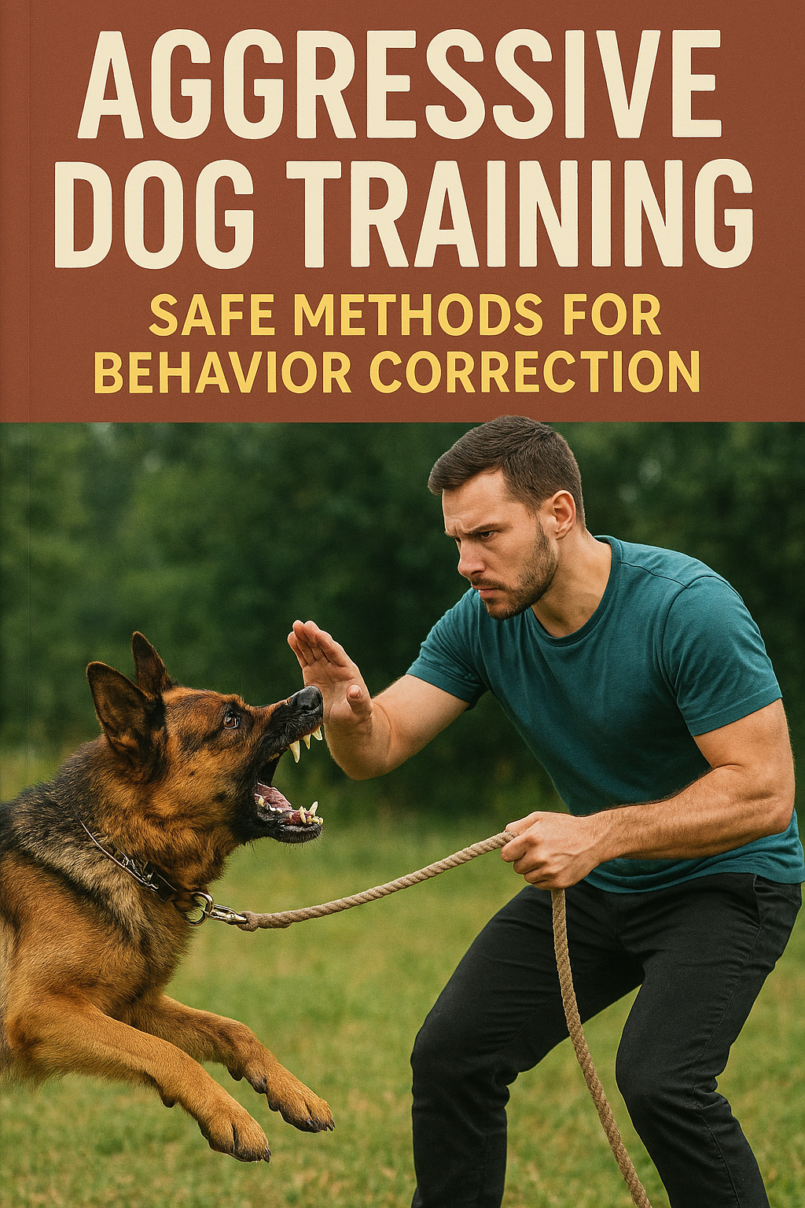
Aggressive Dog Training: Safe Methods for Behavior Correction
Aggression in dogs can be stressful and even alarming, but it’s also one of the most treatable behavioral issues when handled correctly. Many pet owners misunderstand aggression as a sign of a “bad dog,” but in truth, it’s often a symptom of fear, anxiety, or confusion. With the right approach, patience, and safety measures, aggression can be managed and minimized effectively. This article explores safe and proven methods for training aggressive dogs, helping you restore peace and trust between you and your canine companion.
Understanding Why Dogs Become Aggressive
Before addressing aggression, it’s essential to understand what drives it. Dogs usually show aggression as a response to something they perceive as a threat. Common causes include:
– **Fear or anxiety:** Dogs may lash out when they feel cornered or afraid.
– **Territorial behavior:** Guarding toys, food, or spaces can trigger aggression.
– **Pain or illness:** Underlying medical issues often lead to irritability or defensiveness.
– **Protective instincts:** Some dogs react aggressively when they think a loved one is in danger.
– **Frustration or lack of control:** Dogs that cannot release built-up energy or are restrained may redirect that frustration through aggression.
Understanding the root cause helps trainers craft a targeted plan that addresses the underlying emotion—not just the outward behavior.
***
Safety First: Protecting People and Pets
When working with an aggressive dog, safety must come before training progress. Protective measures prevent injuries and keep the dog from escalating their reactions further.
– **Use proper equipment:** A well-fitted basket muzzle can protect others while allowing the dog to breathe, pant, and drink.
– **Secure the environment:** Train in a controlled area, preferably fenced or indoors.
– **Avoid physical punishment:** Hitting, shouting, or “alpha rolls” increase fear and aggression. Instead, rely on calm but firm redirection and consistent structure.
– **Read body language:** Learn to recognize warning signs such as stiff posture, raised hackles, hard staring, or growling. These cues give you time to intervene early.
Always prioritize controlled exposure and patience—forcing a dog into stressful situations too soon can backfire dramatically.
***
Professional Evaluation and Veterinary Support
Before beginning any aggressive dog training program, a veterinary check-up is crucial. Conditions such as thyroid imbalances, chronic pain, or neurological problems can mimic aggression. Once medical causes are ruled out, consulting a **Certified Applied Animal Behaviorist (CAAB)** or a **certified dog trainer specializing in behavior modification** is ideal.
Professionals can help identify whether the aggression is fear-based, territorial, or dominance-related and design a tailored program accordingly. They may also guide you in using behavioral tools like **desensitization and counter-conditioning** safely.
***
Desensitization and Counter-Conditioning
These two cornerstone techniques in behavior modification aim to change how your dog feels about triggers that spark aggression.
– **Desensitization** means gradually exposing the dog to the trigger (such as another dog or visitor) at a very low intensity, one that doesn’t provoke aggression. Over time, the exposure level is increased as the dog remains calm.
– **Counter-conditioning** teaches the dog to associate the trigger with something positive, like a treat, toy, or praise.
For example, if your dog growls when seeing another dog from 20 feet away, start at 40 feet and reward calm reactions with treats. Slowly reduce the distance across sessions until your dog can remain relaxed much closer to other dogs.
Consistency and small, incremental progress are the keys. Rushing the process risks undoing progress and reinforcing fear.
Positive Reinforcement: Reward-Based Learning
Aggressive behaviors often stem from insecurity or confusion, so punishment tends to worsen them. Instead, focus on **positive reinforcement**—rewarding desired behavior rather than punishing the unwanted one.
When your dog chooses calmness over aggression—such as sitting rather than lunging—immediately reward that choice with something valuable to them (high-quality treats, praise, or play). Over time, the dog learns that calm responses yield positive outcomes, while aggression simply doesn’t work.
This approach builds trust and confidence between you and your dog. The dog begins to rely on you for guidance rather than taking control through aggression.
***
Teaching Impulse Control and Focus
Many aggressive dogs struggle with impulse control. They react instinctively rather than thinking through their responses. Training exercises that promote focus can reduce reactivity.
Two effective commands to teach are:
– **“Look at me” or “Watch”:** Use this to redirect your dog’s focus from a trigger back to you.
– **“Leave it”:** Helps your dog learn to disengage from an object, noise, or person that might cause tension.
Start these exercises in calm settings before using them in challenging environments. These cues give your dog an alternative action and help prevent escalation.
***
Managing the Environment
Sometimes the best way to reduce aggression is to manage what the dog encounters. If your dog reacts to strangers or other dogs, modify routes, create boundaries, and provide safe zones. Simple adjustments—like using opaque fencing, scheduling walks at quiet times, or providing structured play—can significantly lower stress levels.
Dogs thrive when they know what to expect. Routine and predictability keep anxiety down, which translates to smoother training sessions and fewer outbursts.
***
Socialization: Careful, Controlled Exposure
While early socialization helps prevent aggression, even adult dogs can benefit from structured exposure. The goal is not to force interaction but to **reintroduce positive, calm associations** with the world around them.
Work at the dog’s pace. Introduce new people or animals at a distance where your dog feels safe. Reward calm behavior and keep experiences short but positive. Enrolling in a **reactive dog class** or **controlled group session** with professional supervision can accelerate progress while ensuring safety.
***
Consistency and Emotional Awareness
Dogs read human emotions remarkably well. If you’re tense, anxious, or frustrated, your dog will likely mirror those feelings. Maintaining a calm, confident demeanor reassures your pet that the situation is under control.
Equally important is **consistency**. Everyone in the household should follow the same rules, cues, and expectations. Mixed messages—like sometimes allowing rough play but other times scolding it—confuse dogs and delay progress.
Keep training sessions short (10–15 minutes) and positive, ending each one on a successful note.
***
When to Seek Professional Help
Some forms of aggression—such as attacks without warning or cases involving serious bites—require professional intervention immediately. Certified behaviorists use tools like controlled exposure setups, remote rewards, and specialized safety protocols that are often beyond what most owners can safely manage alone.
In certain cases, veterinarians may prescribe **behavioral medication** to help reduce anxiety or hyperarousal while training continues. Medication is not a magic fix, but when combined with behavior modification, it can make the dog more receptive to learning.
***
The Path Toward a Trust-Based Relationship
Training an aggressive dog is not just about eliminating bad behavior—it’s about healing a relationship. By addressing root causes, using humane and effective techniques, and maintaining patience, most aggressive dogs can learn new ways to cope and communicate.
Trust is the foundation of every breakthrough. As your dog starts to perceive you as a calm, reliable leader, aggression fades into a distant habit replaced by confidence, respect, and emotional stability. The process can take weeks or even months, but the result is worth the investment—a safer, happier life for both you and your beloved dog.