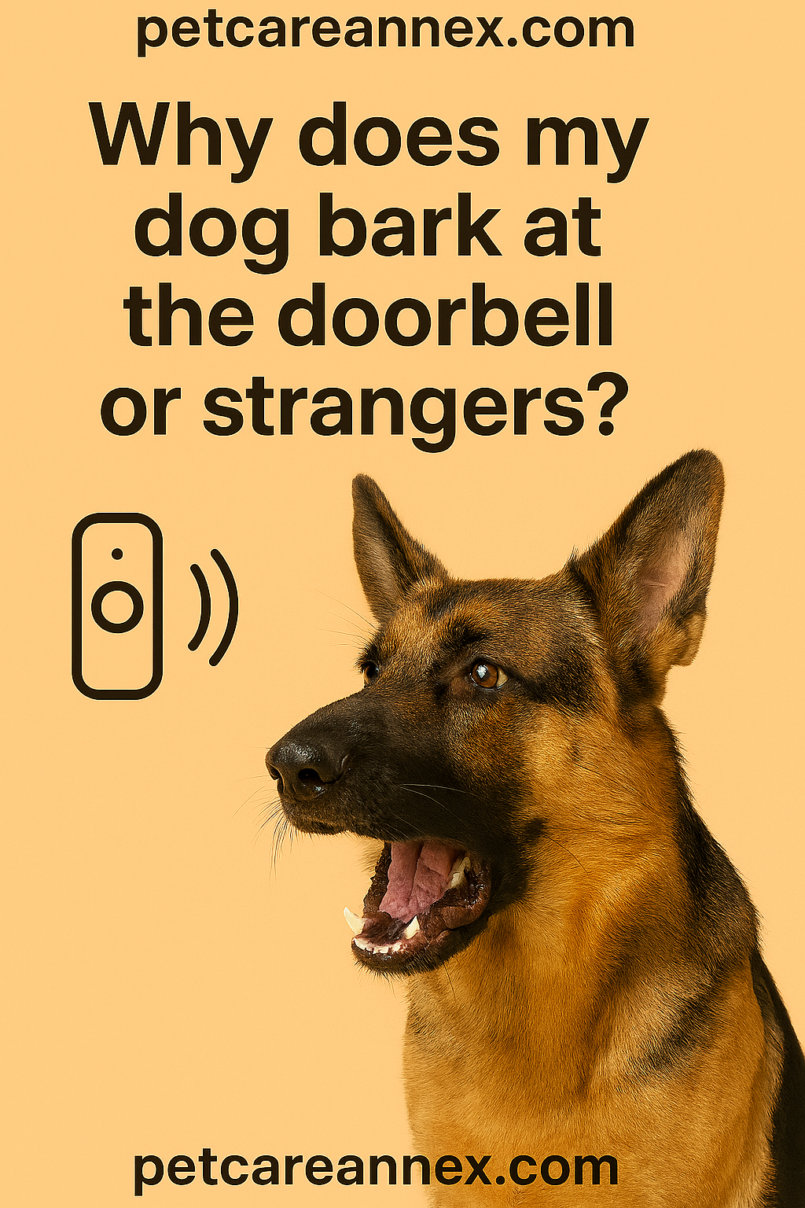
Dogs bark at doorbells and strangers due to instinctual territorial protection, excitement over visitors, or fear of the unknown sound signaling change.
Territorial and Alert Barking
Most doorbell barking stems from a dog’s natural role as guardian— the unexpected ring signals a potential intruder entering their territory, prompting sharp alert barks to warn the family. This protective instinct, inherited from wolf ancestors, activates even for delivery people or friends, as dogs prioritize safety over familiarity.
Strangers trigger similar responses, with dogs positioning themselves between you and the unknown person to defend their pack.
Excitement and Anticipation
Many dogs associate doorbells with fun arrivals like playdates or walks, barking in eager anticipation with wagging tails and bouncing. This celebratory noise escalates if past greetings involved petting or attention during frenzy, reinforcing the pattern.
Over time, even TV doorbells prompt Pavlovian responses as dogs link the sound to activity.
Fear or Startle Response
Sensitive or under-socialized dogs startle at the sudden chime, barking to scare away the “threat” or express anxiety. Signs include tucked tails, wide eyes, or trembling—unlike confident alert barks. Past trauma or noise phobias amplify this, turning harmless rings into panic cues.
Stranger fear shows as stiff posture or growling alongside barking.
Learned Reinforcement from Owners
Unintentional training occurs when owners react—rushing to quiet the dog, yelling “no,” or greeting amid chaos—rewarding noise with attention. Dogs learn barking guarantees interaction, even negative, perpetuating the cycle.
Inconsistent responses across family members confuse dogs further.
Management Before Training
Prevent rehearsal by muting doorbells, using wireless cameras for deliveries, or posting “no knock” signs. Gate or crate during arrivals until calm, avoiding door rushes that fuel excitement.
Exercise beforehand tires dogs, reducing reactivity.
Step-by-Step Training Solutions
Teach “place” or “bed” command: lure to mat with treats, reward stays as helpers simulate rings (recordings first). Gradually add real door practice, praising silence.
Counter-condition fear by playing doorbell sounds softly with high-value rewards, building positive associations.
When to Seek Professional Help
Persistent barking with aggression, trembling, or despite 2-4 weeks of effort signals anxiety needing certified trainers or vets for meds/behavior plans. Pain or illness can underlie noise too.
10 Frequently Asked Questions About Doorbell and Stranger Barking
1. Why the instant frenzy at every ring?
Dogs perceive doorbells as territorial alerts—unknown sounds mean possible threats, triggering protective barks before verifying friend or foe.
2. Does my dog think they’re protecting me?
Yes—loyalty drives many to bark as self-appointed guardians, positioning between you and strangers to defend their pack.
3. How do I know if it’s excitement vs. fear?
Excitement shows loose wagging, play bows, bouncing; fear has stiff body, tucked tail, avoidance. Context and tail set matter most.
4. Can TV doorbells trigger real barking?
Absolutely—dogs generalize the sound to predict visitors, barking preemptively even without actual arrivals.
5. Does yelling “quiet” make it worse?
Often yes—raised voices mimic barking intensity, exciting them more. Calm withdrawal or commands work better.
6. Why bark at familiar guests too?
Instinct doesn’t distinguish; every ring resets the alert cycle. Training overrides this with consistent calm greetings.
7. How to train without guests present?
Use doorbell recordings at low volume, rewarding mat stays. Progress to helpers knocking, ignoring until four paws down.
8. Is this normal puppy behavior?
Common but trainable early—pups learn fast, preventing adult habits. Socialize widely to reduce stranger reactivity.
9. What if barking escalates to lunging?
Management first (leash/gate), then counter-conditioning with pros—fear or frustration underlies aggression risks.
10. Can exercise alone fix it?
Helps reduce excess energy but won’t address root instincts or learned patterns—combine with targeted training for quiet doors.