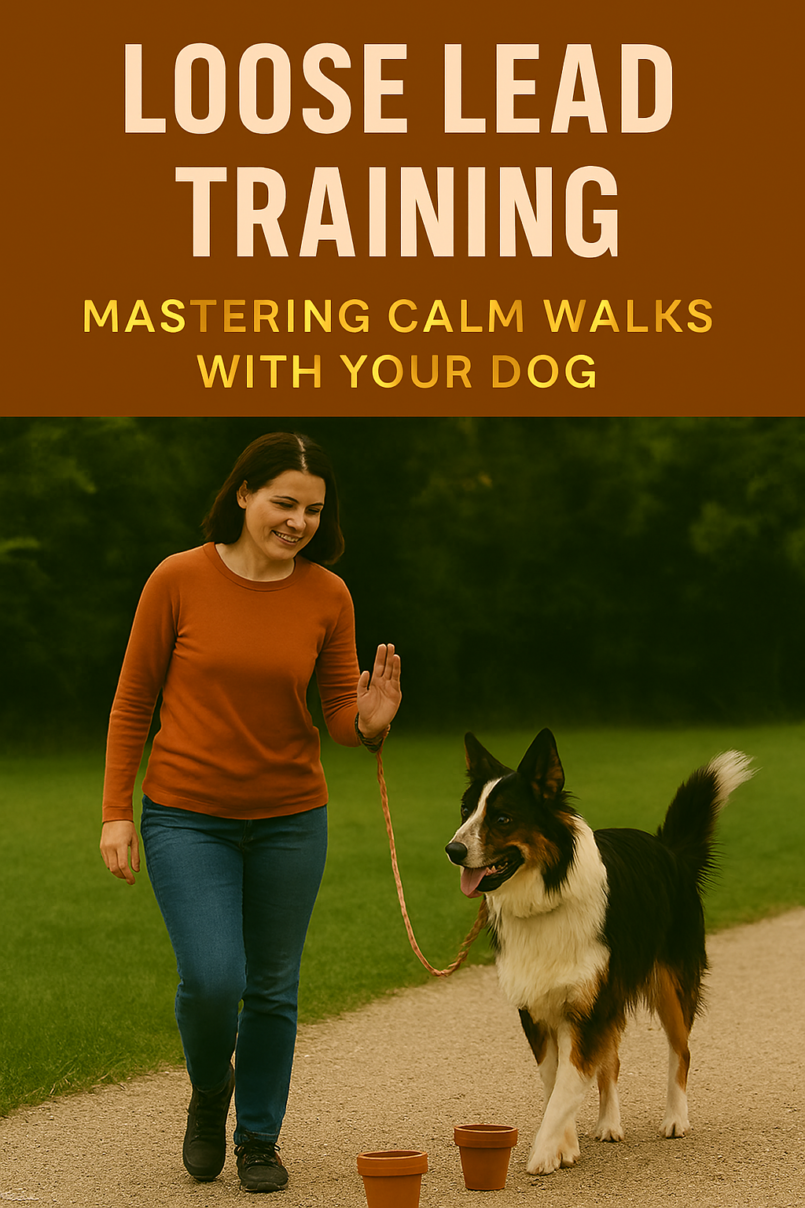
He pulls ahead eagerly, turning every outing into a frustrating tug-of-war that leaves both of you exhausted. Loose lead training transforms those battles into relaxed strolls where he walks calmly by your side with a slack leash, improving safety and enjoyment for daily walks. This positive reinforcement method teaches him that staying near you leads to rewards and freedom to explore, rather than straining against resistance.
Why Loose Lead Walking Matters
Pulling risks injury to his neck and your arms, while fostering reactivity toward distractions like other dogs or squirrels. Calm walks build his focus and impulse control, reducing lunging or bolting. He learns to check in with you naturally, making public outings stress-free. Owners gain confidence handling him in crowds or near traffic, strengthening their leadership role without force.
Equipment for Success
Start with a well-fitted flat collar or front-clip harness that distributes pressure evenly—avoid choke chains or retractables, which encourage pulling. Use a standard 4-6 foot leash for control without constant tension. Carry a treat pouch stocked with high-value rewards like cheese or chicken, plus a clicker or marker word (“yes!”) to pinpoint perfect moments. Test fits by slipping two fingers under gear; comfort prevents resistance.
Step 1: Build Positive Leash Associations
Acclimate he indoors first. Let him drag the leash supervised, pairing it with play and treats to erase negative feelings. Attach it loosely and reward voluntary checks toward you. Practice short “follow me” games: change directions randomly, clicking relaxed positions at your side. Sessions last 3-5 minutes multiple times daily until he seeks your movement happily.
Step 2: The Stop-and-Go Method
Walk together; when tension hits, freeze like a statue—no talking, yanking, or reeling. Wait silently for slack—he’ll turn back to investigate. The instant leash loosens, mark “yes!” and reward generously, then resume. Repeat consistently: pulling pauses progress, looseness means forward motion. Early walks cover minimal distance, but he quickly connects cause and effect.
Step 3: Reward Position, Not Just Slack
Define “good spot”: thigh level or slightly behind, where an imaginary U-shaped leash hangs loose. Hold treats there to lure initially, marking steps in position. Fade lure by pretending to hold treats, rewarding from pouch. Praise lavishly for eye contact amid steps—”good check!” Vary pace: speed up for engagement, slow for control.
Adding Distractions Gradually
Master indoors, then quiet yards before streets. Introduce mild distractions (yard squirrels viewed from windows) rewarding focus returns. Use U-turns: spin 180 degrees away from triggers, rewarding quick follows. Practice “watch me” cue (treat to eyes) for redirections. Aim for 80% success before advancing—return to basics if regression hits.
| Training Stage | Focus | Duration | Success Goal |
|---|---|---|---|
| Foundation | Leash comfort | 1-3 days | Voluntary follows |
| Basic | Stop/go | 1 week | 90% slack |
| Proofing | Distractions | 2-4 weeks | Real walks |
Advanced Techniques for Reliability
**Circle Method:** Tension prompts circling back to you—reward heel position, then forward. Keeps motion fun, preventing standoffs.
**Sniff Breaks:** Allow loose-leash sniffing as rewards, satisfying his nose without forging ahead. Alternate “work” stretches with “free” exploration.
**Long Line Practice:** 15-30 foot leads teach self-correction in open spaces, fading to standard leash seamlessly.
Common Mistakes to Avoid
Yanking reinforces the game—stay still instead. Inconsistent rules (allowing pulls sometimes) confuse him; enforce every time. Over-treating creates dependency—fade to praise and play. Skipping foundations leads to frustration; build slowly. Train rested, hungry he for motivation.
Handling Specific Challenges
**High-Drive Pullers:** Exercise first (fetch burns zoomies), then train. Use highest-value rewards initially.
**Fearful Reactors:** Desensitize triggers at distance, rewarding calm alongside you.
**Distracted Sniffers:** Shorten sessions, jackpot focus returns. “Leave it” cues redirect noses.
**Multi-Dog Homes:** Walk singly first, mastering one before pairs.
Maintenance for Lifelong Calm Walks
Randomly reward perfect stretches years later—surprise treats keep him guessing. Vary routes, speeds, handlers for generalization. Annual refreshers prevent drift. Track progress journal: note breakthroughs like ignoring neighborhood dogs.
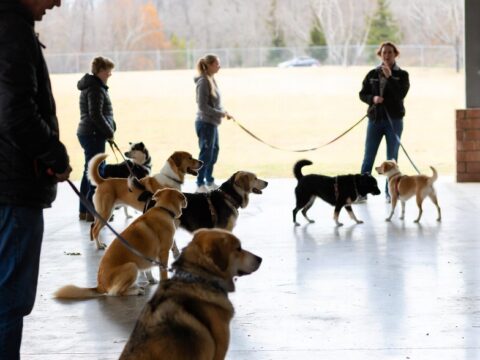
Group classes polish social proofing; professionals help stubborn cases. Tired brains learn best—combine with mental games.
Real Results and Owner Tips
Owners report 2-4 week transformations: from power-walkers to leisurely explorers. “He now heels past joggers without a glance,” shares one retriever parent. Consistency across family pays dividends—no mixed signals.
Celebrate milestones: first block-long loose walk earns playtime. Patience yields partnership—he walks because it works, not from force.
Loose lead mastery unlocks joyful outings—healing divides, forging teamwork for stress-free adventures together.