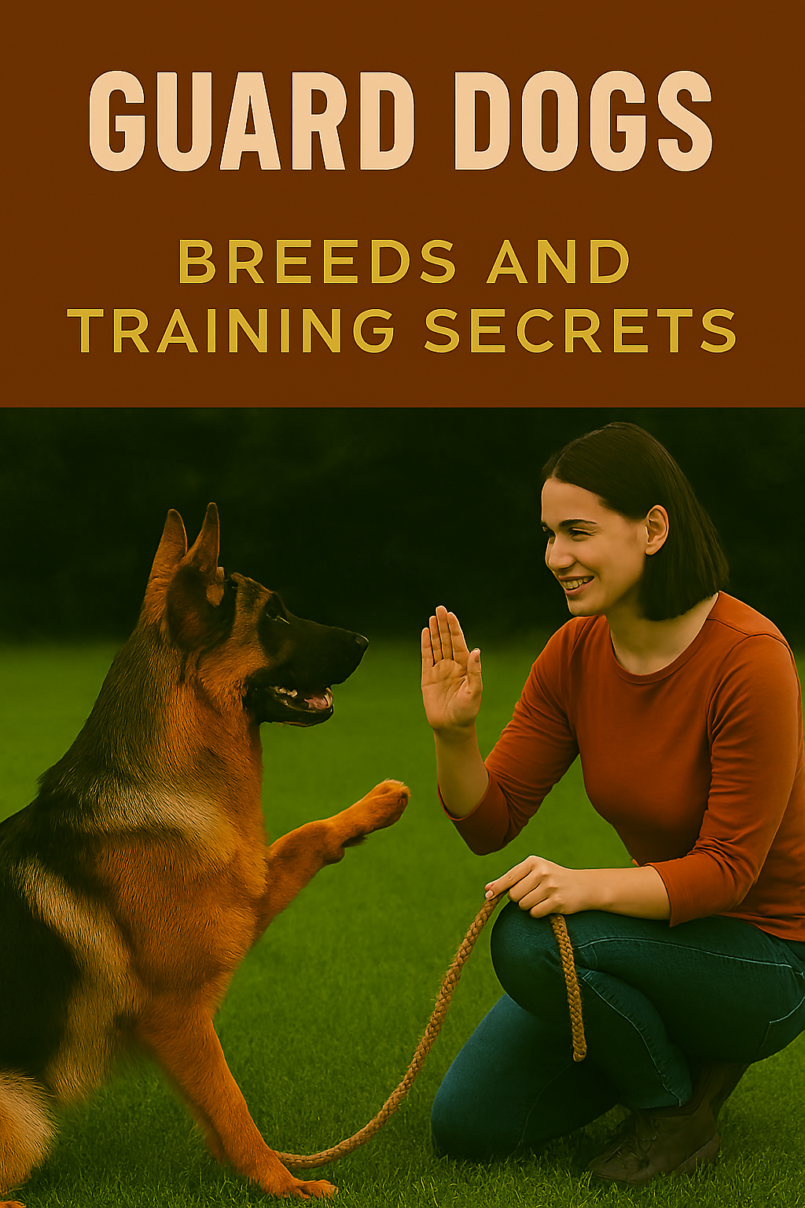
He stands alert at the door, ears perked at unfamiliar sounds—a natural guardian ready to protect with proper guidance. Guard dogs combine innate territorial instincts with disciplined training, offering reliable home protection without unprovoked aggression. Selecting the right breed and mastering specialized techniques transforms protective potential into controlled security, ensuring he safeguards family while remaining a loving companion.
Top Guard Dog Breeds and Their Traits
**German Shepherd:** The gold standard—intelligent, versatile, loyal. Working lines excel in protection; exceptional scent detection and bite work. Requires 2+ hours daily exercise, mental jobs.
**Rottweiler:** Confident, powerful, even-tempered. Natural deterrents through sheer presence; steady family protectors when socialized early. Moderate exercise, firm consistent leadership.
**Doberman Pinscher:** Fearless, alert, fast learners. Sleek athletes with exceptional hearing/vision; “velcro dogs” bond intensely with owners. High exercise needs, advanced obedience essential.
**Bullmastiff:** Silent sentinels—massive size intimidates without barking. Laid-back with family, decisive against intruders. Lower energy than most, extensive early socialization critical.
**Belgian Malinois:** Military/police elite—insanely driven, athletic, handler-focused. Requires experienced owners; job-oriented or develops neuroses. 3+ hours structured work daily.
**Cane Corso:** Ancient Roman war dog heritage—intimidating presence, stable temperament. Exceptional family loyalty; puppy socialization prevents overprotectiveness.
**Rhodesian Ridgeback:** Independent African hunter—quietly watchful, independent thinkers. Excellent family dogs with proper boundaries; moderate exercise.
## Essential Traits of Great Guard Dogs
Effective guardians balance:
– **Discrimination:** Distinguish threats from guests.
– **Confidence:** No fear-based reactivity.
– **Trainability:** Obey under stress.
– **Physical Capability:** Intimidation + functional strength.
– **Off-Switch:** Relax with family.
Avoid nervous/fear-aggressive dogs—true protectors assess calmly.
Foundation Training: Obedience First
Guard prospects master rock-solid basics before protection:
**Reliable Recall:** 100% response regardless of distraction.
**Heel:** Automatic positioning at left side.
**Place:** 1-hour settles ignoring temptations.
**Leave It:** Ignore food, toys, distractions.
**Wait:** Door thresholds, controlled exits.
Positive reinforcement builds compliance under pressure. 6-12 months minimum before specialized work.
Early Socialization: Critical Window
6-16 weeks: expose 300+ positive experiences:
– 100 strangers (uniforms, hats, mobility aids).
– 50 dogs (varied breeds, play styles).
– Novel surfaces/sounds/textures.
– Children, crowds, vehicles.
Socialization prevents false alarms, builds discernment. Under-socialized guardians overreact indiscriminately.
| Breed | Adult Weight | Exercise Needs | Trainability | Protection Style |
|---|---|---|---|---|
| German Shepherd | 65-90 lbs | High | Excellent | Active patrol |
| Rottweiler | 80-135 lbs | Moderate | Good | Presence deterrent |
| Doberman | 60-100 lbs | Very High | Excellent | Alert patrol |
| Bullmastiff | 100-130 lbs | Low-Moderate | Fair | Silent sentinel |
Protection Training Progression
**Phase 1: Alert Training (4-6 months)**
– Bark on cue (“speak”) → quiet (“enough”).
– Perimeter patrol: alert to unusual activity.
– Handler protection: position between threat/family.
**Phase 2: Discrimination (6-12 months)**
– Friend vs. stranger role-play—only bark at “intruders.”
– Call-off: abandon pursuit on command.
– Controlled aggression: bite on handler cue only.
**Phase 3: Advanced Control (12+ months)**
– Out (release bite) under maximum arousal.
– Escort: guard without engaging.
– Transport: protection during vehicle movement.
Professional trainers mandatory—bite sleeves, decoys, safety protocols required.
Exercise and Mental Stimulation
Guard dogs need jobs:
– **2+ hours daily:** Walks, runs, weight pulls.
– **Mental Work:** Schutzhund, IPO trials, scent detection.
– **Toys:** Kongs, puzzle feeders prevent boredom aggression.
– **Social:** Controlled dog interactions maintain balance.
Unstimulated guardians develop neuroses—compulsive barking, escape attempts.
Legal Considerations and Liability
**Local Laws:** Check breed-specific legislation (BSL), bite statutes.
**Insurance:** Specialized policies ($300-800/year).
**Documentation:** Training logs, temperament tests, vet records.
**Signage:** “Beware of Dog” notifies legally.
Bite history creates liability—proper training prevents incidents.
Family Integration Training
Guardians must love family:
– Children: Gentle mouth, lie-down tolerance.
– Strangers: Neutral until commanded.
– Other pets: Tolerate without predation.
– Daily routines: Crate training, personal space.
Family obedience classes alongside protection work.
Common Mistakes to Avoid
– **Under-socialization:** Creates fear-biters.
– **Inconsistent rules:** Confuses discrimination.
– **Teasing/roughhousing:** Encourages over-arousal.
– **Insufficient exercise:** Creates frustration aggression.
– **DIY bite training:** Dangerous without equipment.
Health and Nutrition for Working Guardians
**Joint Support:** Glucosamine, fish oil, controlled growth puppies.
**Protein:** 25-30% working diets maintain muscle.
**Weight Management:** Lean condition prevents injury.
**Annual:** Full ortho exams, bite work radiographs.
Selecting Quality Breeding/Training
**Breeder Vetting:**
– Working titles (IPO1+, SchH3).
– Health clearances (hips, elbows, heart).
– Temperament tested parents.
– Puppy neurological assessment (8 weeks).
**Trainer Credentials:**
– Protection sport experience.
– Police/military background.
– Insurance, facility tours.
– Client references, trial periods.
Expect $15,000-50,000 fully trained adults; puppies $2,500-8,000 from titled lines.
Lifelong Maintenance
Annual refreshers prevent skill fade. New family members retrigger socialization. Retirement planning (8-10 years) ensures graceful exit.
Guard dogs reward commitment with unparalleled devotion—breeds plus expert training create discerning protectors who love fiercely, defend decisively, live loyally.