Leash reactivity, often called leash aggression, is one of the most common behavioral challenges dog owners face. A dog that barks, lunges, growls, or stiffens when seeing other dogs, people, bikes, or vehicles on leash can turn enjoyable walks into stressful ordeals. Reactive behavior usually stems from fear, frustration, lack of socialization, or past negative experiences rather than true aggression. The good news is that with structured, positive training, most reactive dogs can learn to remain calm and focused even in triggering situations. Effective management combines desensitization, counter-conditioning, impulse control, and realistic expectations to rebuild confidence and safety on leash.
Understanding Leash Reactivity
Leash reactivity differs from off-leash aggression. On leash, dogs feel trapped—they cannot flee or greet naturally, so the “fight” response intensifies. Common triggers include other dogs (most frequent), strangers, joggers, strollers, or cars. The behavior often escalates because owners tighten the leash, yell “no,” or pull the dog away, unintentionally reinforcing the reaction through tension and conflict.
Reactivity exists on a spectrum: mild barking from excitement, moderate lunging with growling, or severe attempts to bite. It can appear suddenly after a bad encounter or develop gradually from inadequate early socialization. Breeds with high prey drive, guarding instincts, or poor impulse control (terriers, herding breeds, some bully types) may show reactivity more readily, but any dog can become reactive under stress.
Recognizing early warning signs—stiffening, staring, raised hackles, lip licking, yawning—allows intervention before the outburst. The goal of training is not to eliminate all emotion but to teach the dog a new, calmer response to triggers.
The Science Behind Effective Management
Modern reactive dog training relies on two core behavioral principles: **desensitization** (gradual exposure below the reaction threshold) and **counter-conditioning** (pairing the trigger with something the dog loves to change the emotional response). Classical conditioning replaces “other dog = threat” with “other dog = good things happen.”
Positive reinforcement drives the process. High-value rewards (chicken, cheese, hot dogs, favorite toys) delivered at the exact moment the dog notices the trigger but before reacting help create positive associations. Timing is critical—reward too late and you reinforce barking; too early and you miss the learning window.
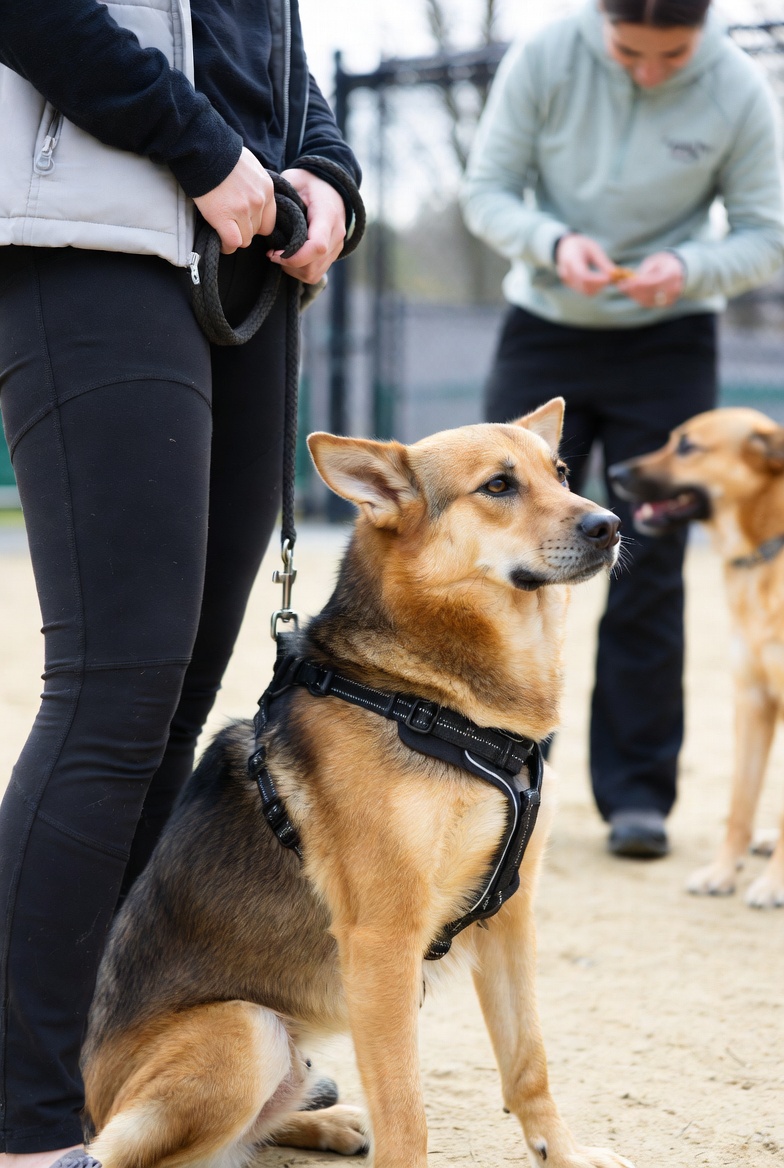
Impulse-control exercises build the dog’s ability to choose calm behavior over reaction. Management tools—distance, barriers, head halters, front-clip harnesses—prevent rehearsal of unwanted behavior while training progresses.
Step-by-Step Training Strategies
Start with a solid foundation in low-distraction environments.
1. Teach and heavily reinforce focus cues (“look at me,” name response) using treats to build attention.
2. Practice “engage-disengage” games: reward the dog for looking at a trigger then looking back at you voluntarily.
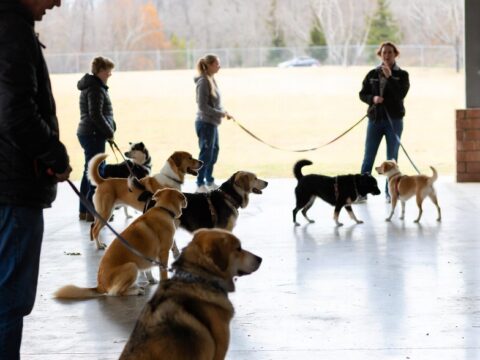
3. Use controlled setups: have a helper with a neutral dog stand far away (often 100+ feet initially). Reward calm observation. Gradually decrease distance over weeks or months as the dog stays under threshold.
4. Counter-condition during real walks: the instant your dog notices a trigger, feed a stream of treats while creating distance. Stop feeding when the trigger disappears. Over time, the sight of another dog predicts treats instead of stress.
5. Build duration and proximity slowly. Celebrate small wins—remaining quiet at 50 feet is progress.
Parallel walking (two dogs walking the same direction at a safe distance) often reduces reactivity faster than head-on approaches.
Essential Tools and Management Techniques
Management prevents rehearsal while training takes effect.
– **Front-clip harness or head halter** reduces pulling power and redirects the dog’s head toward you.
– **Long line** allows practice in open spaces with safety.
– **High-value treat pouch** keeps rewards instantly accessible.
– **Visual barriers** (parked cars, fences) during walks buy space.
– **Avoid punishment**—yanking, yelling, or shock collars worsen fear and damage trust.
Many trainers recommend BAT (Behavior Adjustment Training) or Leslie McDevitt’s “Look at That” protocol for structured progress.
Working with Professional Help
While many owners make excellent progress solo using books like “The Cautious Canine” or online courses (Grisha Stewart’s BAT 2.0, Fenzi Dog Sports Academy reactivity classes), professional guidance accelerates results and prevents mistakes.
Look for trainers certified in force-free methods (CPDT-KA, IAABC, KPA-CTP) who specialize in reactivity. Group “reactive dog” classes offer controlled exposure with distance protocols. Private sessions allow customized plans. Virtual consults help owners set up training scenarios at home.
Avoid any trainer promising quick fixes through dominance or punishment—those approaches frequently worsen reactivity.
Realistic Expectations and Long-Term Success
Progress is rarely linear. Some days your dog handles triggers beautifully; others a bad setup causes regression. Celebrate incremental improvements: barking less intensely, recovering faster, noticing triggers from farther away.
Most dogs never become bombproof around every dog on leash, but many achieve reliable calm at manageable distances with consistent practice. Maintenance involves ongoing management—avoiding unnecessary close encounters—and continuing positive pairings.
Patience, consistency, and empathy are key. Reactive dogs are not “bad”; they’re struggling to cope. Training reframes their world from threatening to predictable and rewarding.
Managing leash reactivity effectively transforms stressful walks into opportunities for connection and confidence. With structured desensitization, counter-conditioning, smart management, and realistic goals, reactive dogs and their owners can enjoy calmer, safer outings and a stronger bond built on trust.