Puppy whining in the crate at night is one of the most common early challenges new dog owners face, especially in the first weeks at home. The goal is to teach your puppy that the crate is a safe, comfortable den, not a place of isolation or punishment. With the right combination of setup, routine, and consistent responses, most puppies learn to settle quietly and sleep through the night. This guide explains why puppies cry, how to prevent problems before bedtime, and what to do in the moment so everyone can finally get some peaceful rest.
Why Puppies Whine in the Crate
Understanding the reasons behind whining helps you respond calmly instead of getting frustrated. Many puppies cry because they’ve just been separated from their litter and feel lonely or unsure in a new environment. Others need to go to the bathroom and don’t yet understand how to hold it through the night. Some whine because they’re full of energy and not tired enough, or because the crate feels unfamiliar and uncomfortable. In a few cases, persistent, panicked screaming can signal that the puppy is truly overwhelmed, and training needs to proceed more slowly.
Set Up the Crate for Comfort and Security
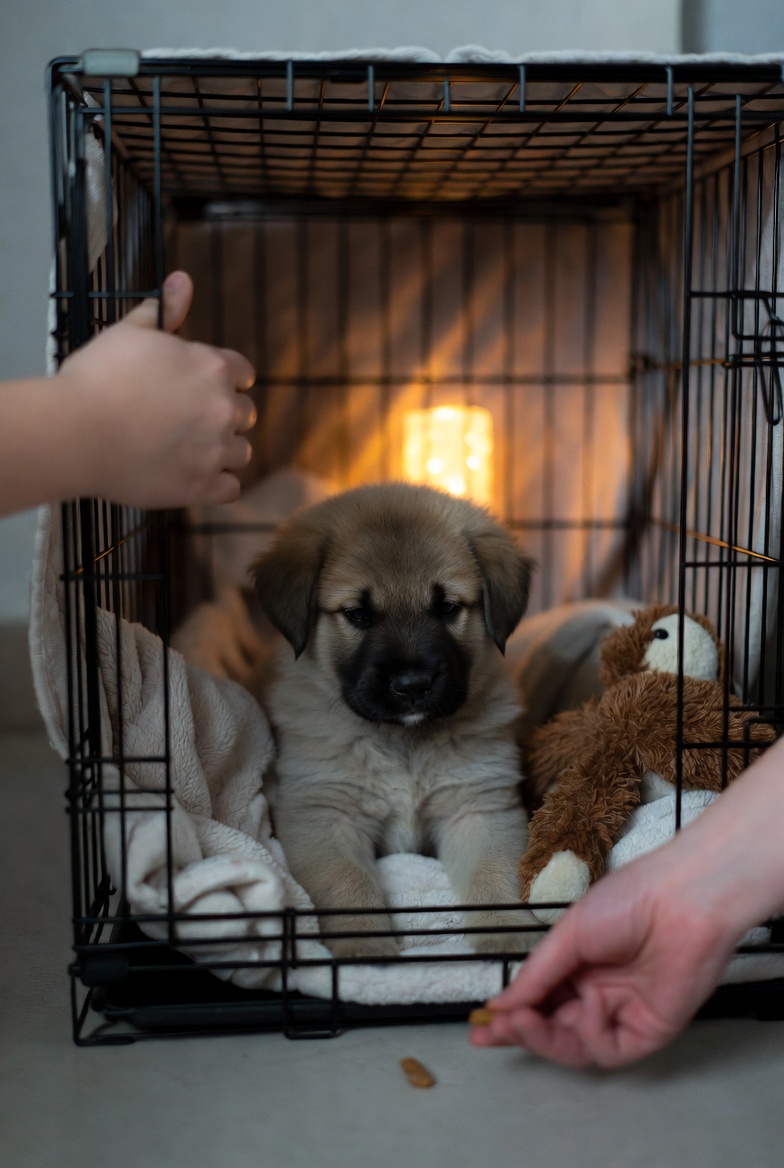
A cozy, den‑like crate makes it easier for a puppy to relax. Choose a crate that’s just big enough for your puppy to stand up, turn around, and lie down comfortably, using a divider if the full crate is too large. Add soft bedding or a crate mat if your puppy doesn’t chew or soil it, and include a safe chew or stuffed toy to occupy them as they settle. Covering part of the crate with a light blanket or crate cover can reduce visual stimulation and create a more secure, cave‑like feel. Keep the crate in your bedroom or close by at night so your puppy can hear and smell you, which often reduces anxiety.
Build Positive Associations With the Crate
Crate time should predict good things, not punishment or isolation. Feed some or all of your puppy’s meals in the crate, with the door open at first, so they learn to walk in voluntarily for food. Toss small treats inside throughout the day and let your puppy discover them, turning the crate into a place where surprises appear. Practice short daytime sessions where your puppy goes in, gets a treat, and comes right back out, slowly increasing the time the door remains closed. The more your puppy chooses to enter the crate on their own, the less likely they are to protest when you close the door at night.
Create a Pre‑Bedtime Routine
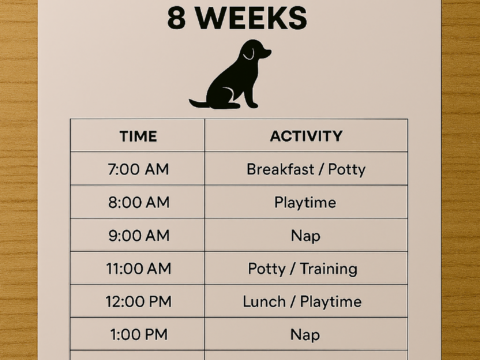
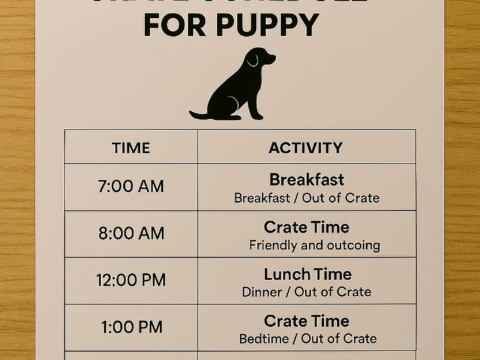
A consistent routine before bedtime sets your puppy up for success. In the evening, provide a substantial play session that includes physical activity and some training or puzzle toys to burn mental energy. About an hour before bed, start to wind things down with calmer activities and limit water intake if your veterinarian has no objections so the puppy is less likely to need multiple overnight potty trips. Take your puppy out for a final bathroom break right before crating, and reward them for going, so their bladder is as empty as possible. A predictable routine helps your puppy understand that crate time means sleep, not more play or attention.
Handle Whining Without Reinforcing It
The way you respond to whining can either teach your puppy to settle or unintentionally reward noisy behavior. If you know your puppy’s needs are met—recent potty break, no signs of distress—you can wait a short period to see if they settle on their own, as many puppies stop after a few minutes. If the whining escalates or continues for longer, take a calm, business‑like approach: briefly step in, take them out for a quick potty break with minimal interaction, then return them to the crate. Avoid long cuddling sessions, play, or feeding after whining, because that teaches your puppy that crying is a reliable way to get attention and fun.
Nighttime Potty Break Strategy
Young puppies genuinely cannot hold their bladder all night, so planned potty breaks can reduce frantic whining. At bedtime, set an alarm for a time you expect your puppy will need to go out, based on their age and daytime pattern, so you wake them before they wake you. When the alarm goes off, quietly take the puppy outside on leash, let them eliminate, praise softly, and return straight to the crate with no extra play. As your puppy matures and starts waking up dry, gradually push the alarm later, extending the time between breaks. This proactive approach teaches your puppy that nighttime is for quick bathroom trips and sleep, not middle‑of‑the‑night parties.
Comfort Tools and Calming Aids
A few simple comforts can make the crate feel safer for a young puppy. Many owners find that placing the crate beside the bed and occasionally offering a hand or fingers through the bars helps the puppy settle, especially in the first few nights. A safe chew, like a stuffed, frozen food toy designed for puppies, can give them something soothing to lick and gnaw while they relax. Some people use soft background noise, such as a fan or quiet music, to mask outside sounds that might trigger whining. Always supervise the types of bedding and toys you provide and remove anything your puppy might destroy or swallow.
Daytime Training to Support Nighttime Success
Crate training during the day makes nighttime much easier. Practice very short sessions when your puppy is not overtired or overexcited: ask them to go into the crate, reward, close the door for a few seconds, then open it before they start whining. Gradually increase the time with the door closed and add short moments where you step out of sight, always returning before they panic. This teaches your puppy that being crated and briefly alone is normal and that you always come back. If your puppy starts to scream or panic, you’ve moved too fast; shorten the sessions and build up more slowly to protect their confidence.
Common Mistakes to Avoid
A few well‑meaning habits can unintentionally prolong crate whining. Putting an energetic puppy in the crate with no prior exercise makes it harder for them to settle, so they vocalize out of sheer restlessness. Letting the puppy out every time they cry teaches them that crying opens the door, which often intensifies the behavior over time. Moving too quickly from no crate to long, isolated crating can overwhelm a sensitive puppy and create negative associations. Finally, losing your temper, banging on the crate, or yelling may temporarily silence the whining but increases fear and confusion, making long‑term training harder.
When to Seek Extra Help
Most puppies improve steadily with a good routine and consistent handling, but some struggle more than others. If your puppy screams for long periods, shows signs of panic, or regresses despite patient training, consider consulting a veterinarian or qualified trainer to rule out medical issues or separation‑related anxiety. Persistent diarrhea, frequent accidents despite careful scheduling, or signs of pain warrant a vet visit before assuming the problem is purely behavioral. With tailored guidance and some adjustments, even sensitive puppies can learn to feel secure in their crate. Over time, your efforts will pay off in peaceful nights and a puppy who sees the crate as a safe, comfortable place to rest.