Many dog owners feel confused or worried when they see their dog nibbling on grass during a walk or in the backyard. This behavior, known as pica when animals eat non-food items, is actually very common in otherwise healthy dogs. Some dogs eat grass occasionally, while others seem to graze like little cows. Understanding the possible reasons behind grass eating can help you decide whether it is harmless or a sign that your dog needs a veterinary checkup.
Is Eating Grass Normal for Dogs?
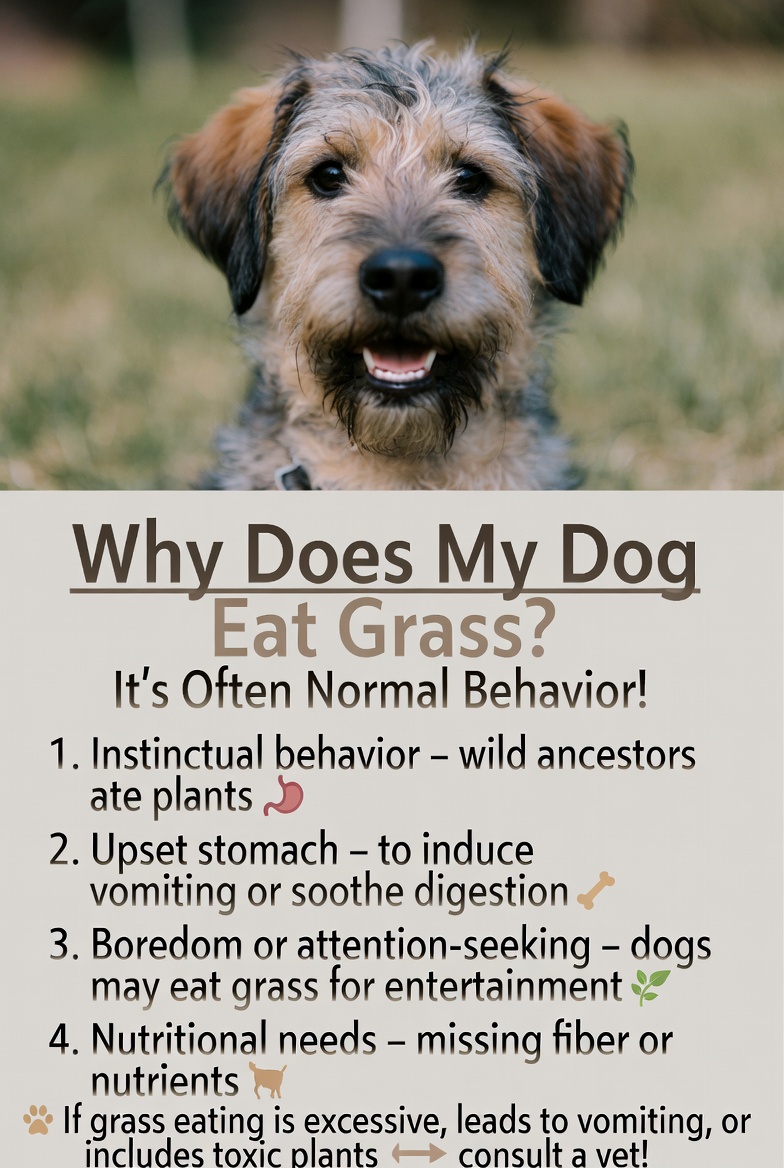
For most dogs, eating grass is considered normal canine behavior and is not automatically a cause for alarm. Dogs are naturally curious and explore the world with their mouths, so tasting grass can simply be part of that exploration. In the wild, canines often consume the stomach contents of herbivorous prey, which may include plant material, so grass eating may echo this ancestral habit. As long as your dog is otherwise healthy, playful, and eating regular meals, occasional grass snacking is usually not a problem.
Do Dogs Eat Grass to Make Themselves Vomit?
A popular belief is that dogs eat grass when they have an upset stomach and want to make themselves vomit. Sometimes, a dog will indeed eat grass quickly, gag, and bring up foam, grass, or food shortly afterward. However, not all grass-eating dogs vomit, and many seem perfectly content before and after grazing. This suggests that while an upset stomach may be one reason some dogs turn to grass, it is not the only explanation and may not even be the most common one.
Could It Be Boredom or Attention-Seeking?
Behavioral reasons often play a role in grass eating. Dogs that are bored, under-stimulated, or not getting enough exercise may start nibbling at grass simply because it is something to do. If you react strongly every time your dog eats grass, they may also learn that this behavior gets your attention, even if that attention is negative. Providing mental stimulation, training sessions, and regular physical activity can reduce grass eating that stems from boredom or a desire for interaction.
Is Grass Eating Related to Diet or Nutrients?
Some people worry that a grass-eating dog must be missing important nutrients in their regular food. While there is limited scientific proof that dogs use grass to correct a specific deficiency, diet can still influence this habit. Dogs on low-fiber diets may find the texture of grass appealing because it adds roughage to their gut. Offering a high-quality, complete diet, and sometimes discussing a fiber adjustment with your veterinarian, can help ensure your dog’s nutritional needs are met.
Health Issues That Might Be Involved
Although many grass eaters are healthy, persistent or frantic grass eating can sometimes signal an underlying problem. Conditions such as gastritis, intestinal parasites, inflammatory bowel disease, or chronic nausea may cause a dog to seek out grass more often. If your dog suddenly starts eating large amounts of grass, seems uncomfortable, or has other symptoms like vomiting, diarrhea, weight loss, or decreased appetite, a veterinary examination is important. Identifying and treating any medical issue early can prevent more serious complications.
Is It Safe for Dogs to Eat Grass?
Grass itself is usually not harmful in small amounts, but the environment where your dog grazes matters. Lawns treated with pesticides, herbicides, or chemical fertilizers can pose a risk if your dog ingests residues along with the grass. Grass near roads or public areas may be contaminated with waste or pollutants. To keep your dog safe, try to limit grass eating to areas you know are free from chemicals and toxins, and wash paws and fur if you suspect exposure to lawn treatments.
Helping Your Dog Eat Grass More Safely
If your dog loves to graze and your vet has confirmed they are healthy, you can focus on making the habit safer. Keep your own yard free from harmful chemicals if your dog tends to eat grass there. Mow regularly so your dog is less likely to swallow long blades that could cause gagging or irritation. Supervise your dog on walks and gently redirect them from unknown or heavily treated grassy spots to safer areas or other activities like sniffing games or training cues.
When to See the Vet About Grass Eating
You should schedule a veterinary visit if grass eating is new, suddenly increases, or comes with other concerning signs. Watch for repeated vomiting, diarrhea, blood in stool, severe drooling, lethargy, or refusal to eat or drink. These symptoms can indicate gastrointestinal disease, toxin exposure, or other health issues that need prompt attention. Even if the problem turns out to be mild, getting professional guidance can reassure you and ensure your dog remains comfortable and healthy.
10 Frequently Asked Questions About Dogs Eating Grass
1. Is it normal for my dog to eat grass every day?
Many dogs nibble grass daily and remain perfectly healthy, so daily grazing can still be normal. The key is to watch your dog’s overall behavior, appetite, and energy level rather than focusing only on the grass. If your dog is bright, eating well, and having normal stools, daily grass snacking is usually not a reason to panic. Still, mention it at routine checkups so your veterinarian can consider it in the context of your dog’s general health.
2. Why does my dog eat grass and then vomit?
Some dogs eat grass quickly and swallow large pieces, which can irritate the stomach lining and trigger vomiting. In other cases, they may already feel nauseous and instinctively turn to grass, with vomiting happening shortly afterward. Occasional vomiting after eating grass is not unusual, but frequent or severe vomiting should never be ignored. If your dog vomits repeatedly, seems weak, or cannot keep food or water down, contact your veterinarian promptly.
3. Can worms or parasites make my dog eat grass?
Intestinal parasites can cause digestive upset, discomfort, and changes in appetite or behavior, which might include grass eating. While grass eating alone does not prove your dog has worms, it can be one of several subtle signs that something is off. Regular fecal exams and parasite prevention are important parts of keeping your dog’s digestive system healthy. If you notice weight loss, a dull coat, or soft stools alongside grass eating, ask your vet about parasite testing.
4. Is my dog lacking fiber if they eat grass?
Some dogs may seek out grass because chewing fiber feels satisfying or helps stimulate their gut. If your dog’s diet is very low in fiber, they may be more likely to look for roughage in the yard. You can talk with your veterinarian about whether adding more fiber through a different food, canned pumpkin, or other safe sources would be helpful. Any changes to diet should be gradual to avoid upsetting your dog’s stomach.
5. How can I stop my dog from eating grass?
To reduce grass eating, focus on meeting your dog’s physical and mental needs first. Provide daily walks, play sessions, and enrichment such as puzzle toys or scent games so your dog is less bored. On walks, you can use a short leash, practice cues like “leave it,” and reward your dog for choosing to walk past grass instead of eating it. Consistency and patience will help your dog learn that there are more rewarding activities than grazing.
6. Is eating grass dangerous if my lawn is treated?
Grass treated with certain fertilizers, weed killers, or pesticides can be dangerous if your dog licks or ingests it. Some chemicals can irritate the digestive tract or, in higher doses, cause more serious poisoning. Always follow product labels regarding pet safety and keep dogs off treated areas for the recommended time. When in doubt, choose pet-safe lawn care options or avoid using chemical treatments altogether in spaces where your dog plays and grazes.
7. Does my dog eat grass because they are hungry?
A dog that is not getting enough calories, or is fed only once a day, might be more inclined to snack on anything available, including grass. However, most well-fed dogs that eat grass are not truly hungry; they may simply enjoy the habit. Make sure your dog is on an appropriate feeding schedule and receiving the right amount of food for their age, size, and activity level. If you are unsure, your veterinarian can help calculate suitable portions.
8. Why does my dog choose certain patches of grass?
Dogs have powerful senses of smell and taste, so they may prefer specific grass patches that smell fresher, sweeter, or more interesting. Moist areas, new growth, or spots where other animals have been can all draw extra attention. This selective grazing does not necessarily indicate a problem; it often reflects your dog’s preferences. Still, it is wise to steer them away from areas that might be contaminated by chemicals or other animals’ waste.
9. Should I switch foods if my dog eats grass a lot?
Before changing foods, evaluate your dog’s overall health and talk with your veterinarian. If your dog’s current diet is high quality and complete, grass eating alone may not warrant a switch. However, if there are other signs like soft stools, gas, or skin problems, a dietary change might help. Your vet can suggest appropriate formulas or prescription diets if they suspect a food-related cause for your dog’s grass habit.
10. When is grass eating an emergency?
Grass eating becomes an emergency if it is followed by severe or repeated vomiting, collapse, extreme lethargy, or signs of pain such as whining or a tight belly. It is also urgent if you know or suspect your dog has eaten grass treated with toxic chemicals or contaminated with harmful substances. In those cases, seek immediate veterinary care or emergency help rather than waiting to see if your dog improves. Acting quickly can make a critical difference in your dog’s outcome.