A dog’s dry nose is common and often normal, but sometimes it can signal a health issue that needs a vet visit. Below is a roughly 1000‑word blog article with clear H2 and P tags plus 10 FAQs and answers.
Why Is My Dog’s Nose Dry?
Many pet parents worry the moment they notice their dog’s nose feels dry instead of cool and moist. While a wet nose is often associated with a healthy dog, a dry nose is not always a sign that something is wrong. In many cases, it simply reflects normal changes throughout the day, like sleep, exercise, or the environment. However, there are times when a dry nose can point to dehydration, allergies, sunburn, or more serious illness, so it is important to know what to look for and when to contact your veterinarian.
Normal Reasons Your Dog’s Nose Is Dry
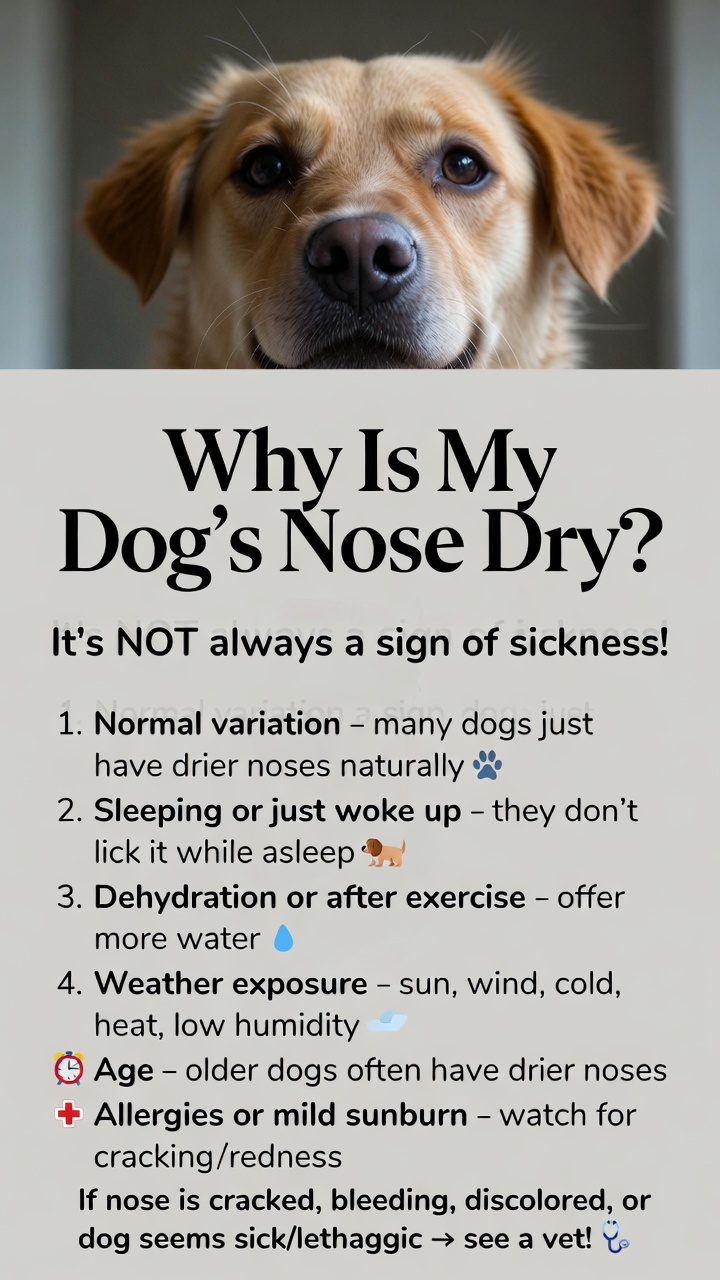
Your dog’s nose can naturally switch between wet and dry several times a day. After a nap, many dogs wake up with a warm, dry nose because they have not been licking it while they sleep. A period of hard play or exercise can also leave the nose feeling drier than usual as your dog pants and loses moisture. Warm rooms, heaters, fireplaces, or dry climate air can temporarily dry out the nose surface as well. These kinds of changes usually resolve on their own once your dog drinks water, licks their nose, or moves away from the heat source.
When a Dry Nose Might Be a Problem
A dry nose becomes more concerning when it is persistent or comes with other symptoms. If the nose looks cracked, crusty, or bleeding, or if there is thick discharge, that can indicate infection, autoimmune disease, or other skin disorders that need professional care. You should also pay attention if your dog is lethargic, vomiting, has diarrhea, is not eating, or seems generally unwell at the same time their nose is very dry. In these situations, the dry nose may be one of several signs of illness rather than a harmless change.
Common Medical Causes of a Dry Nose
Several health issues can lead to a dry dog nose. Dehydration is very common, especially after heavy exercise, hot weather, or if your dog is not drinking enough water. Allergies to food, pollen, cleaning products, or fragrances can irritate the skin on the nose and make it dry or flaky. Sunburn is another frequent cause, particularly in light-colored dogs or those with pink noses that have less pigment to protect from ultraviolet rays. In more serious cases, autoimmune conditions such as lupus or pemphigus can damage the skin of the nose, causing sores, scabs, and changes in texture or color.
What You Can Do at Home
If your dog otherwise seems healthy and only has a mildly dry nose, you can usually start with simple home care. Make sure fresh, clean water is available at all times and encourage your dog to drink, especially after play or on warm days. You can use a damp, soft cloth to gently wipe the nose if there is a little crust or dirt, and avoid harsh soaps or wipes that contain alcohol or strong fragrance. A pet-safe nose balm or moisturizer, recommended by your vet, can help protect the nose from drying out further and soothe chapped areas.
When to Call the Vet
It is time to call your veterinarian if your dog’s dry nose lasts more than a day or two, becomes cracked or bleeding, or is accompanied by worrying signs like fever, loss of appetite, coughing, sneezing, or behavior changes. Sudden swelling of the nose, a change in its shape, or a foul smell can also signal infection or other serious problems. Your vet may perform an exam, run bloodwork, or even recommend a skin biopsy to determine the underlying cause. Early diagnosis often makes treatment easier and improves your dog’s comfort and long-term health.
How Vets Diagnose Dry Nose Problems
During a veterinary visit, the doctor will start by taking a detailed history, asking when you first noticed the dry nose and whether anything in your dog’s routine or environment has changed. They will then examine the nose closely, checking for cracks, ulcers, pigment changes, or thick crusts. Depending on what they see, they may recommend additional tests such as skin scrapings, allergy testing, blood tests, or biopsies to rule out infections, autoimmune disease, or other systemic issues. This step-by-step approach helps pinpoint whether your dog’s dry nose is a simple irritation or part of a larger medical condition that needs targeted treatment.
Tips to Prevent a Dry Nose
While you cannot control every factor, there are easy ways to reduce the chances of your dog’s nose getting excessively dry. Provide constant access to water and encourage frequent small drinks rather than letting your dog become very thirsty. Try to avoid long periods in very hot or very cold weather and offer shade or shelter when outdoors. Keep your dog away from strong chemical cleaners and fragrances, and use pet-safe products whenever possible. For dogs who spend time in the sun, ask your vet about dog-safe sunscreen or protective balms to shield sensitive noses from UV damage.
10 Frequently Asked Questions About Dry Dog Noses
1. Is a dry nose always a sign my dog is sick?
No, a dry nose is not always a sign of illness. Many healthy dogs have dry noses at different times of the day, especially after sleeping, exercising, or spending time near a heat source. As long as your dog is bright, eating normally, and acting like themselves, an occasional dry nose is usually nothing to worry about. Watch for other symptoms before assuming your dog is sick.
2. What are the most common harmless causes of a dry nose?
Common harmless causes include normal daily fluctuations in moisture, sleeping without licking the nose, brief dehydration after vigorous play, and exposure to warm or dry indoor air. These situations usually correct themselves once your dog wakes up, has a drink, or moves to a more comfortable spot. You might notice the nose feels dry for a short time and then returns to its usual moist texture later.
3. How can I tell if dehydration is causing my dog’s dry nose?
If dehydration is the problem, your dog may show other signs such as sticky gums, sunken-looking eyes, lethargy, or reduced skin elasticity when you gently lift the skin on the neck. In mild cases, simply offering cool, fresh water and allowing your dog to rest can help restore normal hydration and nose moisture. If your dog refuses water, continues to act weak, or has vomiting or diarrhea, contact your vet promptly because dehydration can quickly become dangerous.
4. Can allergies make my dog’s nose dry and cracked?
Yes, allergies are a frequent reason for a dry, irritated nose in dogs. Allergens like pollen, dust, certain foods, or strong cleaning products can inflame the skin around the nostrils and cause dryness, redness, or flaking. If you notice your dog also itching, licking paws, or having watery eyes along with a dry nose, allergies may be involved. Your veterinarian can help identify triggers and recommend treatments such as diet changes, medications, or topical products.
5. Should I use human lotion or petroleum jelly on my dog’s nose?
It is best not to use human lotions or products that are not specifically labeled as safe for pets, because many contain fragrances, zinc, or other ingredients that dogs should not lick. Dogs constantly lick their noses, so anything you apply will likely be swallowed. Instead, ask your vet about pet-formulated nose balms or moisturizers that are designed to be non-toxic if ingested. Using the right product helps soothe the nose safely without risking stomach upset or poisoning.
6. Can the sun really burn my dog’s nose?
Yes, dogs can get sunburned on their noses, especially if they have light-colored fur, pink skin, or naturally lighter nose pigment. Sunburn can make the nose red, tender, and dry, and repeated burns may increase the risk of more serious skin problems over time. Limiting intense sun exposure during peak hours and using vet-approved sun protection can help keep your dog’s nose comfortable and healthy. If you see blisters or severe redness, have your vet evaluate the area.
7. What signs mean my dog’s dry nose is an emergency?
Signs of an emergency include a very hot, dry nose combined with heavy panting, weakness, or collapse, which can point to heatstroke. Profuse vomiting, bloody diarrhea, or sudden swelling of the face or nose alongside dryness can also indicate a serious reaction or illness. In these situations, do not wait to see if things improve on their own. Seek immediate veterinary care to protect your dog’s life and reduce the risk of complications.
8. Do older dogs get dry noses more often?
Senior dogs commonly have drier noses for a few reasons. They often sleep more, so they spend longer periods without licking their noses, which naturally reduces moisture. Age-related changes in skin and immune function can also make the nose more prone to dryness, cracking, or irritation. While a slightly drier nose can be normal in older dogs, any sudden or severe changes should still be checked by a veterinarian.
9. Can I prevent my dog’s nose from getting too dry?
You can reduce dryness by offering plenty of water, avoiding extreme temperatures, and limiting exposure to harsh chemicals or dusty environments. Using a humidifier in very dry indoor climates and applying a dog-safe nose balm can also help maintain moisture. Regularly checking your dog’s nose gives you a chance to spot early changes and adjust their environment quickly. Small adjustments often go a long way toward keeping the nose comfortable.
10. When in doubt, should I ask my vet about a dry nose?
Yes, if you are unsure whether your dog’s dry nose is normal or something more serious, it is always wise to ask your veterinarian. A quick phone call or visit can provide peace of mind and catch potential problems early. Your vet knows your dog’s overall health history and can help you decide whether simple home care is enough or if testing and treatment are needed. Trusting your instincts and seeking professional advice is one of the best ways to keep your dog safe and healthy.