A dog health certificate, often called a Certificate of Veterinary Inspection (CVI), is an official document that proves your dog is healthy and meets certain medical requirements for travel, relocation, or boarding. Many airlines, states, and countries require this certificate before your dog can cross borders or be accepted into facilities. Understanding what a dog health certificate is, when you need one, and how to obtain it can make travel and relocation much smoother for both you and your pet.
What Is a Dog Health Certificate?
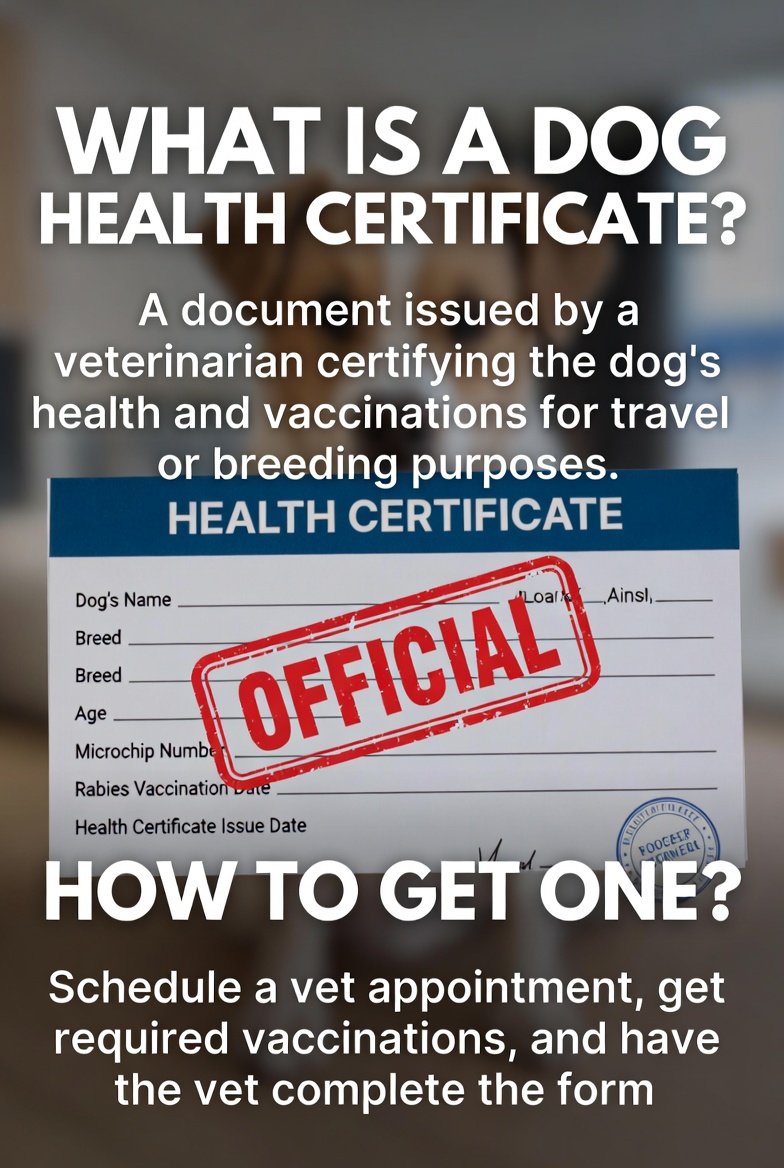
A dog health certificate is a form completed and signed by a licensed veterinarian that confirms your dog has been examined and is free of contagious diseases. It typically includes information such as your dog’s age, breed, microchip number, vaccination history (especially rabies), and a statement that the dog is fit to travel. Some certificates also list parasite treatments and any required tests, depending on the destination.
For international travel, the certificate may need to be endorsed by a government agency such as USDA APHIS in the United States. The exact format and requirements vary by country and sometimes by state, so it is important to check the rules for your specific destination well in advance.
When Do You Need a Dog Health Certificate?
Health certificates are commonly required for air travel, especially when your dog flies in the cabin or cargo hold. Most major airlines ask for a certificate issued within a specific window before departure, often 10–14 days. Some states also require health certificates for dogs entering from another state, particularly if the dog will be sold, boarded, or shown.
International travel almost always requires a health certificate, along with proof of rabies vaccination and sometimes additional tests such as a rabies titer. Certain countries may also require the certificate to be endorsed by a national veterinary authority or to include a microchip number and specific wording.
How Long Is a Dog Health Certificate Valid?
The validity of a dog health certificate depends on the issuing authority and the destination. Many airlines and states accept certificates issued within 10 days of travel, while some international destinations require the exam to be done within 7–14 days of arrival. In some cases, the certificate must be issued no more than a few days before the flight.
Because the timing is strict, it is important to schedule your vet appointment with the exact travel date in mind. If your plans change and the certificate expires, you may need a new exam and a new form, which can add cost and stress.
How to Get a Dog Health Certificate
To obtain a dog health certificate, start by confirming that your veterinarian is licensed and, if needed, USDA‑accredited for international travel. Schedule a wellness exam at least 10–14 days before your travel date. During the visit, the vet will check your dog’s overall health, review vaccination records, and update any required shots or tests.
After the exam, the veterinarian completes the appropriate CVI form, signs it, and may submit it electronically for endorsement (for example, through USDA’s VEHCS system). Once endorsed, you usually receive a printed or digital copy that must travel with your dog. Some countries require original documents plus supporting paperwork such as rabies certificates or lab reports.
What Information Is Included on the Certificate?
A typical dog health certificate includes your dog’s name, species, breed, age, sex, color, and microchip number. It also lists the owner’s name and contact information, the veterinarian’s details, and the date of the exam. The form notes the dog’s clinical findings, vaccination status, and any treatments given.
For international travel, the certificate may include specific statements required by the destination country, such as confirmation that the dog is free of signs of disease, has a valid rabies vaccination, and meets any additional testing or quarantine rules. Always review the form carefully before travel to ensure all fields are correctly filled out.
10 Frequently Asked Questions (FAQs)
1. What is a dog health certificate used for?
A dog health certificate is used to prove that your dog is healthy and meets medical requirements for travel, relocation, boarding, or entry into another country or state. It is often required by airlines, pet‑transport services, and government agencies.
2. Do all dogs need a health certificate?
No—requirements depend on where you are going and how your dog is traveling. Many domestic flights and some state crossings do not require a certificate, but international travel, certain airlines, and some boarding facilities do. Always check the rules for your specific situation.
3. How far in advance should I get a health certificate?
Most certificates must be issued within 10–14 days of travel, so schedule your vet appointment about 1–2 weeks before departure. For destinations with strict rules, ask your vet or the destination’s consulate for the exact window.
4. Can any veterinarian issue a dog health certificate?
For domestic travel, a licensed veterinarian can usually issue the certificate. For international travel, many countries require the form to be completed and endorsed by a USDA‑accredited veterinarian or equivalent national authority.
5. Does a health certificate replace vaccination records?
No—the health certificate summarizes your dog’s health and vaccination status, but you still need to carry original vaccination records, especially for rabies. Some countries require both the endorsed certificate and the original rabies certificate.
6. What happens if my dog’s health certificate expires?
If the certificate expires before travel, you may need a new exam and a new form. This can delay your trip or add extra cost, so plan carefully and keep track of the validity dates.
7. Can I travel with a digital copy of the health certificate?
Some airlines and countries accept a printed copy of a digitally endorsed certificate, but many still require an original or printed version to travel with the dog. Check the rules for your route and always carry at least one printed copy.
8. Are health certificates required for puppies?
Yes—puppies often need health certificates for travel, but they must also meet age and vaccination requirements. Many countries require puppies to be at least a certain age and to have a valid rabies vaccination before entry.
9. Do I need a separate certificate for each dog?
Yes—each dog must have its own health certificate. You cannot list multiple pets on a single form, even if they are traveling together. Each certificate is tied to one animal’s identification and medical history.
10. What should I do if my dog is sick before travel?
If your dog shows signs of illness close to travel, contact your veterinarian immediately. A sick dog may not be cleared for travel, and the vet may need to delay or cancel the health certificate. In some cases, treatment and re‑examination are required before a new certificate can be issued.
Tips for a Smooth Process
To make getting a dog health certificate as easy as possible, keep your dog’s vaccinations up to date, maintain accurate records, and confirm travel requirements early. Choose a veterinarian who is familiar with pet‑travel paperwork, especially if you are going abroad. Give yourself extra time in case of delays, and always double‑check the rules for your airline and destination.
With the right preparation, a dog health certificate is a straightforward step that helps protect your pet’s health and ensures you meet legal and safety requirements for travel.