Dog owners often wonder whether it’s safe for their pup to snack on cat food, especially if the dog manages to sneak a few bites from the cat’s bowl. While an occasional nibble is usually not an emergency, cat food is not designed for dogs and can cause health problems over time. This article explains the risks of feeding cat food to dogs, what to do if your dog eats it, and what safer alternatives you can offer instead.
Why Cat Food Is Different From Dog Food
Cats and dogs have very different nutritional needs, so their foods are formulated differently. Cat food is higher in protein and fat because cats are obligate carnivores who must get certain nutrients from animal sources. Dog food, on the other hand, is balanced for an omnivorous diet with more fiber, moderate protein, and lower fat levels.
Because of these differences, cat food can be too rich for a dog’s digestive system and may provide too much of some vitamins and minerals. Over time, feeding a dog mainly cat food can lead to nutrient imbalances and strain on the liver and kidneys.
Short‑Term Risks of Dogs Eating Cat Food
If a dog eats a small amount of cat food once or twice, it may only cause mild stomach upset such as vomiting, diarrhea, or gas. These symptoms often resolve on their own if the dog returns to its normal diet. However, some dogs—especially those with sensitive stomachs or existing health issues—can react more strongly.
High‑fat cat food can also trigger pancreatitis in dogs, a painful inflammation of the pancreas. Signs include vomiting, abdominal pain, lethargy, and loss of appetite. Pancreatitis is a medical emergency and requires immediate veterinary care.
Long‑Term Health Risks
When a dog regularly eats cat food instead of dog food, several long‑term problems can develop. The high protein and fat content can lead to weight gain and obesity, which increases the risk of joint disease, diabetes, and heart problems. Extra calories and fat also put extra strain on the liver and kidneys.
Some cat foods contain higher levels of certain fat‑soluble vitamins, such as vitamin D and vitamin A, than what dogs need. Over time, excess intake can build up in the body and contribute to organ damage, including kidney failure in severe cases.
When Occasional Cat Food Is Less Harmful
A one‑off taste of cat food is usually not dangerous for a healthy dog. Many veterinarians agree that an occasional small amount will not cause lasting harm, as long as the dog quickly returns to a proper dog‑food diet. The real risk comes from repeated or large‑quantity consumption.
If your dog has a history of pancreatitis, kidney disease, liver disease, or a sensitive stomach, even small amounts of cat food should be avoided. In these cases, any change in diet should be discussed with your veterinarian.
What to Do If Your Dog Eats Cat Food
If your dog eats a small amount of cat food and seems fine, monitor them closely for the next 24 hours. Watch for vomiting, diarrhea, loss of appetite, or signs of abdominal pain. If symptoms appear, contact your veterinarian or an emergency clinic.
If your dog eats a large quantity of cat food—such as an entire meal or more—skip their next regular meal and offer water only. Then contact your vet for advice, especially if your dog is small, young, elderly, or has pre‑existing health conditions. In some cases, your vet may recommend bringing your dog in for an exam.
10 Frequently Asked Questions (FAQs)
1. Can dogs eat cat food occasionally?
Yes, most healthy dogs can tolerate a small amount of cat food once in a while without serious problems. However, it should never replace their regular dog food. Occasional nibbles are usually fine, but repeated access to cat food can lead to digestive upset, weight gain, and other health issues.
2. Is cat food toxic to dogs?
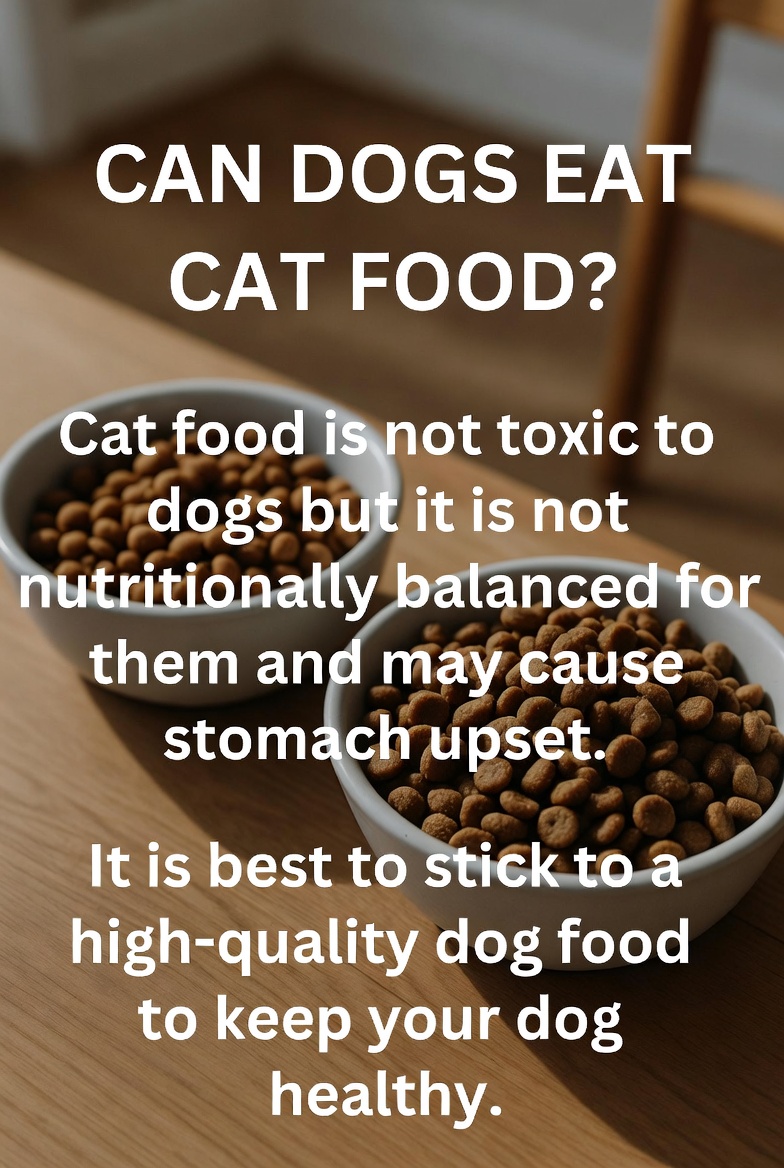
Cat food is not “toxic” in the same way that chocolate or grapes are, but it is not nutritionally appropriate for dogs. The high protein and fat levels can cause pancreatitis or obesity over time, and some formulas may contain vitamin levels that are too high for dogs if eaten regularly.
3. Can dogs eat wet cat food?
Wet cat food is usually even richer and higher in fat than dry cat food, so it poses similar or greater risks if eaten in quantity. A tiny taste is unlikely to hurt, but dogs should not be fed wet cat food as a regular meal or treat.
4. Can dogs eat dry cat food?
Dry cat food is also formulated for cats and contains more protein and fat than most dog foods. While a few kibbles won’t usually cause harm, feeding dry cat food regularly can lead to weight gain, digestive issues, and strain on the liver and kidneys.
5. Can a dog die from eating cat food?
It is very unlikely that a dog will die from eating cat food, but severe complications such as acute pancreatitis can be life‑threatening if not treated promptly. Most dogs recover after a single incident, but any dog showing signs of serious illness after eating cat food should be seen by a veterinarian immediately.
6. Why do dogs like cat food so much?
Dogs are attracted to cat food because it is very meaty, high in protein and fat, and strongly flavored. These qualities make it more palatable than many dog foods, which are designed to be nutritionally balanced rather than maximally tasty. This is also why it can be so tempting for dogs to steal from the cat’s bowl.
7. How can I stop my dog from eating cat food?
To prevent your dog from eating cat food, feed the cat in a separate room or use a baby gate, crate, or elevated feeding station that the dog cannot reach. Automatic feeders or puzzle bowls can also help by limiting access. Training your dog to “leave it” and rewarding them for ignoring the cat’s food can further reduce temptation.
8. Can dogs eat kitten food?
Kitten food is even higher in calories, protein, and fat than adult cat food, so it is even less suitable for dogs. While a tiny amount may not cause harm, regular consumption can quickly lead to weight gain and digestive problems. Kitten food should not be used as a dog food substitute.
9. Are there any dog foods that are safe for both dogs and cats?
There are no commercial foods that are truly safe and nutritionally complete for both species at the same time. Some “all‑species” or “multi‑pet” foods exist, but they are usually compromises and may not meet the specific needs of either dogs or cats. It is best to feed each pet a diet formulated specifically for their species.
10. What should I feed my dog instead of cat food?
Feed your dog a high‑quality dog food that matches their age, size, and activity level. If your dog has special needs—such as weight management, sensitive digestion, or medical conditions—ask your veterinarian for a recommended diet. Treats should also be dog‑specific and given in moderation to avoid overfeeding.
Safe Alternatives and Feeding Tips
Instead of letting your dog eat cat food, provide appropriate dog treats or small portions of dog‑friendly human foods such as plain cooked chicken, carrots, or green beans. These options are safer and can still satisfy your dog’s desire for variety.
To keep both pets happy, consider scheduled feeding times, separate eating areas, and consistent training. By managing access and offering the right foods, you can protect your dog’s health while still allowing your cat to enjoy their specialized diet.