
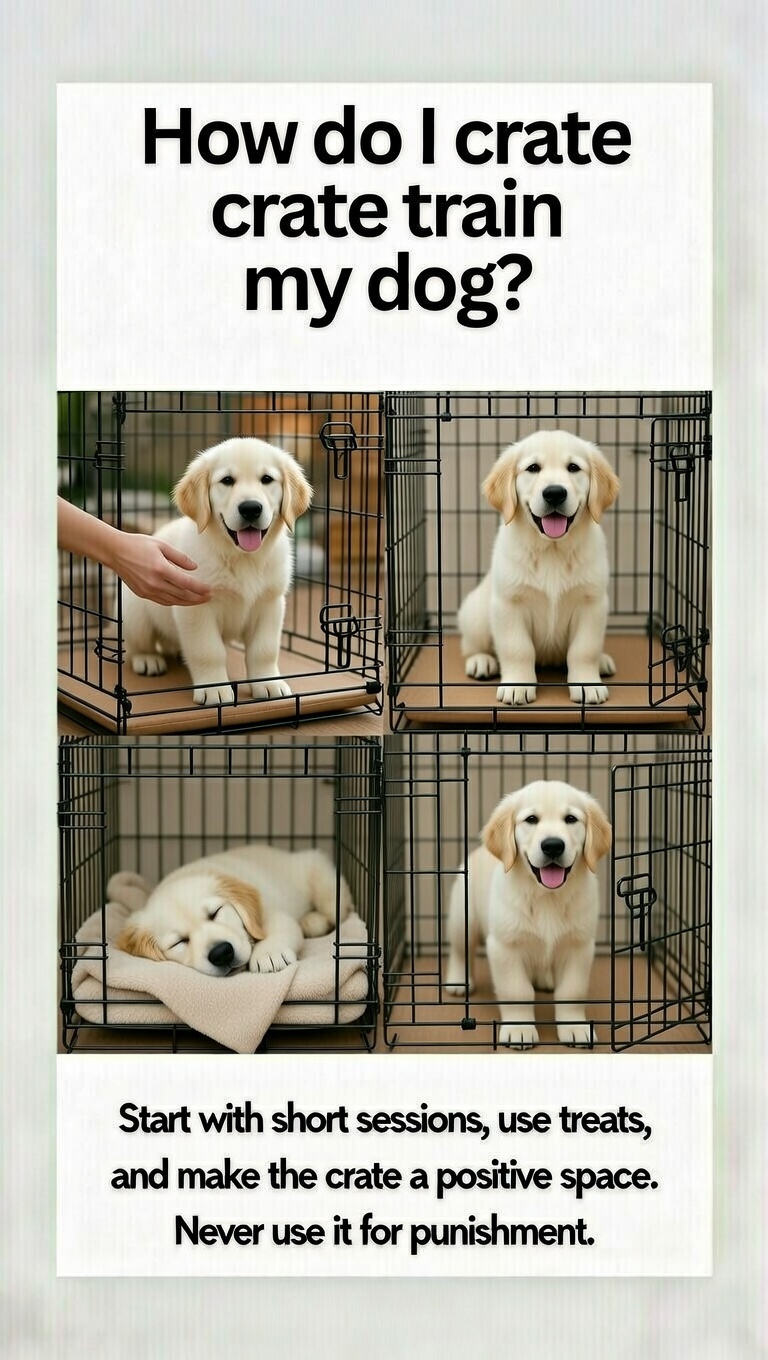
Crate training teaches your dog that their crate is a safe, cozy den, not a punishment. It’s one of the best tools for house training, preventing destructive behavior when you can’t supervise, and giving your dog a secure place to relax. Done correctly, crate training is gradual, positive, and based on rewards—not forcing your dog inside or leaving them to cry it out for long periods.
The basic process is: choose the right-sized crate, introduce it slowly with treats and toys, feed meals in the crate, then build up to closing the door for short periods while you’re home. Over days or weeks, you extend that time and start using the crate for short absences and overnight sleep. Patience, consistency, and keeping the crate associated with good things are the keys to success.
Step 1: Choose and Set Up the Crate
Pick a crate that’s just big enough for your dog to stand up, turn around, and lie down comfortably, but not so large that they can sleep in one corner and toilet in another. Wire, plastic, and fabric crates all work; many people like wire crates with a divider so you can adjust the space as a puppy grows. Make the crate inviting with a comfortable bed or mat (unless your dog chews bedding), and add a safe chew toy or two.
Place the crate in a room where your family spends a lot of time, such as the living room or near the kitchen—not in isolation. Keep the door open at first so your dog can go in and out freely. Your goal at this stage is simply to make the crate look and smell like a cozy, low-pressure hangout, not a cage that appears suddenly when you leave.
Step 2: Introduce Your Dog to the Crate
Start by casually tossing treats just inside the crate door, then slightly farther in, and eventually to the back of the crate. Praise any curiosity: sniffing, stepping in, or choosing to lie inside. If your dog is nervous, don’t push; let them approach at their own pace and keep sessions very short and relaxed. You can also toss in a favorite toy or a stuffed food puzzle to encourage exploration.
Never shove or drag your dog into the crate; that creates fear and resistance that will slow the whole process. Over time, you can add a cue like “crate” or “bed” by saying it right before your dog steps in for a treat. Your first milestone is when your dog will walk into the crate on their own in anticipation of something good.
Step 3: Feed Meals in the Crate
Once your dog is willing to go into the crate, start feeding regular meals in or near it to deepen the positive association. At first, you can place the bowl just inside the doorway; as your dog relaxes, gradually move the bowl farther back so they have to stand fully inside to eat. This makes the crate predict something wonderful: food.
If your dog is hesitant, move at their pace—keep the bowl where they’re comfortable and inch it back over several meals. Most dogs quickly learn that stepping into the crate leads to eating, which helps them feel safe there. For many dogs, breakfast and dinner in the crate are the main reasons they absolutely love going in.
Step 4: Close the Door for Short Periods
After your dog is happily entering the crate and eating meals inside, you can begin closing the door briefly. Wait until they’re focused on their food or a chew, gently close the door, and stay nearby. When they finish and are still calm, open the door and let them out. Keep these early “door closed” sessions short and uneventful.
Gradually extend the time the door stays closed by a minute or two at a time. You can sit beside the crate reading or working so your dog learns that being crated simply means settling while you are still around. If they whine, avoid rushing to let them out instantly; wait for even a second of quiet, then open the door, so they learn that calm behavior—not noise—gets the door open.
Step 5: Build Up Alone Time and Night Crating
When your dog can relax quietly in the crate for around 20–30 minutes with you mostly out of sight, you can begin leaving them crated for short outings or naps while you’re away. Start with very short trips, like going outside to get the mail or a quick errand, and slowly extend the duration as your dog stays calm. Keep departures and arrivals low-key to avoid making a big emotional event out of crating.
For night crating, put your dog in the crate with a cue and a special bedtime treat or safe chew. Many puppies sleep better if the crate is in your bedroom or nearby at first so they can hear and smell you. Over time, you can move the crate if you prefer, but starting close by often reduces nighttime whining and helps you hear if they need a potty break.
Step 6: Set Fair Time Limits
Crates are for safety and rest—not for all-day confinement. Young puppies can usually only stay crated for about as many hours as their age in months (up to around 3–4 hours max), because of bladder limits. Adult dogs, once trained and accustomed, may handle about 4–6 hours in a crate during the day, but they should not be crated endlessly without exercise or mental stimulation.
Overnight, most dogs can sleep longer in the crate, especially adults. Regardless of age, always balance crate time with plenty of exercise, potty breaks, training, and social interaction. If you must be away longer than your dog can reasonably handle, arrange for a friend, family member, or dog walker to let them out and give them a break.
10 FAQs About Crate Training (With Answers)
1. How long does crate training take?
Crate training can take anywhere from a few days to several weeks, depending on your dog’s age, temperament, and past experiences. Consistency matters more than speed; it’s better to move slowly and keep the crate positive than to rush and create fear. Most puppies with no negative history adjust faster than adult dogs who have never seen a crate or have been crated incorrectly before.
2. What size crate should I get?
The crate should be large enough for your dog to stand up, turn around, and lie down comfortably, but not so big that they can use one end as a bathroom. For growing puppies, a crate with a divider panel is ideal, so you can start small and expand the space as they grow. Too much space early on can make house training harder, because puppies are more likely to sleep in one corner and soil the other.
3. Should I put bedding and toys in the crate?
Most dogs do well with a soft bed, blanket, or mat in the crate to make it cozy and encourage relaxation. If your dog chews or shreds fabric, start with a tougher mat or no loose bedding and supervise more carefully until you know what’s safe. Safe chew toys, like durable chews or stuffed food puzzles, are great for keeping your dog occupied and creating positive associations with crate time.
4. What do I do if my dog cries in the crate?
Mild whining is common at first as your dog adjusts. If you’re sure they don’t need a potty break, wait for a brief pause in the noise before quietly letting them out, so they don’t learn that whining always opens the door. If the crying is intense, lasts a long time, or your dog seems panicked, you’ve likely moved too fast—go back a step, shorten sessions, and build up more gradually with better rewards.
5. Can crate training help with house training?
Yes. Because most dogs naturally avoid soiling where they sleep, a properly sized crate helps them learn to hold their bladder until they’re taken outside. Use a consistent schedule: take your dog out immediately after they come out of the crate, reward them for toileting outside, and then allow supervised free time. Over time, they connect “outside” with bathroom breaks and the crate with resting.
6. Is it okay to crate my dog while I’m at work?
Crating all day while you’re at work is too much for most dogs, especially puppies. If you have to be gone longer than 4–6 hours, consider options like a trusted friend, dog walker, doggy daycare, or a safe puppy-proofed area with a pen instead of just the crate. Crates are best used in combination with other management strategies, not as the only solution for long absences.
7. Can older dogs be crate trained, or is it just for puppies?
Older dogs can absolutely be crate trained, even if they’ve never used one before, as long as you move slowly and keep the experience positive. Adult dogs may need more time to adjust, especially if they have any anxiety or past bad experiences with confinement. Use extra tasty treats, short sessions, and lots of patience—many adult dogs eventually come to love having their own cozy den.
8. Should I ever use the crate as punishment?
No. If you send your dog to the crate only when you’re angry or they’re in trouble, they’ll quickly associate it with negative experiences and resist going in. The crate should be a place of safety and calm, where good things happen: meals, chews, naps, and quiet time. You can use the crate to manage over-excitement, but frame it as “time to relax,” not a jail sentence.
9. How do I teach my dog to go into the crate on cue?
Once your dog is comfortable entering the crate, say a word like “crate” or “bed” right before they walk in for a treat or meal. Repeat this many times so the word predicts stepping into the crate and getting rewarded. Later, you can say the cue first, then point, and reward when they choose to go in; gradually, they’ll trot into the crate happily when they hear the cue.
10. When should I avoid or reconsider crate training?
If your dog shows signs of severe panic in any type of confinement—such as injuring themselves trying to escape—you should stop and consult a qualified trainer or behavior professional. In those cases, a crate may not be appropriate until the underlying anxiety is addressed. Also reconsider crate use if it leads to long, daily stretches of isolation; in that situation, focus on creating a safer, larger confinement area and adjusting your dog’s routine so their social and physical needs are met.