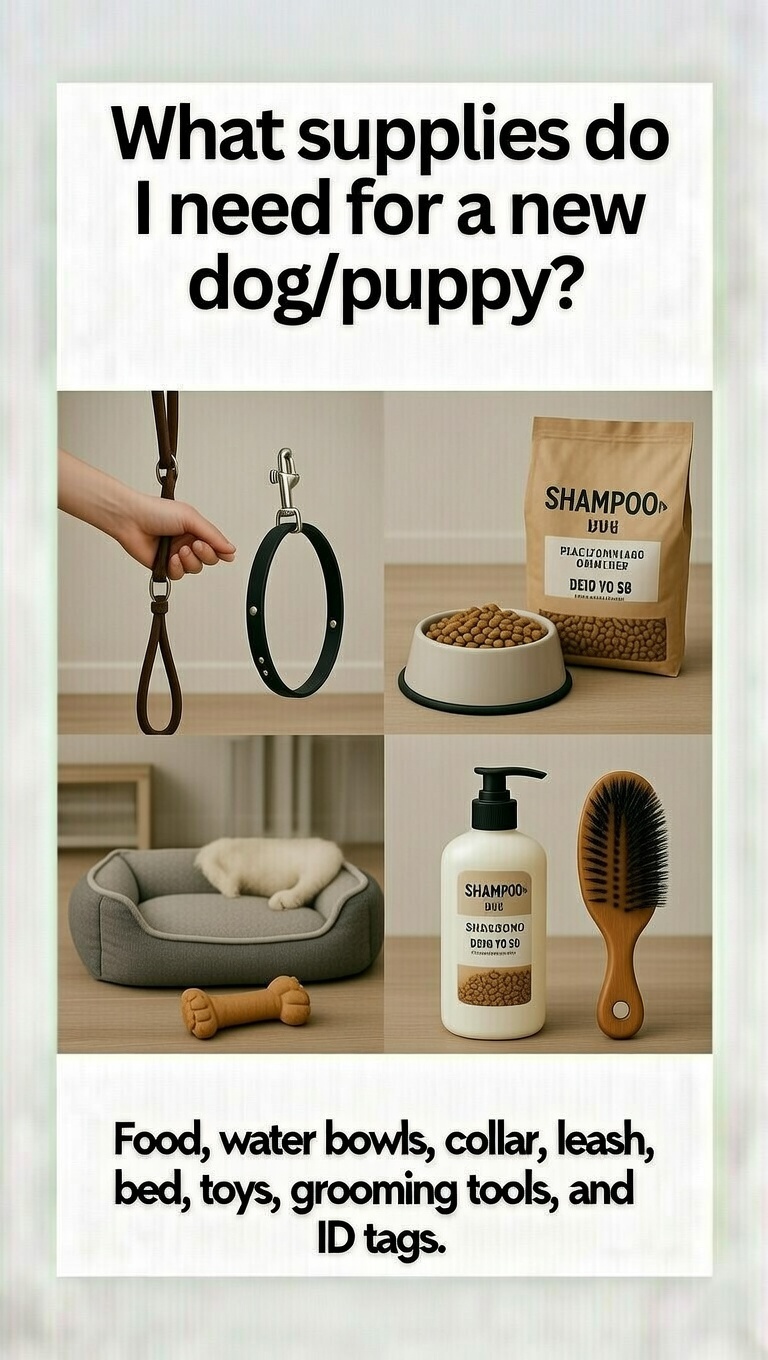
Bringing home a new dog or puppy is exciting, and having the right supplies ready makes the transition smoother and less stressful for both of you. At a minimum, you’ll need essentials for feeding, safety, sleep, hygiene, training, and enrichment, plus a few extras tailored to your dog’s age and lifestyle.
Think in categories: food and bowls, collar and ID, leash and harness, crate or bed, potty and cleaning supplies, grooming tools, toys, and health items. Starting with a thoughtful checklist helps you avoid impulse buys while still making sure your new companion has everything they need from the first day home.
Core Essentials for Every New Dog
Every new dog needs a good-quality food appropriate for their life stage (puppy, adult, or senior), plus sturdy food and water bowls. Stainless steel or ceramic bowls are usually recommended because they are durable and easy to clean.
[nylabone](https://www.nylabone.com/dog101/checklist-of-dog-supplies-for-your-new-fur-kid)
You’ll also want a flat collar with an ID tag that includes your phone number, and ideally a microchip registered in your name for extra security. A standard 4–6 foot leash is necessary for walks and safe outdoor time, and many owners add a harness for better control and comfort, especially if the dog pulls.
Safe Spaces: Crates, Pens, and Beds
A crate or exercise pen creates a safe, contained space for your dog to rest, sleep, and relax, and can be a powerful tool for house training and managing behavior. The crate should be large enough for your dog to stand up, turn around, and lie down comfortably, but not so big that they can sleep at one end and toilet at the other.
[k-9lifesavers](https://www.k-9lifesavers.org/s/Dog-Supply-Checklist.pdf)
In addition to a crate or pen, provide at least one comfortable dog bed or mat that’s easy to wash. Many owners like having a bed in the main living area and another in the crate, so the dog always has a cozy place to settle nearby.
Feeding and Treat Supplies
Choose a high-quality dog or puppy food based on your vet’s advice, ideally starting with what your dog has been eating to avoid stomach upset and then transitioning slowly if needed. Store it in an airtight container to keep it fresh and prevent pests.
You’ll also want training treats—small, soft, and easy to eat quickly—to reward good behavior and start building positive habits right away. A treat pouch you can wear on walks or during training sessions makes it easier to carry and access rewards.
Grooming, Cleaning, and Health Basics
Basic grooming supplies include a brush or comb suited to your dog’s coat type, dog shampoo, nail clippers, and possibly grooming wipes for in-between cleanups. Starting grooming routines early helps your dog accept handling and keeps their coat and skin healthy.
For cleaning, it’s smart to have an enzymatic cleaner for accidents, pet-safe stain removers, and paper towels or cloths ready to go. A simple pet first aid kit with gauze, antiseptic wipes, tweezers, and a digital thermometer is useful for minor issues until you can see a vet.
Training and Enrichment Supplies
Toys are non-negotiable: have a mix of chew toys, interactive toys, and soft toys (if your dog isn’t a shredder) to keep them engaged and help prevent boredom. Puppies especially need safe chews to help with teething and redirect chewing from furniture or hands.
Training tools can include a clicker (if you use clicker training), a treat pouch, and possibly baby gates or dog gates to block off certain areas of the house. These management tools make it easier to supervise your dog and set them up for success while they learn the rules of their new home.
Potty and House-Training Supplies
If you’re bringing home a puppy or a dog who isn’t fully house-trained, puppy pads or indoor potty options can be extremely useful, especially in apartments or bad weather. Combine these with a consistent schedule, frequent outdoor trips, and rewards when your dog toilets in the right spot.
[atlantahumane](https://atlantahumane.org/blog/essential-supplies/)
Poop bags are essential for walks and outings; you’ll need a steady supply to stay on top of clean-up duties in public spaces and your yard. Many people like to attach a small poop bag dispenser to the leash so it’s always handy.
10 FAQs About Supplies for a New Dog or Puppy
1. What are the absolute must-have items before bringing my dog home?
At minimum, you should have food, water and food bowls, a collar with ID tag, a leash, a bed or crate, a few toys, poop bags, and basic cleaning supplies ready before your dog arrives. These cover feeding, safety, sleep, enrichment, and hygiene from day one.
2. Do I need different supplies for a puppy versus an adult dog?
Puppies need many of the same basics as adults, but you’ll emphasize house-training supplies like puppy pads, lots of chew-safe toys for teething, and perhaps a smaller or adjustable crate. Puppy-specific food and tiny training treats are important to support growth and early training. Adult dogs may need larger sizes, fewer potty pads, and age-appropriate food and supplements.
3. What kind of food and water bowls are best?
Stainless steel or heavy ceramic bowls are generally recommended because they are durable, easy to clean, and less likely to harbor bacteria than some plastics. Non-slip bases help keep bowls from sliding while your dog eats or drinks. For tall dogs, consider raised feeders; for travel, collapsible bowls are convenient.
4. Is a crate really necessary?
A crate is not strictly mandatory, but it’s highly recommended for house training, safety, and giving your dog a secure den-like space. Many rescues and trainers include a crate on their “essentials” list because it helps prevent destructive behavior and supports consistent routines. If you don’t use a crate, you’ll still need some way to safely confine your dog, like an exercise pen or gated area.
5. How many toys should I buy to start?
You don’t need a huge pile, but having a variety of 5–10 toys is helpful: at least a couple of durable chews, a few soft or plush toys (if safe for your dog), and one or two interactive or puzzle-style toys. Rotate them to keep things interesting without overwhelming your dog. Over time, you can add more based on what your dog actually enjoys.
6. Do I really need grooming tools right away?
Yes—starting grooming early makes life easier later. Even short-coated dogs benefit from a basic brush, nail clippers, dog shampoo, and possibly grooming wipes. Long- or double-coated dogs may need specific brushes or de-shedding tools, so it’s worth matching your grooming supplies to your dog’s coat type from the start.
7. What health-related items should be on my first shopping list?
Along with food, plan for flea/tick and heartworm preventatives recommended by your vet, plus a simple first aid kit with bandage materials, antiseptic, tweezers, and a thermometer. Keep your vet’s contact info and an emergency clinic number somewhere easy to find. Some owners also invest early in pet insurance to help with unexpected vet costs.
8. How many collars and leashes do I need?
At least one well-fitting flat collar with ID tag and one standard leash (4–6 feet) are essential. Many owners also get a backup collar and leash, plus a harness for walks—especially for puppies and pullers. Over time, you might add a longer line for training or hikes and a seat belt harness for car travel.
9. What cleaning supplies are best for accidents?
An enzymatic cleaner designed for pet stains is one of the most useful items you can buy, because it helps break down odors that might otherwise attract repeat accidents. Pair that with paper towels or reusable cloths and a pet-safe general cleaner for floors and surfaces. Having these ready before your dog comes home makes accidents much less stressful.
10. How can I avoid buying unnecessary things?
Start with a simple checklist covering the core categories—food, bowls, collar/ID, leash/harness, crate/bed, potty supplies, grooming basics, toys, and health items—and buy only one or two options in each. As you get to know your dog’s size, chewing style, and preferences, you can add more specific gear like certain toy types or training tools. Focusing on function over novelty helps you spend money where it truly supports your dog’s comfort and well-being.