Knowing whether your dog is a healthy weight is less about the number on the scale and more about how your dog’s body looks and feels. Because breeds and mixes vary so much, vets use a body condition score system and simple hands-on checks instead of relying on generic weight charts.
What Is a Body Condition Score (BCS)?
A body condition score (BCS) is a 9-point scale that estimates how much body fat your dog carries; a score of 4–5 out of 9 is considered ideal. Dogs scoring 1–3 are too thin, 6–7 are overweight, and 8–9 are obese, meaning they have excessive fat that can affect their health.
Rib Check: What You Should Feel
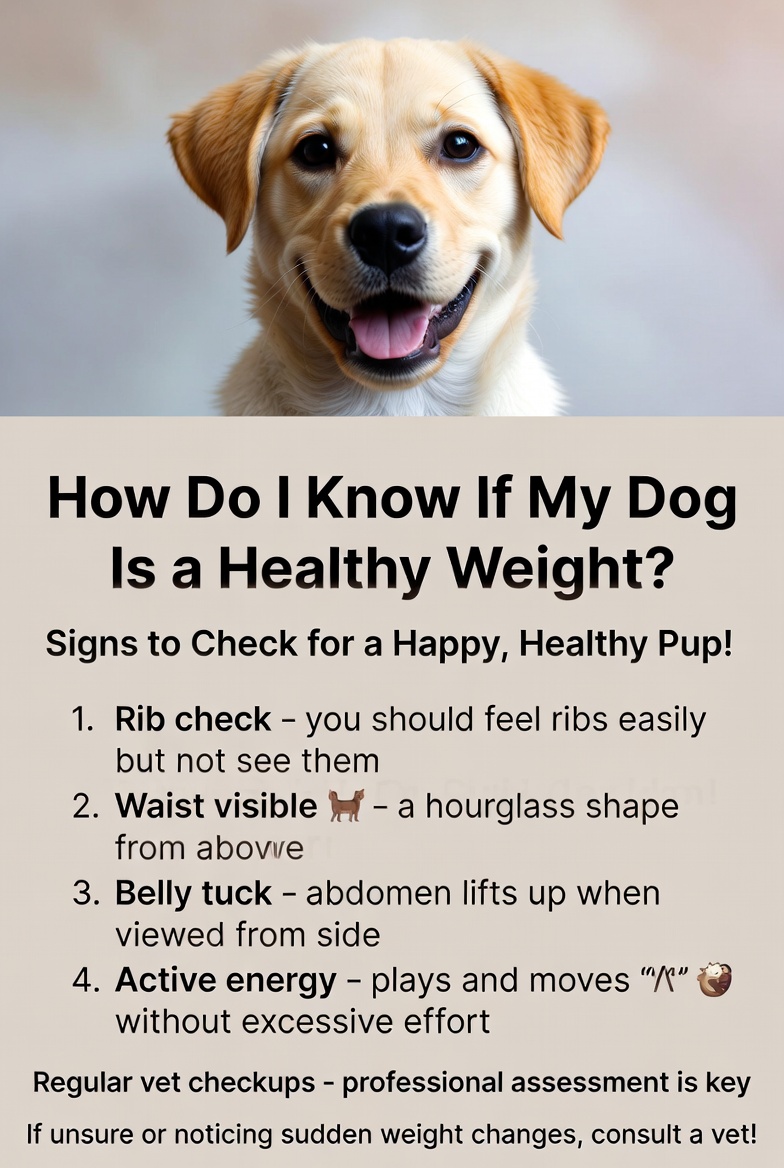
In a healthy-weight dog, you should be able to feel the ribs easily with light pressure, covered by only a thin layer of fat—similar to feeling the back of your hand. If the ribs are sharp and very prominent, your dog is likely underweight, but if you have to dig through a thick padding of fat to feel them, your dog is probably overweight.
Waistline and “Hourglass” Shape
When you look down at your dog from above, there should be a noticeable inward curve behind the ribs, giving an “hourglass” waist. Overweight dogs tend to have little or no waist, so their bodies look more oval or rectangular from above, with no clear distinction between chest and abdomen.
Abdominal Tuck From the Side
View your dog from the side: a healthy-weight dog usually has an “abdominal tuck,” where the belly slopes up from the ribcage toward the hind legs. In overweight or obese dogs, the abdomen often hangs down or looks level with the chest, and severely overweight dogs may have a rounded or sagging belly.
Energy Levels and Fitness Clues
Weight affects how easily your dog moves and exercises; healthy-weight dogs generally have good stamina for age and breed. Overweight dogs may pant heavily on short walks, lag behind, or prefer to lie down rather than play, while underweight dogs may seem weak or tire quickly.
Why the Scale Alone Is Not Enough
Dogs of the same breed can have very different ideal weights, and mixed-breed dogs often fall outside any chart, so weight alone can mislead you. A dog can also keep a steady weight while quietly gaining fat and losing muscle, which is why body shape and BCS are better indicators of real health.
When to Talk to Your Veterinarian
You should consult your vet if you cannot feel ribs at all, cannot see a waist, notice a sagging belly, or see very prominent bones and a sharply tucked abdomen. Your veterinarian can assign an official BCS, check for medical causes of weight change, and help design a safe plan to gain or lose weight if needed.
Long-Term Weight Management Tips
Maintaining a healthy weight involves feeding measured, balanced meals, avoiding excessive treats, and adjusting portions based on your dog’s condition and activity. Regular checkups, routine BCS and rib/waist checks at home, and appropriate daily exercise help keep your dog lean, strong, and less prone to weight-related disease.
10 Frequently Asked Questions About Healthy Dog Weight
1. How can I quickly tell if my dog is overweight?
A quick check is to feel the ribs and look for a waist: if you cannot easily feel ribs or see an inward curve behind the ribs from above, your dog is likely overweight. A flat or bulging belly without a tuck when viewed from the side is another common sign.
2. What does an ideal-weight dog look like?
An ideal-weight dog has ribs that are easy to feel but not sticking out, a visible waist from above, and a clear abdominal tuck from the side. Overall, the body should resemble a gentle hourglass, not a straight tube or round barrel.
3. Can my dog be overweight even if the vet’s scale number seems “normal”?
Yes, because “normal” ranges are broad and do not reflect individual build or fat versus muscle. A dog can be at a common weight for their breed yet still carry excess fat, so BCS and body shape are more important than the number alone.
4. How often should I check my dog’s body condition?
It is helpful to do a quick rib, waist, and tuck check every few weeks and any time you change food, treats, or exercise routines. Regular monitoring helps you catch small changes early, before your dog becomes significantly over- or underweight.
5. What are health risks of being overweight?
Overweight and obese dogs have higher risks of arthritis, joint injuries, diabetes, heart and respiratory problems, and some cancers. Extra weight also stresses bones and organs, often shortening life expectancy and reducing quality of life.
6. How do I know if my dog is underweight?
Underweight dogs often have very visible ribs, spine, and hip bones with little to no fat cover and a very sharp abdominal tuck. They may also have low energy, poor coat quality, or difficulty maintaining muscle mass, which warrants a vet exam.
7. Should I use an online “ideal weight by breed” chart?
Breed charts can give a rough starting point, but they cannot account for your dog’s unique build, sex, or mix of breeds. It is better to combine any chart information with BCS checks and your veterinarian’s guidance.
8. How can I safely help my overweight dog lose weight?
Work with your vet to calculate target weight, then feed measured portions of an appropriate diet, reduce high-calorie treats, and gradually increase exercise. Regular weigh-ins and BCS checks help ensure weight comes off slowly and safely, mostly from fat rather than muscle.
9. Do senior dogs have different ideal weights?
Senior dogs often need fewer calories but still require enough protein to maintain muscle, so their ideal weight may shift slightly over time. Because older dogs can lose muscle while gaining fat, BCS and muscle condition scoring are especially important in this age group.
10. When should I see a vet about my dog’s weight?
See your vet if you notice sudden weight gain or loss, big changes in appetite, difficulty exercising, or if you are unsure how your dog’s body condition compares to ideal. A professional exam can rule out medical causes and give you a clear, tailored plan to keep your dog at a healthy, comfortable weight.