
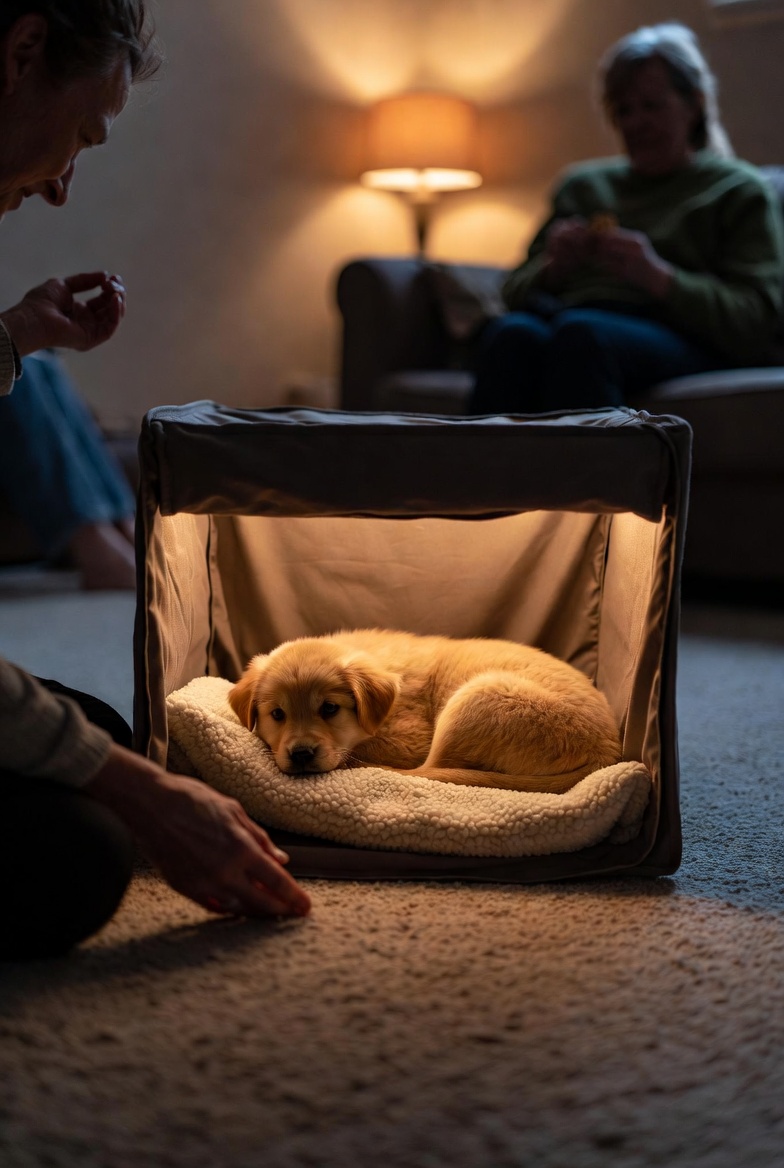
Kennel training a puppy at night is easier when you follow a clear, consistent plan that makes the crate feel safe and predictable.
Step 1: Choose and Place the Kennel
Start with a kennel just large enough for your puppy to stand up, turn around, and lie down comfortably, not so big that they can sleep in one corner and potty in another. Place it in your bedroom or very close by at first so your puppy can smell and hear you, which usually reduces night‑time anxiety. Make the inside inviting with a bed or crate mat (if your puppy doesn’t shred or eat bedding) and one safe chew toy. Think of the kennel as a bedroom, not a punishment box, and never use it to “time out” your puppy for misbehavior.
Step 2: Introduce the Kennel During the Day
Before expecting your puppy to sleep in the kennel at night, let them explore it when they’re awake and relaxed. Leave the door open and toss a few treats inside so your puppy chooses to walk in and out on their own. You can feed some meals in the kennel with the door open to build a strong positive association with going inside. Once they’re comfortable, briefly close the door for a few seconds, reward calm behavior, and let them out before they start to panic.
Step 3: Build Positive Associations
Make your puppy think “good things happen in here.” Offer a special chew or stuffed food toy (like a puppy‑safe rubber toy filled with part of their dinner) only when they’re in the kennel. Calmly praise and drop a couple of treats in after you close the door, so the door closing predicts rewards instead of separation. Keep early kennel sessions short and end them while your puppy is still relatively calm to prevent building a pattern of crying every time they’re inside.
Step 4: Create a Pre‑Bedtime Routine
Puppies settle better at night if they’ve had their physical and mental needs met beforehand. In the evening, include play, a short training session, and a walk or potty break to use up energy and give their brain a workout. About two hours before bed, start winding things down: calmer activities, lower excitement, and (with your vet’s approval) monitoring water intake so they don’t tank up right before sleep. Always finish with a final potty trip immediately before putting your puppy in the kennel.
Step 5: First Nights in the Kennel
For the first few nights, place the kennel right beside your bed so you can reassure your puppy with your voice or a hand near the door if needed. Gently guide them into the kennel with a cue like “kennel” or “bed,” give a few small treats, close the door, and keep the room dark and quiet. Expect some whining; a bit of protest is normal as they adjust to sleeping alone. Staying close helps your puppy learn that they’re not abandoned and makes the transition to independent sleep easier later.
Step 6: Handle Whining Calmly and Consistently
If your puppy whines, pause for a moment to see if they settle; many do after a short grumble. If the whining escalates or it’s been a while since their last potty break, take them out briefly and quietly on leash to their potty spot, then return them straight to the kennel—no play or long cuddles. Open the door only when they are quiet, even for a few seconds, so they learn that calm behavior, not crying, makes the door open. Try to stay neutral and soft‑spoken; reacting with frustration can increase their stress.
Step 7: Plan Night‑Time Potty Breaks
Young puppies cannot hold their bladder all night, so set an alarm rather than waiting for desperate crying. As a rough guide, many people use “age in months plus 1” hours as a maximum stretch at night for very young puppies, adjusting based on your individual pup. When the alarm goes off, calmly take your puppy out on leash, let them potty, praise quietly, and return them directly to the kennel. As your puppy starts waking up dry and whining less, slowly push potty breaks later until they can sleep through the night.
Step 8: Use Comfort Aids Wisely
A few simple comforts can make the kennel feel safer. Soft background noise (like a fan or white‑noise machine) helps mask household and outdoor sounds that might trigger barking. Some puppies settle better with a safe chew or stuffed food toy in the kennel at bedtime, which keeps their mouth busy as they get sleepy. If your puppy is very young and recently left their litter, a soft toy or blanket for them to cuddle against can mimic the feeling of sleeping with siblings, as long as they don’t chew and swallow pieces.
Step 9: Daytime Training to Support Night Success
Kennel training shouldn’t happen only at night; short daytime sessions make everything easier. Practice sending your puppy into the kennel for a few minutes while you’re still home and moving around, then gradually increase how long the door stays closed. Step out of sight briefly and return before they get very upset so you can reward calmness. These small “reps” teach your puppy that being in the kennel is normal, that you always come back, and that it’s not just the place where long, lonely nights happen.
Step 10: Adjusting as Your Puppy Grows
As your puppy matures and becomes more comfortable, you can slowly move the kennel farther from your bed or to its long‑term location, if that’s your goal. Keep your bedtime routine consistent, maintain clear rules (no yelling or banging if they fuss), and celebrate small improvements—quicker settling, fewer potty breaks, less whining. If your puppy continues to panic intensely or shows signs of extreme distress despite patient training, consider talking to your vet or a trainer about separation‑related issues. With steady practice and realistic expectations, most puppies learn to view the kennel as a safe, cozy bedroom, and your nights become much more peaceful.