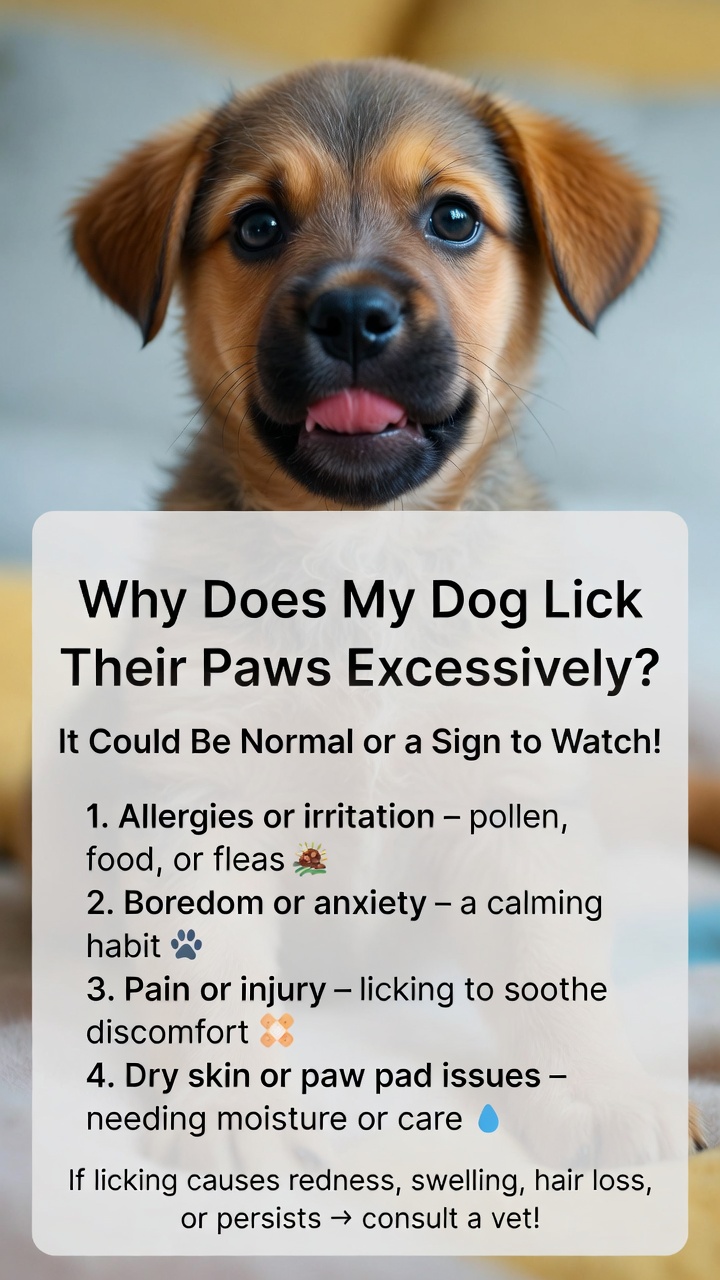
It is normal for dogs to lick their paws occasionally for grooming, but constant or obsessive licking can be a sign that something is wrong. Excessive paw licking may point to allergies, infections, injuries, parasites, or even stress and anxiety. Because persistent licking can damage the skin and lead to further problems, it is important to understand the common causes and when to contact your veterinarian.
Common Medical Causes of Excessive Paw Licking
One of the most frequent reasons dogs lick their paws too much is allergies, which can be triggered by pollen, grass, dust mites, household cleaners, or certain ingredients in food. These allergens make the skin on the feet itchy and inflamed, so dogs lick to try to relieve the discomfort. Skin infections caused by bacteria or yeast can also develop on the paws and between the toes, especially when licking keeps the area warm and moist, and this makes the itch and redness even worse.
Injuries and Pain in the Paws
Injuries are another major cause of paw licking, and sometimes the damage is small and easy to miss at first. Dogs may step on sharp objects, hot pavement, ice-melting chemicals, thorns, or get splinters or foreign bodies stuck between their toes, leading to pain and irritation. Joint pain or arthritis in the legs can also cause a dog to focus on licking a particular paw as a way to self-soothe, even though the real source of discomfort may be higher up in the limb.
Parasites and Skin Irritations
External parasites like fleas, ticks, and mites can make a dog’s paws extremely itchy, prompting them to lick and chew repeatedly. Mange and other parasitic skin conditions can cause intense irritation that often affects the feet along with other parts of the body. Even without parasites, exposure to chemicals such as lawn treatments, de-icing salts, or harsh cleaning products can irritate the skin on the pads and between the toes, triggering a cycle of licking and inflammation.
Behavioral and Emotional Triggers
Not all paw licking is caused by something physical; sometimes it stems from behavioral or emotional issues. Dogs that are anxious, stressed, bored, or left alone for long periods may develop compulsive licking as a self-soothing habit. Over time, this can become a repetitive pattern similar to nail-biting in people, and even once the skin is damaged, the dog keeps licking the same spot out of habit or to cope with underlying anxiety.
What Can Happen if Paw Licking Is Ignored?
If excessive paw licking continues without treatment, it can lead to serious secondary problems. Constant moisture and friction can break down the skin barrier, creating open sores, hot spots, and areas of thickened, hairless skin sometimes called lick granulomas. These damaged areas are more likely to become infected with bacteria or yeast, causing swelling, pain, odor, and sometimes limping, which then encourages even more licking and chewing.
What You Can Do at Home
At home, start by gently examining your dog’s paws, looking between the toes and under the pads for cuts, thorns, redness, swelling, or foreign objects. You can carefully rinse the feet with lukewarm water after walks, especially if your dog has been on grass, sidewalks, or areas that may have chemicals, and then dry the paws thoroughly. Using an Elizabethan collar or a soft recovery cone may be necessary for a short time to break the licking cycle while the skin heals, but it is still important to address the underlying cause with your veterinarian’s guidance.
When to See the Veterinarian
You should book a vet visit if your dog’s paw licking is frequent, intense, or focused on one paw, or if you see redness, swelling, discharge, bleeding, or a bad odor. A sudden increase in licking, limping, or signs of pain, along with changes in appetite or energy level, are also reasons to seek professional help promptly. Your vet can examine the paws closely, check for infections or injuries, run tests for allergies or parasites, and create a treatment plan tailored to the cause.
Treatment Options Your Vet May Recommend
Treatment depends on the underlying problem and may include medicated shampoos or wipes, topical creams, oral antibiotics or antifungals, anti-itch medications, or parasite preventives. For allergies, your veterinarian may suggest diet changes, hypoallergenic foods, allergy testing, or medications to control itching and inflammation. If anxiety or compulsive behavior is involved, a combination of behavior modification, environmental enrichment, and sometimes anti-anxiety medication may be needed to reduce stress and break the habit.
Preventing Excessive Paw Licking
Prevention starts with good paw care and a healthy routine. Rinse and dry your dog’s feet after exposure to irritants, keep nails trimmed, and avoid walking on very hot pavement or areas treated with harsh chemicals whenever possible. Providing regular exercise, mental stimulation, and a predictable routine can help reduce stress and boredom, while consistent use of parasite prevention and regular vet checkups can catch medical issues early before they turn into chronic paw-licking problems.
10 Frequently Asked Questions About Excessive Paw Licking
1. Is it normal for dogs to lick their paws?
Occasional paw licking is normal, especially after walks or when a dog is grooming themselves. It becomes a concern when the licking is frequent, intense, or causing redness, hair loss, or open sores. If you notice your dog fixating on their paws or licking to the point of irritation, it is a sign that something more than routine grooming may be going on.
2. Why does my dog only lick one paw?
When a dog focuses on a single paw, it often points to a localized problem such as a cut, splinter, thorn, insect bite, or joint pain in that limb. There may also be a foreign object stuck between the toes or an infection affecting just that area. Carefully inspect the paw, and if you cannot find a clear cause or the licking continues, have your veterinarian examine it to rule out deeper injuries or other issues.
3. Can allergies cause my dog to lick their paws?
Yes, allergies are one of the most common causes of excessive paw licking. Dogs can react to environmental triggers like pollen, grass, and dust, as well as to certain foods or household chemicals, leading to itchy, inflamed skin on the feet. When a dog licks to relieve this itch, the moisture and irritation can make the problem worse, so allergies usually need veterinary treatment, such as diet changes, medications, or allergy management plans.
4. How do I know if my dog’s paws are infected?
Signs of infection include redness, swelling, warmth, a foul or yeasty odor, discharge, and your dog reacting as if the area is painful when touched. The skin may look darker, thickened, or scabby, and your dog might limp or avoid using that paw normally. If you see any of these signs, do not rely on home remedies alone; schedule a veterinary visit so your dog can receive appropriate antibiotics, antifungals, or other treatments.
5. Could stress or anxiety be causing the licking?
Stress and anxiety can definitely contribute to excessive paw licking, especially when no clear physical cause is found or after medical issues have been treated but the behavior continues. Dogs may lick as a way to calm themselves when they are bored, lonely, or worried, and over time it can become a compulsive habit. Addressing this often requires improving mental enrichment, adjusting routines, using positive training, and in some cases working with your vet or a behavior professional.
6. What can I do at home to reduce paw licking?
At home, you can gently clean your dog’s paws with lukewarm water after outings, dry them well, and check for debris or irritation. Providing more exercise, toys, puzzle feeders, and interactive play can reduce boredom-driven licking. You may also use a cone or protective booties temporarily to limit access to the paws while they heal, but this should go hand in hand with finding and treating the root cause, not just covering up the symptom.
7. Should I use over-the-counter creams or sprays on my dog’s paws?
It is best to be cautious with over-the-counter products, because many human creams or sprays contain ingredients that are unsafe if licked or can further irritate canine skin. Dogs inevitably lick anything you apply to their paws, so only use products your veterinarian has recommended or confirmed as safe. In many cases, simple cleaning, drying, and vet-prescribed topical or oral medications are more effective and safer than random over-the-counter options.
8. When is paw licking an emergency?
Paw licking becomes more urgent if it is sudden and severe, especially if your dog is crying, limping heavily, or the paw is very swollen, bleeding, or obviously injured. It is also an emergency if you suspect your dog walked on or ingested a toxic substance, such as strong chemicals or sharp debris. In these situations, contact an emergency veterinary clinic right away, as prompt care can prevent more serious damage and pain.
9. Will changing my dog’s food help with paw licking?
If food allergies are part of the problem, changing your dog’s diet can reduce itching and paw licking, but this should be done thoughtfully under veterinary guidance. Your vet may recommend an elimination diet or a hypoallergenic food to see whether symptoms improve over several weeks. Randomly switching foods frequently can make it harder to identify triggers, so it is better to follow a structured plan designed by a professional.
10. How can I prevent paw problems in the future?
To help prevent future paw issues, keep your dog on regular parasite prevention, avoid walking on extreme surfaces like very hot pavement or heavily salted sidewalks, and rinse and dry paws after exposure to potential irritants. Maintain a consistent grooming routine that includes checking between toes and trimming hair and nails as needed. Regular checkups with your veterinarian and quick attention to new licking or limping can catch small problems early, before they turn into chronic habits or serious skin disease.