
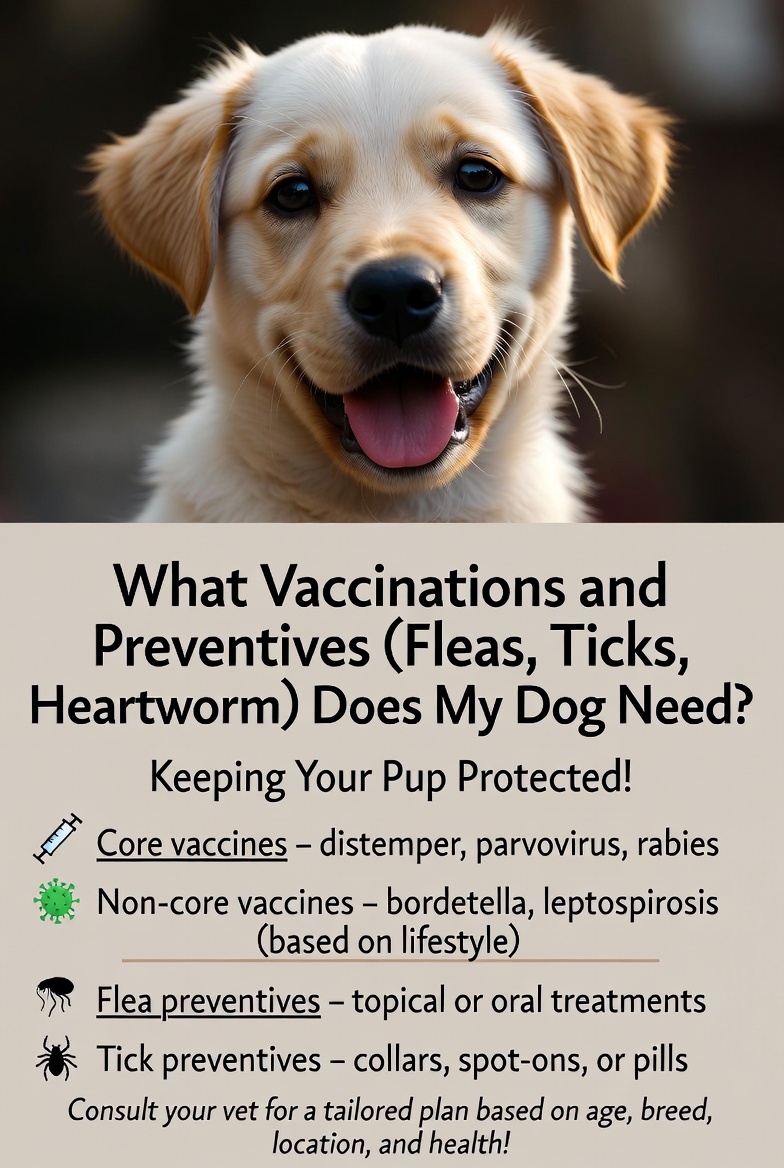
Your dog needs a mix of core vaccines (essential for all dogs), optional non-core vaccines (based on lifestyle and risk), plus year-round protection against fleas, ticks, and heartworm. Core vaccines protect against severe, often deadly diseases, while preventives guard your dog from parasites that can cause illness, discomfort, and even organ damage.
Core Vaccines Every Dog Should Have
Core vaccines are recommended for virtually all dogs because the diseases they prevent are widespread, severe, or required by law. These typically include distemper, adenovirus (hepatitis), parvovirus, and rabies, often given as a combination shot (like DHPP or DAPP) plus a separate rabies injection. Puppies receive a series of these vaccines every few weeks until around 16 weeks of age, followed by a booster about a year later and then usually every one to three years.
Common Non-Core (Lifestyle) Vaccines
Non-core vaccines are given based on where you live and your dog’s lifestyle, such as daycare, grooming, boarding, or hiking habits. Examples include vaccines for Bordetella (kennel cough), leptospirosis, Lyme disease, and canine influenza. Your vet will recommend which of these are appropriate and how often they should be boosted, often yearly for dogs at ongoing risk.
Flea Prevention
Flea preventives protect your dog from itching, allergies, skin infections, and diseases spread by fleas. Modern products come as monthly oral tablets, topical spot-ons, long-acting chews, or collars designed to kill adult fleas and sometimes their eggs and larvae. Year-round use is recommended in most areas because fleas can survive indoors and in mild climates even when it seems “off season.”
Tick Prevention
Tick control is crucial because ticks transmit serious illnesses like Lyme disease, ehrlichiosis, and anaplasmosis. Tick preventives are often combined with flea products or available separately as tablets, spot-ons, or collars that repel and/or kill ticks before they can transmit disease. Regularly checking your dog’s body after walks, especially in tall grass or wooded areas, adds an extra layer of protection.
Heartworm Prevention
Heartworm is spread by mosquitoes and can cause life-threatening heart and lung disease, even in dogs that live mostly indoors. Heartworm preventives are usually monthly chewable tablets, topical products, or long-lasting injectable medications that kill immature heartworm stages before they reach the heart. Most veterinarians recommend year-round prevention and periodic blood tests to confirm your dog remains heartworm-free.
Typical Puppy Vaccine and Preventive Timeline
Puppies usually begin vaccinations around 6–8 weeks of age, with boosters every 3–4 weeks until about 16 weeks. During this period, your vet may add lifestyle vaccines like Bordetella, leptospirosis, Lyme, or canine flu if your pup’s risk is higher. Heartworm prevention and flea/tick control often start in puppyhood as well, timed to your region’s parasites and the specific products your vet recommends.
Adult and Senior Dog Schedules
Once the puppy series is complete, adult dogs move to a maintenance schedule with boosters at intervals set by your vet (often every one to three years for core vaccines). Non-core vaccines and parasite preventives are typically reassessed yearly based on your dog’s current lifestyle and health. Senior dogs usually still need protection, but your veterinarian may adjust which vaccines are given and how often, balancing immune protection with overall health.
Why Annual Wellness Visits Matter
Yearly (or more frequent) wellness visits let your vet review your dog’s vaccination status, refill or adjust preventives, and screen for diseases that vaccines and parasite control are designed to prevent. These visits are also a chance to discuss travel plans, boarding, grooming, and new activities that might change your dog’s risk profile. Keeping vaccines and preventives up to date is one of the simplest ways to avoid costly, serious illnesses later.
10 Frequently Asked Questions About Dog Vaccines and Preventives
1. What “core” vaccines does my dog absolutely need?
Core vaccines almost always include distemper, adenovirus (hepatitis), parvovirus, and rabies. They are recommended for all dogs because these diseases are common, severe, and sometimes legally regulated, and they can be prevented safely with routine shots.
2. How often should my dog get booster shots?
After the initial puppy series and a one-year booster, many core vaccines are given every one to three years, depending on the product and local regulations. Non-core vaccines are often boosted yearly if your dog remains at risk; your vet will tailor the exact timing to your dog’s needs.
3. Does an indoor or mostly indoor dog still need vaccines and preventives?
Yes, because viruses and parasites can still reach indoor dogs through mosquitoes, other pets, humans’ clothing, or short trips outdoors. Rabies is often required by law, and diseases like distemper, parvo, and heartworm don’t respect indoor-only lifestyles, so core protection and basic parasite control remain important.
4. When should my puppy start flea, tick, and heartworm preventives?
Many puppies can begin preventives as early as 6–8 weeks of age, but the exact timing depends on the product and your puppy’s weight and health. Your veterinarian will choose age-appropriate medications and explain when and how to give the first doses safely.
5. Do I really need flea and tick prevention all year?
In many regions, year-round prevention is recommended because fleas and ticks can survive in homes and mild outdoor conditions even in cooler months. Using products continuously also avoids gaps in protection that can allow infestations or tick-borne diseases to take hold.
6. How does heartworm prevention work, and is it safe?
Heartworm preventives kill immature heartworm larvae before they grow into adults that damage the heart and lungs. They are widely used, generally very safe when given at the correct dose, and far cheaper and safer than treating full-blown heartworm disease.
7. What is the Bordetella (kennel cough) vaccine, and does my dog need it?
The Bordetella vaccine helps protect against a major cause of kennel cough, a contagious respiratory illness spread where dogs gather. Dogs that board, attend daycare, groomers, training classes, or dog parks often need this vaccine, and many facilities require proof of current vaccination.
8. Should my dog get the leptospirosis or Lyme vaccines?
Leptospirosis and Lyme vaccines are recommended based on local disease levels and your dog’s exposure to wildlife, standing water, or tick-heavy environments. Your veterinarian can tell you whether these diseases are common in your area and whether your dog’s lifestyle puts them at higher risk.
9. What if I miss a vaccine or preventive dose?
If you miss a vaccine or skip several months of flea, tick, or heartworm medicine, call your vet before restarting. They may need to adjust the schedule, perform a heartworm test, or repeat a series to ensure your dog regains full, reliable protection.
10. How do I create the right plan for my specific dog?
The best plan comes from an honest discussion with your veterinarian about your dog’s age, health, travel, boarding, and daily activities. Together you can choose the appropriate core and non-core vaccines and design a flea, tick, and heartworm program that keeps your dog protected without over- or under-treating.