If you think your dog has eaten something poisonous, act quickly and treat it as an emergency. Fast action can mean the difference between a mild scare and a life-threatening crisis, so your priorities are to keep your dog safe, contact a veterinary professional, and follow their instructions carefully.
[akc](https://www.akc.org/expert-advice/health/poisoning-in-dogs/)
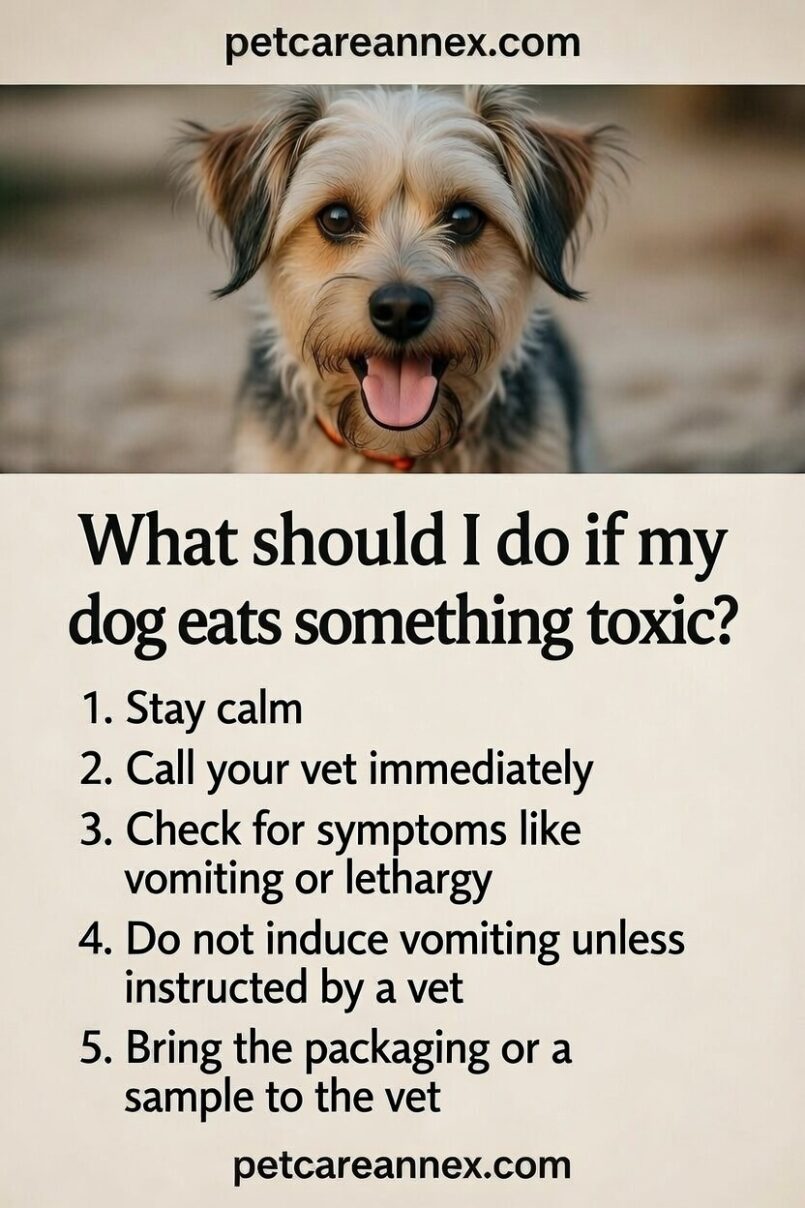
Step 1: Stay Calm and Remove Access
Panic can slow you down, so take a deep breath and calmly move your dog away from the suspected toxin so they cannot eat more. If it is safe for you, pick up any remaining substance, packaging, or vomit in a bag or container to show the vet later, but avoid touching caustic chemicals with bare hands.
Step 2: Check for Symptoms and What Was Eaten
Look for signs such as vomiting, diarrhea, drooling, tremors, weakness, pale or yellow gums, rapid breathing, or seizures, and note when they started. Try to determine what your dog ate, how much, and roughly when, by checking packaging, missing pills, or disturbed trash; this information is critical for treatment.
Step 3: Call a Vet or Pet Poison Helpline Immediately
Contact your regular vet, an emergency vet, or a dedicated pet poison service right away, even if your dog seems fine at the moment. Describe the substance, amount, time since ingestion, and any symptoms, and then follow their instructions exactly, including whether to come in immediately or give first aid at home.
Step 4: Do NOT Induce Vomiting Unless You Are Told To
Some toxins (like caustic cleaners, sharp objects, or certain oils) can cause more damage if your dog vomits them back up. Because of this, experts warn not to make your dog vomit or give home remedies (like salt, milk, or random medications) unless a vet or poison specialist specifically tells you to do so and gives a dose.
What Vets Typically Do for Toxic Ingestion
In clinic, veterinarians may induce vomiting, give activated charcoal to bind the toxin, perform gastric lavage (stomach wash), or use enemas to clear remaining poison, depending on what was ingested and when. They also provide supportive care such as IV fluids, oxygen, and medications for seizures, heart problems, pain, or specific antidotes if available (for some rat poisons, antifreeze, or snake venom).
Common Signs of Poisoning in Dogs
Symptoms vary with the toxin, but common early signs include vomiting, diarrhea, loss of appetite, drooling, excessive thirst or urination, and weakness. More severe signs can involve tremors, seizures, unsteady gait, pale or yellow gums, breathing difficulties, collapse, or abnormal heart rhythms, all of which need emergency care.
Examples of Common Dog Toxins
Many everyday items can poison dogs, including chocolate, xylitol (in sugar-free products), some human medications, antifreeze, rat poison, grapes and raisins, onions and garlic, and certain plants and essential oils. Different toxins damage different organs—for example, some rodenticides cause internal bleeding, others affect the brain, while grapes and some drugs can trigger kidney failure.
Aftercare and Monitoring at Home
After treatment, your vet may send your dog home with medications and instructions to rest, drink water, and avoid certain foods or activities while the body recovers. You will need to watch closely for any return or worsening of symptoms—such as new vomiting, lethargy, or breathing problems—and contact the vet immediately if they appear.
Preventing Toxic Ingestions
Prevention means treating your home like you would for a toddler: store medications, cleaners, automotive products, pest baits, and toxic foods high, closed, and out of reach. Use dog-safe products when possible, secure trash and compost bins, and check new plants, treats, and household items for pet safety before bringing them into your dog’s environment.
10 Frequently Asked Questions About Dogs Eating Something Toxic
1. My dog just ate something toxic—what is the very first thing I should do?
Move your dog away from the substance and make sure they cannot reach more, then immediately call a vet, emergency clinic, or pet poison helpline for instructions. Do not wait for symptoms to appear, because many toxins cause internal damage before outward signs show.
2. Should I make my dog vomit at home?
You should not induce vomiting unless a veterinary professional explicitly tells you to, because the wrong approach or toxin can burn the throat, cause aspiration pneumonia, or make the situation worse. Some poisons and situations are better managed with other treatments like activated charcoal, stomach pumping, or surgery, which must be done in a clinic.
3. How soon do poisoning symptoms show up?
Some toxins cause symptoms within minutes to hours, while others, such as certain rat poisons, may take days before signs like bleeding or weakness appear. Because timing is unpredictable and early treatment is more effective, you should seek advice as soon as you suspect ingestion, even if your dog looks normal.
4. What information will the vet or poison helpline need?
They will ask what your dog ate, how much, and when, plus your dog’s weight, age, medical history, and current symptoms. Keep any packaging or photos of the product and bring them to the clinic so the team can confirm the ingredients and dose.
5. Are human medicines a big danger for dogs?
Yes, many common human medications—like pain relievers, antidepressants, ADHD drugs, and sleep aids—can be extremely dangerous even in small amounts for dogs. If your dog chews a pill bottle or you cannot account for tablets, assume exposure and call a vet or poison service immediately with the drug name and strength.
6. What if my dog ate chocolate or grapes but seems fine?
Chocolate and grapes/raisins can both cause serious problems such as heart issues or kidney failure, and signs may be delayed. Always call a vet or poison line with the type and amount eaten and your dog’s weight so they can calculate risk and decide if decontamination or monitoring is needed.
7. How do vets usually treat poisoning?
Common steps include inducing vomiting if appropriate, giving activated charcoal to bind toxins, using IV fluids, and providing medications to protect organs or control seizures, pain, and heart or breathing issues. When available, specific antidotes (for some rodenticides, antifreeze, or other poisons) may be given to counteract the toxin’s effects.
8. Can poisoning be fatal even with treatment?
Some toxins can still be fatal, especially if large amounts were ingested, treatment is delayed, or the poison has no antidote and causes severe organ damage. However, rapid recognition and veterinary care greatly improve the chances of survival and reduce long-term complications.
9. Should I call a general poison control number or a pet-specific service?
Pet-specific poison helplines and veterinary professionals are best because they know animal-safe doses, species differences, and current treatment protocols. In an emergency, you can also call your local emergency vet directly, who may coordinate with a poison center as needed.
10. How can I reduce the risk of this happening again?
Store all medications, chemicals, and hazardous foods in closed cabinets or high shelves, secure trash and garages, and keep rodent baits, antifreeze, and garden products completely inaccessible to pets. Make a habit of checking new products and plants for pet safety and keep emergency vet and poison helpline numbers posted somewhere easy to find before you ever need them.