Frequent scratching, licking, or chewing is usually a sign that your dog is uncomfortable, not just “being a dog.” Common causes include allergies, parasites like fleas or mites, skin infections, and even stress or boredom. Understanding the most likely reasons and warning signs can help you decide what you can manage at home and when it is time to call your veterinarian.
Top Medical Causes of Itching
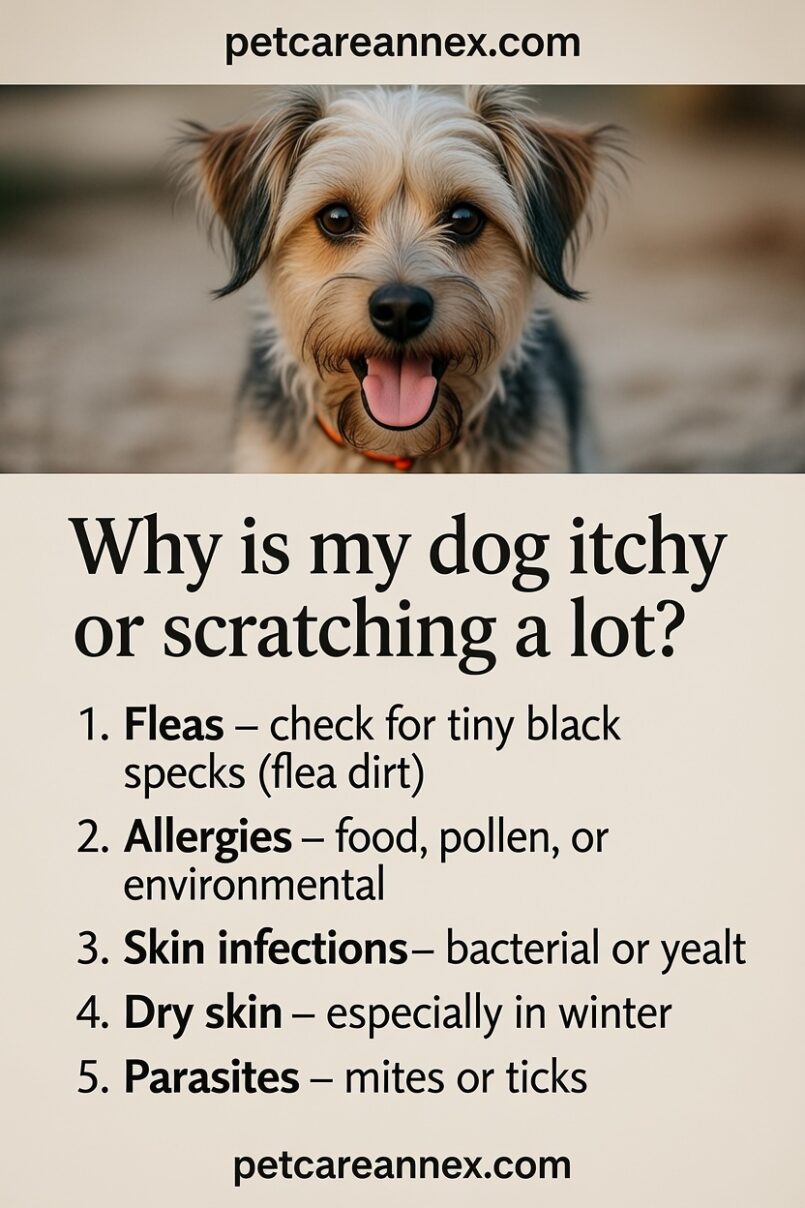
Veterinary dermatology experts list flea allergy, environmental allergies, skin infections, food allergies, and other parasites (like mange mites) among the most common itchy skin problems in dogs. Many itchy dogs actually have a combination of these issues, such as allergies plus secondary bacterial or yeast infections that develop from constant scratching.
Fleas and Other Parasites
Even a few flea bites can cause intense itching, especially in dogs that are allergic to flea saliva, and you might not always see the fleas themselves. Other external parasites such as mites (sarcoptic mange, ear mites), lice, and ticks can also cause severe itchiness, hair loss, and skin damage if not treated promptly.
Allergies: Environmental, Food, and Contact
Dogs can be allergic to pollen, dust mites, mold, grasses, certain foods, and even detergents or yard chemicals, and instead of sneezing, they often show their allergies by scratching, chewing, and licking their skin. Environmental allergies (atopic dermatitis) often affect the paws, belly, ears, and face, while food allergies can cause itching along with digestive upset, and contact allergies tend to show where the skin touches the irritant.
Skin and Ear Infections
Bacterial and yeast infections commonly develop on irritated or moist skin and are both a cause and result of itching. These infections can lead to redness, odor, scabs, oozing, and thickened or darker skin, and they frequently affect the ears and skin folds, making dogs scratch, rub, or shake their heads.
Other Causes: Dry Skin, Hormones, and Anal Glands
Dry skin, climate changes, and low humidity can make some dogs itchy, particularly in winter or in very dry environments. Hormonal problems like low thyroid function or Cushing’s disease can also lead to skin changes, hair loss, and itchiness, and full or irritated anal glands may cause scooting and licking around the rear.
What You Can Check at Home
You can start by parting the fur in several places to look for fleas or “flea dirt,” redness, bumps, dandruff, scabs, or obvious bites and stings. Pay attention to where your dog focuses their scratching (ears, paws, belly, tail base, or rear), because the pattern can give clues about whether the cause is fleas, allergies, parasites, or anal glands.
When to Call the Veterinarian
It is time to see your vet if itching is constant or severe, keeps your dog awake, or causes hair loss, raw or bleeding areas, bad odor, or repeated ear problems. Sudden intense scratching with swelling, hives, or trouble breathing is an emergency and may indicate a serious allergic reaction that needs immediate treatment.
Treatment and Relief Options
Your veterinarian may recommend flea and parasite control, medicated shampoos, ear treatments, allergy medications, special diets, or antibiotics/antifungals depending on the cause. For allergic dogs, long-term management might include regular flea prevention, allergy control (such as tablets, injections, or topical therapies), and careful skin care to prevent recurrent infections.
Preventing Future Itching
Prevention usually involves year-round parasite protection, regular baths with dog-safe shampoos, and avoiding known triggers like certain foods or harsh chemicals. Keeping your dog’s skin and coat healthy with good nutrition, routine vet checkups, and early treatment of minor flare-ups can reduce the risk of chronic, hard-to-control itching.
10 Frequently Asked Questions About Itchy Dogs
1. Why is my dog suddenly scratching all the time?
A sudden burst of scratching can be caused by fleas, insect bites, new allergens (like seasonal pollen), or contact with an irritating product such as a shampoo or yard chemical. If the itching is intense or your dog seems distressed, a vet visit helps rule out serious allergies, parasites, or infections.
2. My dog is itchy but I don’t see any fleas—could it still be fleas?
Yes, some dogs are so allergic to flea saliva that a single bite can trigger severe itching even when you never see a flea. In these cases, strict, year-round flea prevention and sometimes treating the home environment are essential to break the itch cycle.
3. Can food allergies make my dog scratch a lot?
Food allergies can cause chronic itchiness, especially on the paws, face, ears, and belly, and may also lead to vomiting or diarrhea. Diagnosing them often involves an elimination diet supervised by your vet, using a special food for several weeks to see if symptoms improve.
4. How do I know if my dog has mange or mites?
Mange mites can cause intense itching, hair loss, redness, and scabs, and are not always visible to the naked eye. Your veterinarian can perform skin scrapings or other tests to look for mites and prescribe specific treatments if they are found.
5. Why does my dog lick and chew their paws so much?
Paw licking is often linked to environmental allergies, since paws pick up pollen, grass, and other irritants, but it can also indicate yeast infections between the toes or contact allergies. If the skin between the toes is red, brown-stained, or smelly, your dog likely needs veterinary care and possibly allergy control plus topical treatments.
6. Are there safe home remedies I can try for mild itching?
For mild, temporary itching, you can rinse your dog with cool water, use a gentle dog-specific shampoo, and keep them on regular flea prevention while monitoring for changes. However, persistent or worsening itch, broken skin, or signs of infection should not be treated with home remedies alone—your vet should evaluate and direct treatment.
7. Why does my dog scratch their ears and shake their head?
Itchy ears often signal ear infections, ear mites, or allergies that cause inflammation in the ear canal. Redness, odor, discharge, or your dog crying when you touch their ears are signs that a vet visit and proper ear treatment are needed.
8. Can stress or boredom really make my dog itchy?
Stress and boredom can lead some dogs to lick, chew, or scratch in a repetitive, self-soothing way that eventually damages the skin. Even when there is a medical cause, anxiety can make itching worse, so enrichment, exercise, and sometimes behavior support are part of treatment.
9. When is itching an emergency?
Itching becomes an emergency if it comes on suddenly with facial swelling, hives, difficulty breathing, collapse, or intense distress, as these may indicate a severe allergic reaction or anaphylaxis. Rapidly spreading, very painful skin lesions, or nonstop scratching that causes bleeding also warrant urgent veterinary care.
10. How can I prevent my dog from getting so itchy in the future?
Use year-round flea and parasite prevention, avoid known allergens when possible, and bathe your dog regularly with a vet-approved shampoo to help keep skin healthy. Schedule regular vet visits, address small skin or ear issues early, and work with your veterinarian on allergy testing or long-term management if your dog has recurring itch problems.