A dog crate is one of the most useful tools for housebreaking, travel, and giving your dog a safe, den‑like space of their own. When sized correctly and introduced with positive training, a crate can become a cozy “home base” your dog willingly enters and relaxes in. This guide explains how to choose the right crate size for your dog and how to use it effectively for training and daily life.
Why a Dog Crate Is Useful
A properly used crate helps with potty training, prevents destructive chewing when you’re away, and gives your dog a quiet retreat when they feel overwhelmed. It also makes travel and vet visits easier, since your dog is already comfortable in a confined, familiar space. Many dogs naturally seek out small, enclosed areas, so a crate can feel like a secure den rather than a punishment.
Used correctly, crating is not cruel; it is a management and training tool. The key is to keep sessions short at first, never use the crate for long‑term confinement, and always associate it with positive experiences like treats, toys, and calm time.
How to Choose the Right Crate Size
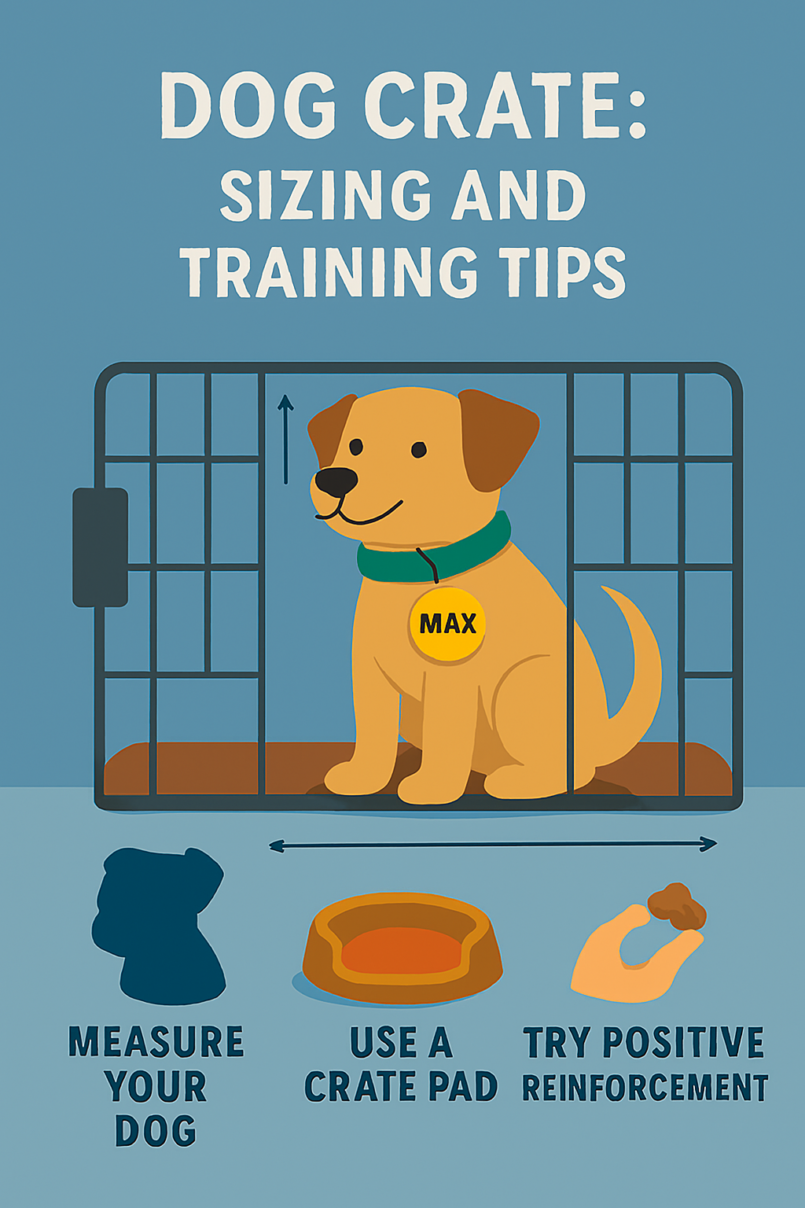
A crate should be large enough for your dog to stand up, turn around, and lie down comfortably, but not so big that they can use one end as a bathroom and the other as a sleeping area. For puppies, many owners choose a larger crate with a divider so the space can grow with the dog while still staying appropriately sized at each stage.
To size a crate, measure your dog from nose to tail and add a few inches for comfort. Also measure their height at the shoulder to ensure the crate is tall enough. Many brands provide size charts by weight and breed; use these as a starting point, then adjust based on your dog’s build and any bedding you plan to add.
Types of Dog Crates
The most common types are wire, plastic (airline‑style), and soft‑sided crates. Wire crates offer good airflow and visibility, making them ideal for home use. Plastic crates are often used for travel because they are sturdy and fit airline requirements. Soft‑sided crates are lightweight and portable but are best for calm dogs and short trips.
For everyday home use, a wire crate with a removable tray is usually the most practical. Look for one with a solid bottom tray for easy cleaning and removable panels or doors that open from the side and top for flexible placement in your home.
Introducing Your Dog to the Crate
Start by placing the crate in a quiet but social area of your home, leaving the door open so your dog can investigate. Toss treats, toys, or meals inside to create a positive association. Let your dog enter and exit freely at first; never force them in.
Once your dog is comfortable going in and out, begin closing the door for very short periods while you stay nearby, then gradually increase the time. Always praise calm behavior and avoid using the crate as a timeout for misbehavior, as this can create fear or resistance.
10 Frequently Asked Questions (FAQs)
1. How do I know if a crate is the right size?
A properly sized crate allows your dog to stand, turn, and lie down without extra room for separate “bathroom” and “sleep” areas. If your dog can stretch out fully and still have a little extra space, the size is usually correct.
2. Should I get a crate that fits my puppy’s adult size?
Many owners buy a larger crate with a divider so the puppy has room to grow. This avoids buying multiple crates, but you must block off extra space so the puppy cannot eliminate in one end and sleep in the other.
3. How long can a dog stay in a crate?
Adult dogs should not be crated for more than 6–8 hours at a time, and puppies much less (about one hour per month of age). Crating is for short‑term management, not all‑day confinement.
4. Can crating help with housebreaking?
Yes—crates help housebreaking because dogs naturally avoid soiling where they sleep. Use the crate during naps and when you cannot supervise, and take your dog out frequently to eliminate.
5. My dog whines in the crate; what should I do?
First, rule out physical needs like bathroom breaks, hunger, or discomfort. If your dog is okay, wait for a quiet moment before opening the door so they learn that whining does not get them out. Gradually increase crate time and keep sessions positive.
6. Is it okay to leave water in the crate?
For short stays, water is usually fine, but for long periods or overnight, many owners remove it to reduce accidents. Use a spill‑proof bowl if you do leave water, and monitor your dog’s drinking habits.
7. Can I crate my dog while I’m at work?
For many dogs, crating during work hours is acceptable if the crate is the right size, the dog is well‑exercised, and they have had bathroom breaks. For longer days, consider a dog walker or doggy daycare so your dog is not confined all day.
8. Should I cover the crate with a blanket?
Some dogs feel more secure with a light cover that blocks visual stimulation, but ensure there is still good airflow and that the blanket cannot be chewed or pulled inside. Watch your dog’s reaction and remove the cover if they seem stressed.
9. Can older or anxious dogs use crates?
Yes—many senior or anxious dogs benefit from a crate as a safe, predictable space. Use soft bedding, calming scents, and slow, positive training to help them feel secure.
10. How do I clean and maintain a dog crate?
Wipe down the tray regularly with pet‑safe cleaner and wash bedding often. Check for loose wires, sharp edges, or worn latches and repair or replace as needed. A clean, well‑maintained crate is more inviting and safer for your dog.
Using the Crate for Training and Daily Life
Beyond housebreaking, a crate can support training by giving your dog a quiet place to rest and helping manage behaviors like jumping or begging. Use it for short “settle” sessions, travel, and vet or grooming visits so your dog remains comfortable in it throughout life.
By pairing the right crate size with patient, reward‑based training, you can turn a simple wire box into a trusted sanctuary your dog chooses to enter on their own. With consistency and kindness, crating becomes a positive part of your dog’s routine rather than a chore.