A dog door gives your dog the freedom to come and go between the house and yard safely and independently. When installed correctly, it becomes a convenient, pet‑friendly access point that reduces door‑scratching, barking, and the need for constant supervision. This guide walks you through choosing the right dog door, deciding where to place it, and installing it so it’s secure, weather‑tight, and comfortable for your dog.
Why Install a Dog Door?
A dog door is especially useful for active dogs that need frequent bathroom breaks or love to spend time in the yard. It can reduce accidents indoors, ease your schedule, and give your dog more mental stimulation by letting them step outside whenever they need to. Many owners also find it helpful for training, as dogs quickly learn to use the door instead of waiting by the human door.
Modern dog doors are designed to be secure and energy‑efficient, with tight‑fitting flaps, weather seals, and optional locking panels. When properly sized and installed, they add convenience without sacrificing safety or comfort for your home.
Choosing the Right Dog Door Size
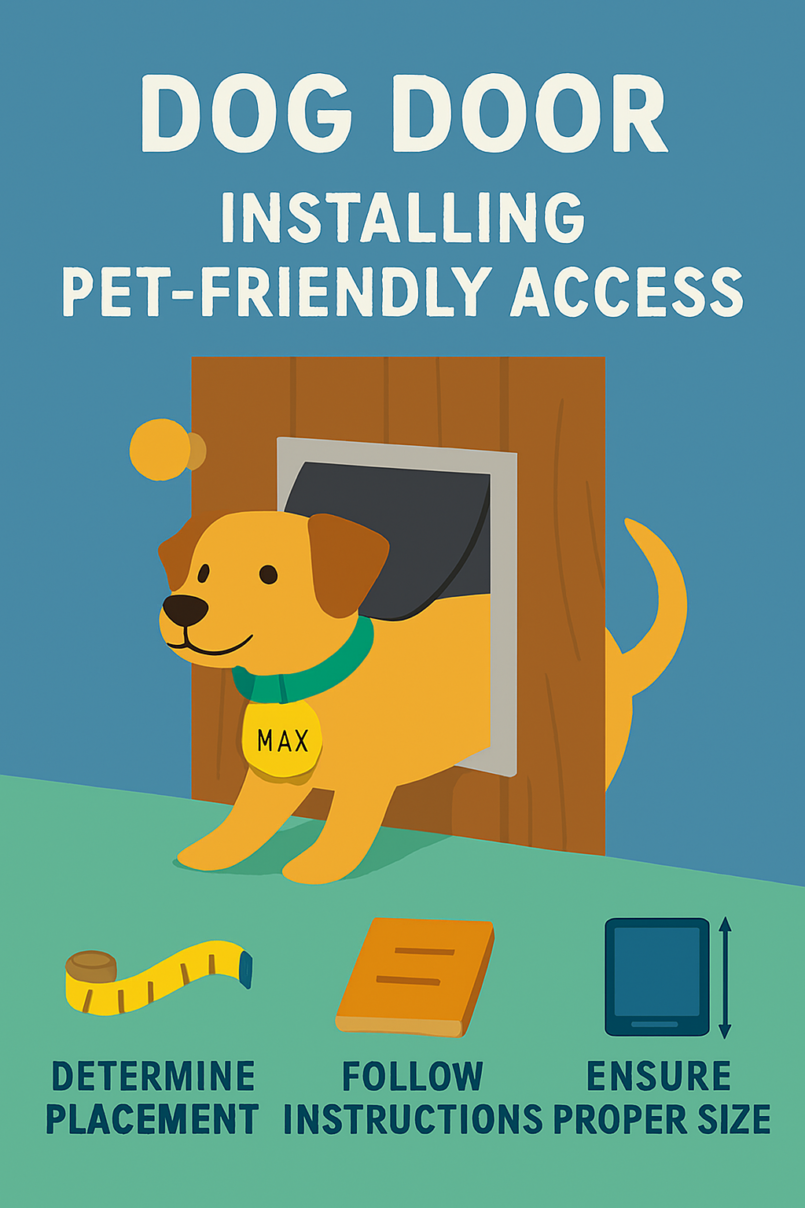
The first step is measuring your dog. Measure from the floor to the top of their shoulders, then add a few inches to determine the minimum height of the opening. For width, measure across their shoulders and add about 2 inches so they can pass through comfortably without squeezing.
Most manufacturers provide size charts by weight and breed, but always base your choice on your dog’s actual measurements. If you have a growing puppy, consider a model that can be adjusted or plan to upgrade later. A door that is too small will discourage use; one that is too large can be drafty and less secure.
Types of Dog Doors
Common dog door types include in‑door models (installed in an exterior door), wall‑mounted units, and sliding‑glass‑door inserts. In‑door dog doors are ideal if you have a solid exterior door and want a permanent, low‑profile option. Wall‑mounted units are good when you don’t want to cut into a door or have a preferred wall location.
Sliding‑glass‑door dog doors attach to the track of a patio door and are popular in homes with large glass panels. Many models feature insulated flaps, dual or triple flaps, and locking panels so you can close the door at night or when you’re away.
Where to Install a Dog Door
Choose a location that is safe, convenient, and easy for your dog to reach. The door or wall should be on the side of the house that leads directly to a fenced yard, away from traffic, busy sidewalks, or hazards. Avoid placing the dog door near steps, steep slopes, or areas where your dog could get stuck.
On a door, position the opening so the bottom of the flap is at least a few inches above the floor to prevent drafts and water entry. On a wall, install it at a height that matches your dog’s shoulder measurement so they don’t have to jump or crouch awkwardly. Make sure the surrounding area is clear of furniture or obstacles.
Basic Installation Steps
Most dog doors come with a template or detailed instructions. Start by removing the exterior door from its hinges if you’re cutting into it, then lay it on a flat surface. Place the template where you want the opening and trace it, making sure it is level and at the correct height.
Drill starter holes at the corners, then use a jigsaw to cut along the outline. Sand any rough edges and test‑fit the interior frame. Mark and drill screw holes, then secure the frame from both sides. Install the exterior frame, add weather‑stripping or caulk as recommended, and rehang the door. For wall or sliding‑glass installations, follow the manufacturer’s guide for framing and sealing.
10 Frequently Asked Questions (FAQs)
1. Can any door be used for a dog door?
Most solid exterior doors work well, but hollow‑core or very thin doors may not be strong enough. Metal or fiberglass doors are usually suitable if you use the correct tools and follow the manufacturer’s guidelines.
2. How high should the dog door be off the ground?
The bottom of the flap should be a few inches above the floor or ground so your dog can step through easily and water or debris does not pool under the door.
3. Will a dog door let in cold air or bugs?
A well‑sealed, insulated dog door with a tight‑fitting flap minimizes drafts and pests. Look for models with dual flaps, magnetic seals, or weatherstripping, and keep the flap clean and in good condition.
4. Can I install a dog door myself?
Yes—many homeowners install in‑door or sliding‑glass dog doors with basic tools like a drill, jigsaw, and measuring tape. If you’re uncomfortable cutting into a wall or door, consider hiring a professional installer.
5. How do I train my dog to use the dog door?
Start by propping the flap open and encouraging your dog through with treats or toys. Gently guide them and praise success. Gradually let the flap close more until they push through on their own. Avoid forcing them, as this can create fear.
6. Are dog doors safe from intruders?
Most dog doors include a locking panel or cover you can close at night or when you’re away. Choose a model with a secure lock and consider adding an alarm or camera if security is a concern.
7. Can I install a dog door in a wall?
Yes—wall‑mounted dog doors are common and can be installed through exterior walls. This usually requires cutting a hole and framing it like a small window, so follow building codes and manufacturer instructions carefully.
8. What if my dog is afraid of the dog door?
Some dogs are hesitant at first. Remove any obstacles, keep the flap fully open, and use high‑value treats or toys to lure them through. Go slowly and never punish or rush them.
9. Can I use a dog door with multiple pets?
Yes—many dog doors work for cats and smaller dogs as well. Make sure the opening is large enough for your biggest pet and that smaller animals can still manage the flap without getting stuck.
10. How do I maintain a dog door?
Regularly clean the flap and frame with mild soap and water, and check for cracks or wear. Lubricate hinges or moving parts if recommended, and replace worn flaps to maintain weather‑tightness and ease of use.
Using the Dog Door in Daily Life
Once installed and your dog is comfortable using it, a dog door can simplify your routine and improve your dog’s quality of life. Use it for supervised access to the yard, potty breaks, and safe outdoor time while you’re home. Close or lock the door when you’re not around or during bad weather.
By choosing the right size, type, and location, and installing it carefully, you can create a pet‑friendly access point that keeps your dog happy and your home comfortable and secure.