Why Does My Dog Scoot Their Butt on the Floor?
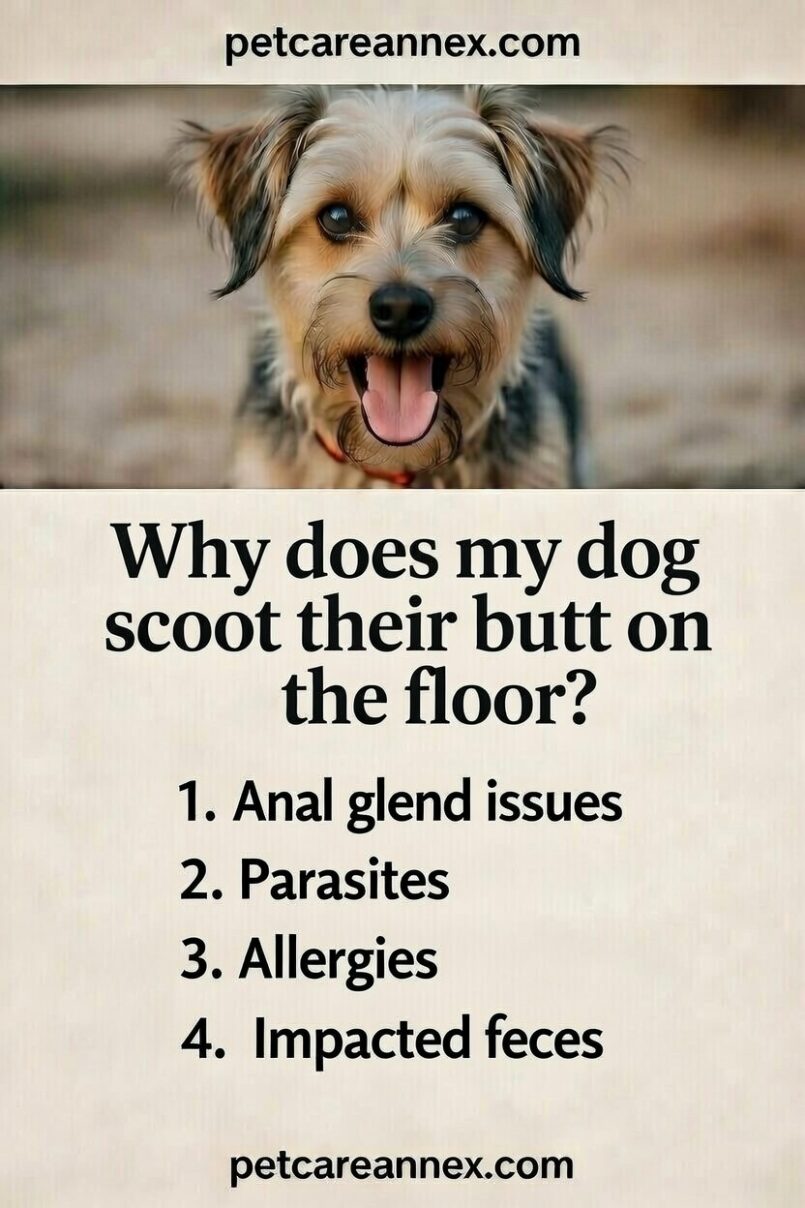
When a dog scoots their butt on the floor, it almost always means something is irritating or uncomfortable around their rear end, not that they are just being silly. The most common cause is trouble with the anal glands, but parasites, allergies, skin infections, and other problems can also be behind the behavior.
Anal Glands: The Number One Cause
Dogs have two small anal glands (anal sacs) just inside the anus that normally empty a smelly fluid when they poop. If these glands become full, thickened, or blocked (impacted), they create pressure and itching, and dogs often scoot or lick to try to relieve the discomfort.
Other Medical Reasons for Scooting
Besides simple impaction, anal glands can become infected, form abscesses (painful swollen pockets of pus), or develop tumors, all of which can cause scooting and pain. Dogs may also scoot from skin infections, perianal fistulas (small draining holes around the anus), hemorrhoid‑like swelling, or irritation from diarrhea or constipation.
Parasites and Allergies
Intestinal parasites like tapeworms, roundworms, and other worms can irritate the anal area and make dogs drag their bottoms. Food or environmental allergies can also cause intense itching around the rear end, often along with paw licking, ear problems, or general skin irritation.
Signs to Watch For Around the Rear End
Clues that something more than a simple itch is going on include redness, swelling, matting of fur, or a strong, fishy or foul odor near the anus. You might also see brownish or oily discharge on bedding, spots of blood or pus, or your dog suddenly reacting when they sit or when you touch near their tail.
When Scooting Is an Emergency or Needs the Vet
Occasional single scoots after a loose stool can be harmless, but frequent scooting or obvious pain should be checked by a veterinarian. Red, hot swelling, bloody discharge, visible worms, lethargy, or changes in appetite, weight, or bathroom habits are all reasons to book a visit promptly.
What Vets Usually Do for Scooting
A vet exam typically includes checking and safely expressing the anal glands, looking for infection, abscesses, or masses, and inspecting the skin and stool for parasites. Treatment may involve gland expression, antibiotics or anti‑inflammatory medications, dewormers, pain relief, or surgery in severe or tumor cases.
Home Care and What Not to Do
You can keep the area gently clean, prevent matting of hair, and monitor how often your dog scoots, but avoid trying to squeeze or “express” anal glands yourself without training because you can injure your dog or miss an infection. Over‑the‑counter creams or wipes around the anus should only be used if a vet confirms they are safe, as some products can further irritate delicate skin.
Preventing Recurring Scooting
Maintaining a healthy weight, feeding a balanced diet with adequate fiber, and keeping stools well‑formed can help anal glands empty more normally and reduce problems. Regular parasite prevention and prompt treatment of diarrhea, skin issues, or allergies also lower the chance of ongoing itchiness and scooting.
10 Frequently Asked Questions About Dog Scooting
1. Why is my dog scooting if they don’t have fleas?
Fleas are not the main cause of scooting; anal gland problems, worms, allergies, or local skin infections are much more common reasons for dragging the butt. A vet exam is needed to tell which of these is affecting your dog and to choose the right treatment.
2. How can I tell if anal glands are the problem?
Typical anal gland signs include frequent scooting, licking or chewing at the rear, a strong fishy smell, and sometimes swelling or a bulge near the anus. Dogs may also suddenly sit down, act uncomfortable when they poop, or yelp if you touch near their tail.
3. Can worms make my dog scoot?
Yes, intestinal parasites like tapeworms and roundworms can irritate the anal area and cause scooting, sometimes with visible worm segments in the stool or around the anus. Weight loss, a bloated belly, diarrhea, or a dull coat together with scooting are extra reasons to have your vet check for worms and prescribe dewormers.
4. Is scooting always something serious?
Not always—an occasional single scoot after a soft stool or minor itch might not mean a major problem. However, repeated scooting, strong odor, pain, bleeding, or any swelling or discharge usually indicates an issue that needs veterinary attention rather than watch‑and‑wait.
5. Should I try to express my dog’s anal glands at home?
It is generally safer to let a veterinarian or trained professional handle anal gland expression, because improper technique can cause pain, injury, or push infected material deeper. A vet can also see if the glands are infected, abscessed, or abnormal, which you might miss at home.
6. What if my dog scoots but I don’t see any swelling or discharge?
Anal glands can still be full or mildly irritated without obvious external changes, and allergies or mild skin irritation can also cause itching with a normal‑looking rear. If scooting happens often or your dog seems uncomfortable, a vet check is still recommended to rule out early problems.
7. Could allergies be causing my dog to scoot?
Yes, allergies to food or environmental triggers like pollen or dust can cause anal itching and scooting, often along with paw licking, ear inflammation, or general skin problems. Managing allergies with your vet—through diet trials, medication, or other therapies—can reduce scooting in these cases.
8. When is scooting an emergency?
Seek urgent care if you see a large, painful lump, obvious blood or pus, severe redness, or if your dog is very distressed, lethargic, or straining to defecate. These signs can point to an anal gland abscess, severe infection, or other serious problems that need prompt treatment.
9. How can diet help with anal gland and scooting issues?
Firmer, well‑formed stools provide natural pressure to help empty the anal glands during bowel movements, and dietary fiber can support this process. Your veterinarian may suggest a specific food or fiber supplement to improve stool quality and reduce recurring gland impaction and scooting.
10. What’s the best overall approach if my dog keeps scooting?
If scooting is frequent, the best plan is to have your vet examine the anal glands, check for parasites or infections, and review your dog’s diet, stool quality, and allergy history. With a clear diagnosis, you can combine targeted treatment, preventive care, and possibly diet or lifestyle changes to keep your dog comfortable and reduce future scooting episodes.