What Makes a Puppy Easy to Train?
An easy‑to‑train puppy usually has a **biddable** temperament: they naturally look to people for guidance and enjoy working with you. These dogs are often food‑motivated, not overly independent, and recover quickly from new or mildly stressful situations. For beginners, it also helps if the breed is generally gentle, sociable with strangers and other dogs, and not prone to extreme guarding or anxiety. Keep in mind that even “easy” breeds still need consistent, positive training and structure to reach their potential.
Top Medium–Large Breeds for Beginners
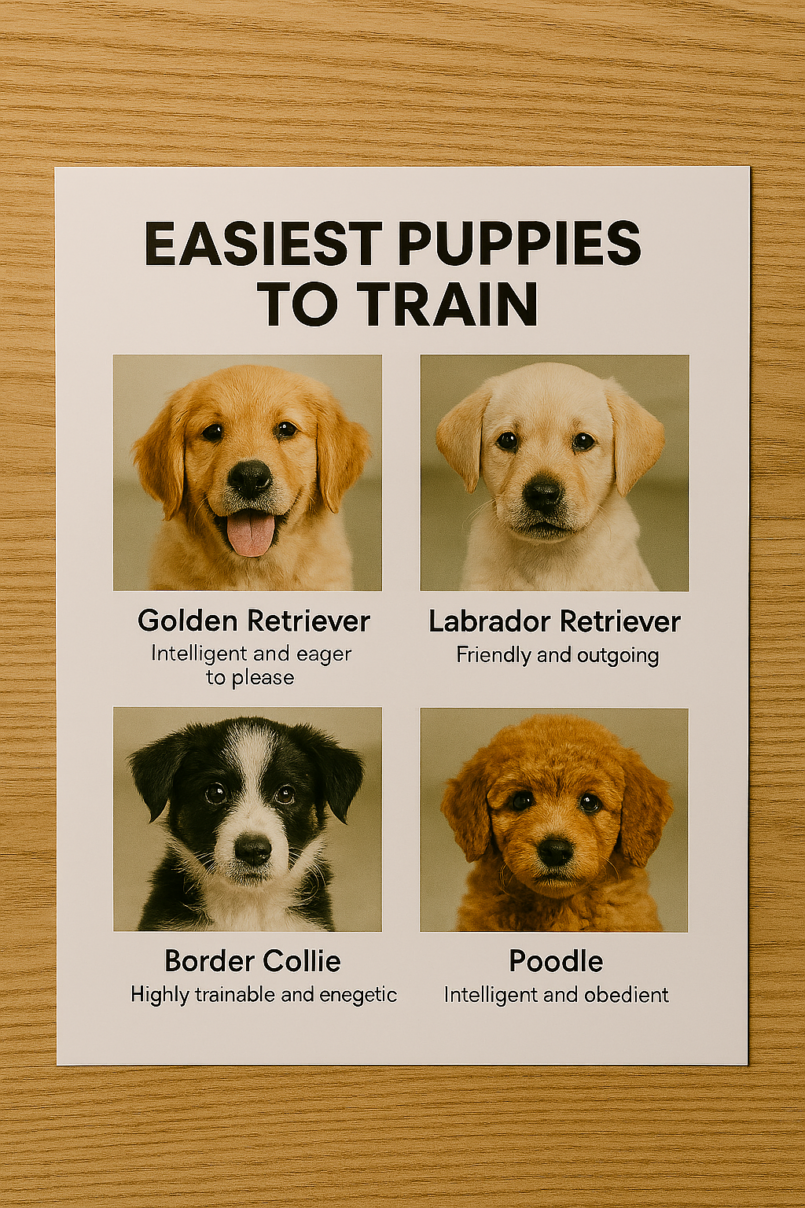
Many experts point to Labrador Retrievers and Golden Retrievers as classic first‑dog choices thanks to their friendliness and strong desire to please. Labs are quick learners, highly food‑motivated, and usually resilient, provided they get enough exercise and mental stimulation. Golden Retrievers are similarly trainable and family‑oriented, though they need regular grooming and daily activity to stay well‑behaved. Well‑bred show‑line Labradors and Goldens are often recommended specifically for first‑time owners because their temperaments tend to be softer and more forgiving than some working lines. For active beginners who want a bit more athleticism without extreme intensity, breeds like the standard Poodle can also be excellent: they’re highly intelligent, low‑shedding, and very responsive to training.
Top Small and Toy Breeds for Beginners
If you prefer a smaller dog, several breeds combine easygoing personalities with good trainability. Cavaliers (Cavalier King Charles Spaniels) are repeatedly recommended for first‑time owners because they are affectionate, adaptable, and generally eager to follow simple household rules. Havanese and Bichon Frise are also noted as cheerful, people‑focused toy breeds that usually train well with gentle, reward‑based methods. Shih Tzus and Pugs tend to be companion‑oriented and manageable for beginners, though they can be a bit more stubborn and need attention to grooming (Shih Tzu) or weight and heat sensitivity (Pug). Small, bright dogs like the Papillon can be extremely quick learners, but they still require mental engagement despite their size.
Example Beginner‑Friendly Breeds
| Breed | Size | Why They’re Good for Beginners | Key Considerations |
|---|---|---|---|
| Labrador Retriever | Medium–large | Very trainable, friendly, food‑motivated. | Needs daily exercise, can be boisterous. |
| Golden Retriever | Medium–large | Eager to please, great with families, learns quickly. | Heavy shedding, needs grooming and activity. |
| Poodle (Standard/Mini/Toy) | Varies | Highly intelligent, responsive, low‑shedding coat. | Regular grooming or professional clips needed. |
| Cavalier King Charles Spaniel | Small | Gentle, adaptable, easygoing, often easy to train. | Prone to some health issues; moderate grooming. |
| Havanese | Small | People‑oriented, enjoys training, adaptable. | Coat needs routine care; likes company. |
| Bichon Frise | Small | Bred as companion, generally easy to train and socialize. | Regular grooming; may dislike being left alone. |
| Shih Tzu | Small | Recommended for first‑time owners; typically affectionate. | Coat care important; training should be gentle. |
| Pug | Small | Friendly, thrives on human attention, can train well. | Monitor weight, breathing, and heat. |
Matching Breed to Your Lifestyle
Even within “easy” breeds, picking the right puppy means matching energy level and grooming needs to your daily routine. High‑energy dogs like Labs and Goldens suit owners who enjoy walks, play, and training most days; lower‑key small breeds may fit apartment or city life better. Consider how much time you can devote to exercise, brushing, and training, and whether you prefer a social butterfly or a quieter lapdog. Finally, remember that individual personality and good early socialization matter as much as breed, so always meet the puppy or parents and choose a responsible source that prioritizes health and temperament.