
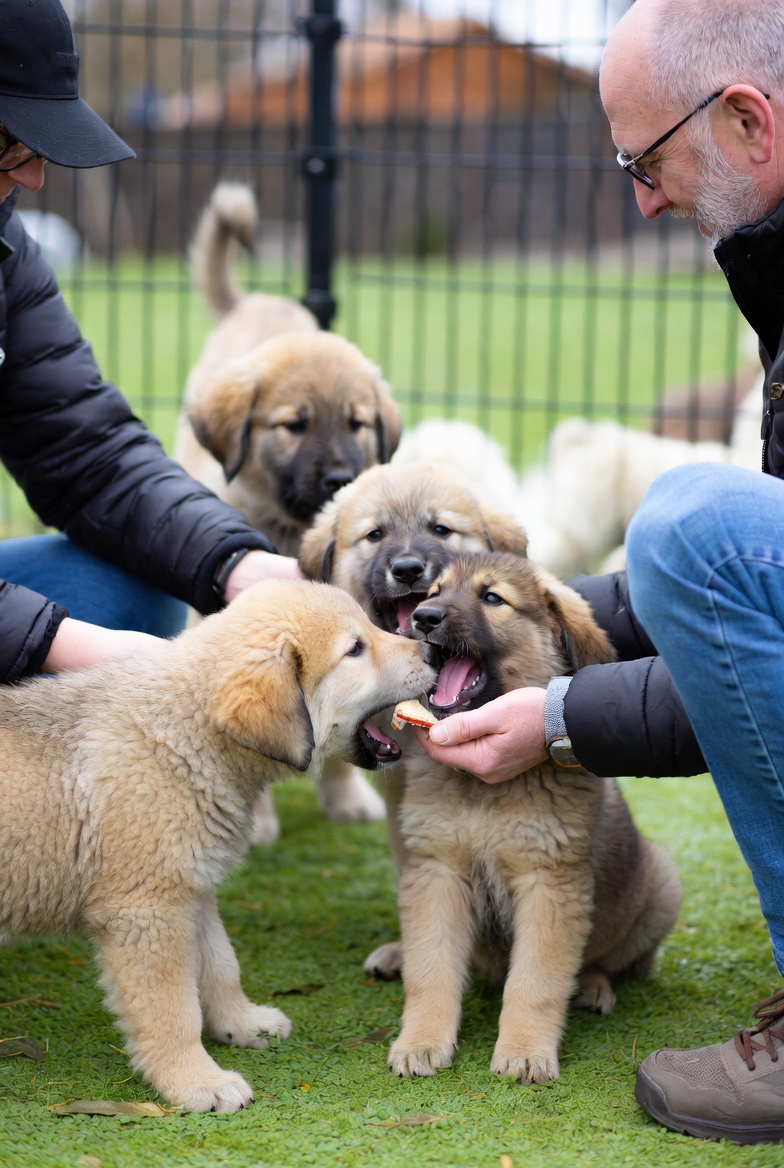
Puppy biting is a normal part of growing up, but those sharp little teeth can still hurt. The goal isn’t to “shut it down” harshly, but to teach your puppy how to use their mouth gently and what is okay to chew. With calm, consistent training, most puppies outgrow rough nipping and learn better ways to play. A gentle approach protects your bond while guiding your pup toward polite behavior.
Why Puppies Bite
Puppies explore the world with their mouths, just like human babies use their hands. They bite during play, when they’re teething, and when they’re overtired or overstimulated. In a litter, other puppies yelp or walk away if someone bites too hard, which teaches bite control over time. When your puppy comes home, you step into that role—showing them what’s too rough and what’s acceptable.
Teaching Bite Inhibition
Bite inhibition means teaching your puppy to control how hard they bite, not just “never bite.” When your puppy mouths you and it crosses your pain threshold, let out a brief, high‑pitched “Ouch!” and immediately stop all interaction. Take your hand away, look away, and freeze or calmly leave the room for 20–60 seconds. This shows your puppy that hard bites make play stop; over time, you can “raise the bar” and ask for softer and softer mouths.
Redirecting to Appropriate Chew Toys
Simply saying “no” isn’t enough—your puppy needs to know what they *should* bite. Keep a variety of safe chew toys nearby (rubber chews, food‑stuffable toys, puppy‑safe bones) and offer one as soon as they start mouthing skin or clothes. Move the toy to make it more interesting than your hands, and praise when they latch onto it. Regularly feeding some meals from food‑dispensing toys also builds a habit of chewing on the right things.
Managing Play So It Stays Gentle
Rough play creates rough mouths. Avoid wrestling with your hands, letting your pup chase and grab your feet, or waving fingers in front of their face. Instead, use toys as the “middleman” for energy—tug ropes, flirt poles, and balls keep teeth off skin. If play escalates and your puppy gets wild or bitey, pause the game, give a short break, and resume only when they’re calmer. This teaches that self‑control keeps the fun going.
Preventing Overtired, Overstimulated Biting
Many puppies bite most when they’re actually exhausted, not under‑exercised. Watch for signs of overtiredness: zoomies, ignoring cues they usually know, and escalating nipping. Build a daily rhythm of short play/training sessions, potty breaks, and regular naps in a crate or quiet area. A puppy who has had physical exercise, mental enrichment, and enough sleep is far less likely to turn into a “land shark.”
Using Gentle Time‑Outs
If yelping and redirection don’t work and your puppy keeps biting hard, use very short, calm time‑outs. That can mean you stand up and step behind a baby gate, or quietly pop your pup in a safe pen for 30–60 seconds—no scolding, no drama. The message is simple: biting too hard ends access to you and to fun. Be consistent and keep these breaks brief so they feel like a clear consequence, not abandonment.
What to Avoid
Harsh methods often make biting worse or create new problems. Don’t hit, grab the muzzle, pin your puppy, yell, or shake scruff; these can frighten them and damage trust. Avoid punishment collars or squirting water in the face—these may stop biting in the moment but don’t teach better choices and can increase anxiety. Also skip “discipline games” like tapping the nose or alpha‑rolling; puppies learn much faster with clear, kind guidance.
Involving Family and Kids Safely
Everyone in the household should respond to biting the same way so your puppy doesn’t get mixed messages. Teach children to use toys instead of hands, to stand still or “be a tree” if the puppy gets too rough, and to let an adult step in. Supervise closely and separate puppy and kids with gates or pens when either is too wound up. Protecting both children and puppy from overwhelming interactions makes training smoother and safer.
When to Get Extra Help
Normal puppy biting is playful, brief, and improves with consistent training over weeks and months. If your puppy’s biting is intense, targeted (especially around face or when you approach food or toys), or comes with growling and stiff body language, it’s wise to get professional guidance. A qualified, positive‑reinforcement trainer or behavior consultant can assess whether it’s typical play, frustration, or early aggression and design a tailored plan. With patience, structure, and gentle methods, even very mouthy puppies can grow into polite, soft‑mouthed adult dogs.