A well-planned crate schedule can turn a chaotic puppy phase into a predictable, calmer routine for both you and your dog. By rotating potty breaks, play, training, and naps in the crate, you help your puppy learn when to rest and when to be active. A clear schedule also speeds up house‑training and reduces whining, chewing, and other problem behaviors. Think of the crate as a **tool** for structure and safety, not a place of punishment.
Core Principles of a Crate Schedule
A good crate routine follows a simple rhythm: crate (rest), potty, play/training, supervised free time, then back to the crate. Young puppies need frequent potty breaks because they can only hold their bladder for a short time. Most pups also require 18–20 hours of sleep a day, so a lot of their time will naturally be spent napping. The aim is not to “lock them up,” but to give them regular downtime so they don’t become overtired, overstimulated, and naughty.
Morning Schedule Example
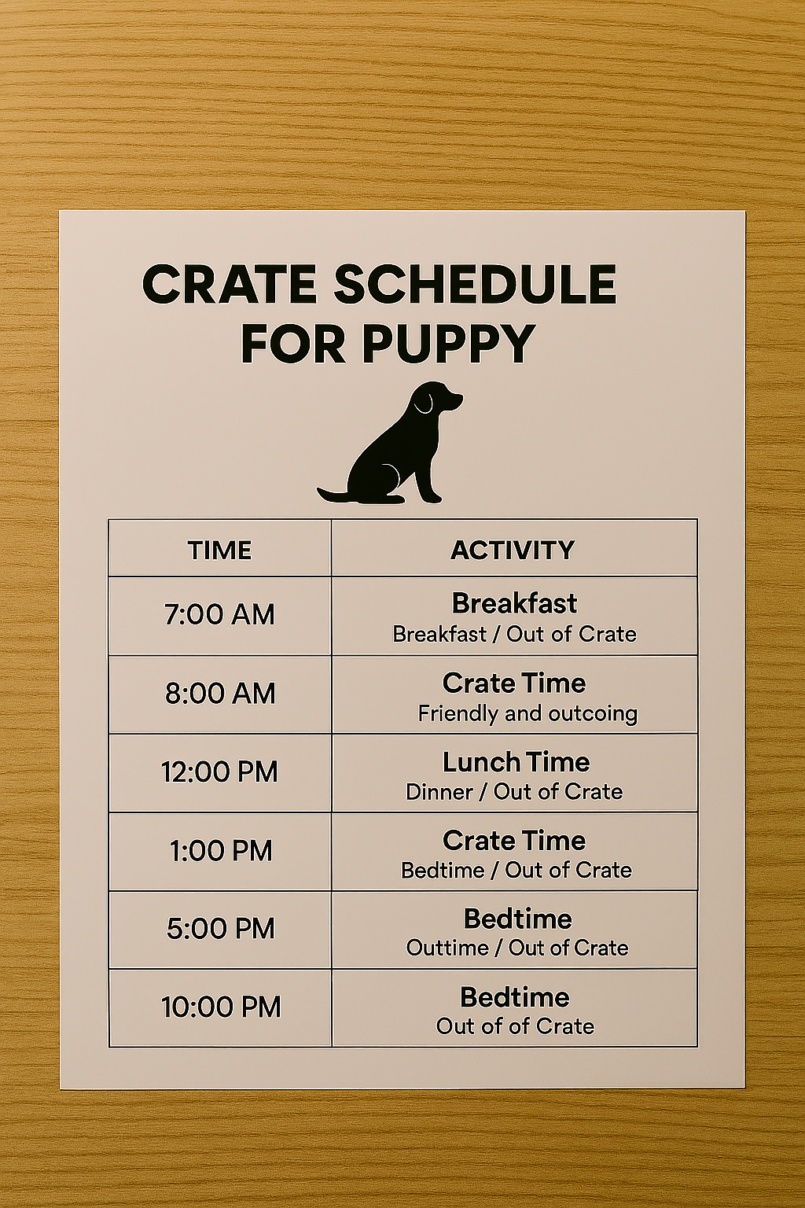
Mornings set the tone for the day, so start with clarity and consistency. As soon as your puppy wakes up, take them straight outside for a potty break before any play or cuddles. After they go, offer breakfast and a short supervised play or training session to burn some energy. Once they’re a bit tired, it’s back into the crate for a nap—often 1–2 hours for very young puppies. This “wake, potty, eat, play, crate” cycle can repeat two or three times in the morning depending on your routine.
Midday Schedule Example
Midday is usually a mix of potty breaks, short activity windows, and naps. After a crate nap, bring your puppy out for a potty break, then give 30–60 minutes of supervised play, gentle training, or calm time near you. When they start to slow down—sniffing around, getting mouthy, or zoning out—it’s a sign they are getting tired, so offer another potty trip followed by crate time. If you’re at work, plan for someone to let the puppy out every few hours; long, uninterrupted crate stretches are too much for very young pups.
Afternoon and Evening Schedule Example
The afternoon can mirror the midday routine with another cycle of crate, potty, play, and supervision. As you approach evening, puppies often get a “zoomie” energy burst, so schedule interactive play or training before dinner. After the evening meal, allow a short settling period in the crate, then a final play and cuddle window under close supervision. Aim for one last potty trip right before bed so your puppy goes into the crate tired and with an empty bladder. Over time, you’ll notice natural patterns in when your puppy tends to nap and can adjust these blocks accordingly.
Overnight Crate Schedule
At night, most young puppies still need at least one planned potty break. Place the crate in or near your bedroom so your presence is reassuring and you can hear if they wake. Start by setting an alarm for a reasonable interval (for example, every 3–4 hours for very young pups), take them out on leash for a quick potty, then return them calmly to the crate. As they grow and begin waking up dry, gently lengthen the time between overnight breaks until they can sleep through the night. Keeping interactions very low‑key helps your puppy learn that nighttime is for sleeping, not playing.
Adjusting the Schedule by Age
The younger the puppy, the shorter their awake windows and the more frequent their potty breaks. Very young puppies may only manage 45–60 minutes of awake time before needing a nap, while older pups can stay up and active longer. As your puppy matures, you can gradually increase crate stretches during the day and reduce the number of naps while still protecting some quiet rest periods. Watch your puppy’s behavior: if they are getting wild, grabby, or unfocused, it usually means they’re tired, not that they need more stimulation.
Balancing Crate Time and Freedom
A healthy crate schedule balances confinement with supervised freedom and social time. Puppies should not spend all day in the crate; they also need time to explore, meet people, learn house rules, and bond with you. Use baby gates, pens, or leashes to provide safe, supervised areas outside the crate rather than giving full unsupervised run of the house. Over weeks and months, as your puppy proves they can stay calm, chew appropriate items, and hold their bladder, you can slowly grant more free time and rely less on the crate.
Common Scheduling Mistakes
Several schedule mistakes can make crate training harder than it needs to be. Leaving a puppy crated too long without breaks often leads to accidents and frustration, which sets back house‑training. Keeping them awake for hours on end can create an overtired, bitey puppy who can’t settle, even in the crate. Inconsistent patterns—random meal times, irregular potty trips, unpredictable crate use—make it hard for your puppy to understand what’s expected. Aim for a routine that is repeatable most days, even if the exact times shift slightly.
Customizing a Routine That Works for You
Every household is different, so treat any sample schedule as a template rather than a strict rule. Start by mapping your own day—wake time, work, school runs, meals, bedtime—and fit your puppy’s crate, potty, and play blocks around those anchor points. If you work long hours, consider dog walkers, daycare, or help from friends or family so your puppy isn’t confined for too long. Check in weekly and tweak the routine based on how your puppy is doing: fewer accidents, calmer crate time, and predictable nap patterns are signs the schedule is working. With consistency and small adjustments, your crate schedule will become a natural rhythm that supports a well‑rested, well‑behaved, and secure puppy.