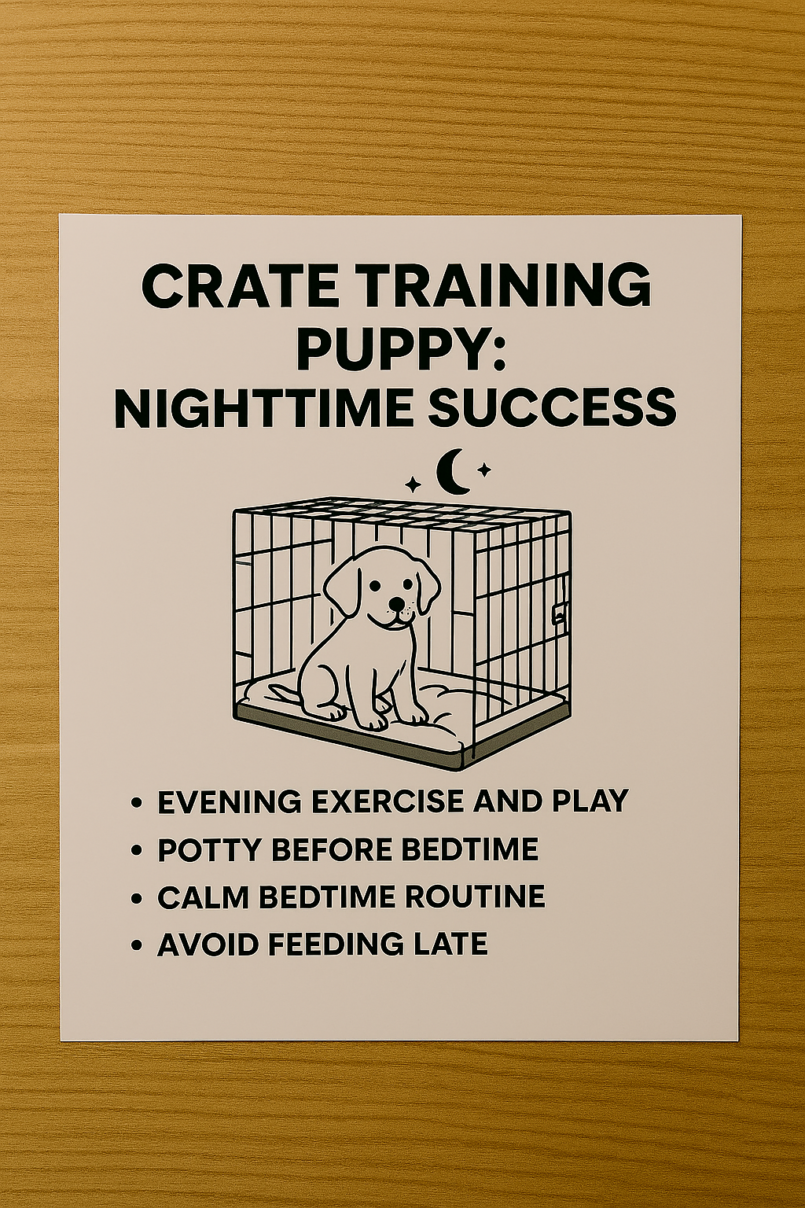
Crate training a puppy for nighttime success transforms chaotic evenings into peaceful sleep for both of you. With the right setup and routine, most puppies learn to settle quietly overnight within a few weeks.
Why Nighttime Crate Training Works
Puppies naturally avoid soiling their sleeping area, making a properly sized crate an effective tool for house training and preventing midnight accidents. Placing the crate near your bed provides comfort through your familiar scent and breathing sounds, reducing separation anxiety. Over time, this builds confidence, teaching your puppy that nighttime is for rest, not play or worry.
Choosing the Perfect Nighttime Crate
Select a crate just large enough for your puppy to stand, turn around, and lie down comfortably—use a divider if needed for growing pups. Wire crates with good airflow work well, but cover three sides with a breathable blanket to create a cozy den feel. Position it right beside your bed initially, so you can reach through the bars to reassure without getting up. Avoid placing it in isolated spots like a garage, as this increases whining.
Pre-Bedtime Routine Essentials
A consistent wind-down sets the stage for success. Two to three hours before bed, stop food and limit water to avoid full-bladder wake-ups. Tire your puppy with evening play, a short walk, and mental games like treat puzzles, but calm down 30 minutes prior—no zoomies right before crate time. End with a final, boring potty trip: leash to the yard, stand still, praise softly if they go, then straight to the crate.
Making the Crate Inviting
Turn the crate into a positive retreat before night one. Feed evening meals inside with the door open, drop random treats during the day, and practice short daytime closes. Add a worn T-shirt of yours for scent comfort and a safe chew like a frozen Kong stuffed with peanut butter. Soft lighting and a ticking clock or white noise machine mimic littermates, easing the transition from siblings.
First Nights: Realistic Expectations
Expect some protest—puppies under 12 weeks can’t hold it all night and may whine for potty needs. On night one, cover the crate fully, say a calm “good night,” and ignore brief fussing. If crying escalates after 10-15 minutes, take them out on leash for a quick potty (no talk, no play), then return them immediately. Consistency prevents learned helplessness; most improve by night three.
Managing Nighttime Potty Breaks
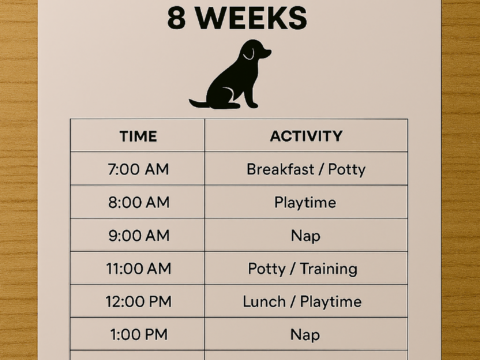
Proactive breaks beat reactive ones. Set alarms: every 2-3 hours for 8-week-olds, stretching to 4-5 hours by 12 weeks. Carry sleepy puppies out, minimal light or words, praise quietly only if they potty, then back to crate. No lingering or fun—keep it business. Track successes; when mornings are dry, extend intervals until full nights emerge around 4-6 months.
Handling Whining and Setbacks
Whining signals potty, under-exercise, or anxiety—rule out needs first. Wait for 10-30 seconds of quiet before opening, rewarding silence. Never yell or bang; it heightens stress. If persistent after a week, shorten daytime sessions or add comfort like a heartbeat toy. Regressions from teething or changes? Revert to basics without frustration—progress isn’t linear.
Daytime Practice Supports Nights
Night success relies on daytime habits. Crate for naps after play (1-2 hours max), feeding short sessions throughout the day. Practice alone time: step out for seconds, building to minutes. Tired puppies from exercise and enrichment settle faster at night. Aim for 18-20 hours total sleep daily, split between crate naps and nights.
Transitioning to Independence
Once sleeping through (dry mornings, no cries), gradually move the crate farther from your bed over weeks. Leave the door open during days for voluntary use. By 6 months, many choose the crate as a safe space. Fade covers if desired, but keep for travel or storms—lifelong security starts here.
Long-Term Benefits
Nighttime crate mastery means fewer accidents, better sleep, and a confident puppy. It prevents resource guarding or destructive habits by teaching boundaries. Adult dogs often self-crate for downtime, easing vet visits or boarding. Patience in those first tough nights yields years of calm evenings and a bonded companion.