What Are Signs My Dog Is in Pain or Sick?
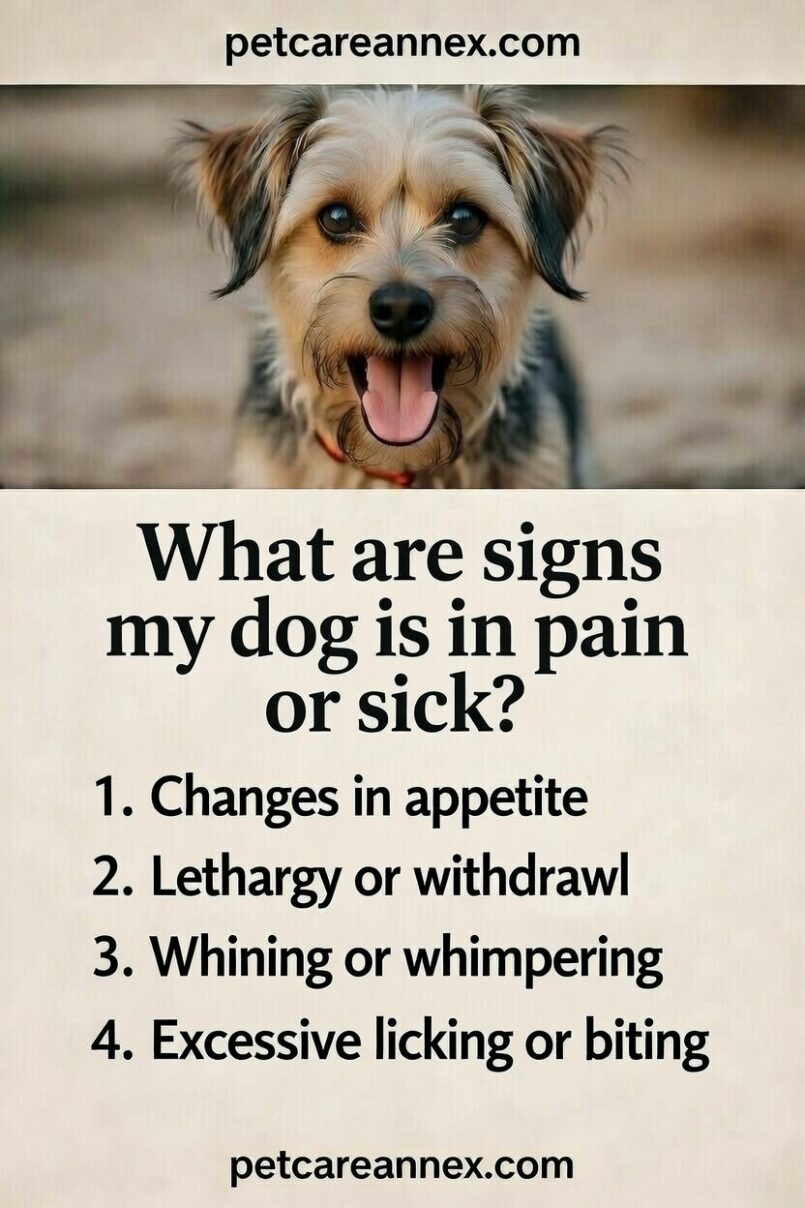
Dogs often hide pain and illness, so changes can be subtle at first. Watching for shifts in behavior, movement, appetite, and body language helps you spot problems early and get veterinary care before your dog becomes seriously unwell.
Behavior Changes You Might Notice
One of the earliest clues is that your dog “isn’t acting like themselves,” such as being quieter, clingier, or more withdrawn than usual. You might see a loss of interest in play or walks, irritability, growling when touched, hiding, or changes in sleep patterns like sleeping much more or pacing restlessly.
Physical and Movement Signs of Pain
Physical signs can include limping, stiffness, moving more slowly, or refusing to jump on furniture, climb stairs, or go for normal walks. Some dogs have trouble lying down or getting up, hold their head low or back arched, or show tense, trembling muscles and an unusual posture or tail position.
Vocalization, Grooming, and Facial Cues
Dogs in pain may whimper, yelp, groan, or howl more than usual, especially when they move or when a sore area is touched. Excessive licking or chewing at one spot, changes in facial expression (ears back, glazed or worried eyes), and panting at rest can all signal discomfort.
Appetite, Bathroom, and Other Illness Signs
Reduced appetite, drinking more or less than usual, vomiting, diarrhea, or suddenly having accidents indoors are common signs of illness or pain. Straining to urinate or defecate, bad breath, coughing, sudden weight loss, or a generally sad, tired demeanor also warrant prompt attention.
10 Frequently Asked Questions About Signs My Dog Is in Pain or Sick
1. How can I tell if my dog is in pain vs. just tired?
A tired dog usually rests comfortably and recovers with sleep, while a dog in pain may be restless, struggle to get comfortable, or avoid normal activities like jumping, playing, or going for walks. Limping, stiffness, flinching when touched, or sudden irritability are stronger clues that pain rather than simple fatigue is involved.
2. What are the most common signs of pain in dogs?
Common signs include limping, difficulty getting up or lying down, reluctance to jump or climb stairs, shaking or trembling, and an arched back or low head. Many dogs also show behavioral changes such as whining, growling when handled, hiding, or licking one area repeatedly.
3. Can my dog be in pain even if they aren’t crying or yelping?
Yes, many dogs hide pain and may never whimper or cry, even with serious problems. Subtle signs like moving less, avoiding stairs, a tucked tail, or not wanting to be touched can signal pain even in otherwise “quiet” dogs.
4. What behavior changes might mean my dog is sick?
Illness can cause loss of interest in food, decreased energy, more sleeping, or the opposite—restlessness and pacing. Dogs may become clingy or withdrawn, ignore house training, or seem confused, all of which are reasons to call your vet if they last more than a day or two.
5. Are changes in eating and drinking a warning sign?
Yes, sudden loss of appetite, drinking much more or much less, or difficulty chewing can indicate pain, dental disease, nausea, or systemic illness. These changes are especially concerning when combined with vomiting, diarrhea, weight loss, or lethargy and should be checked promptly.
6. What should I watch for in how my dog walks and moves?
Watch for limping, stiffness, slowing down on walks, reluctance to exercise, or trouble jumping onto familiar surfaces or into the car. A dog that hesitates on stairs, frequently slips, or seems unsteady may be experiencing joint, back, or neurological pain.
7. Is excessive licking or grooming a sign of pain?
Excessive licking or chewing at a specific area—such as a paw, joint, or surgical site—is a common way dogs try to soothe pain. Over time this can cause redness, hair loss, or sores, so persistent self‑grooming of one spot should be evaluated by a veterinarian.
8. When is panting or trembling a concern?
Panting after exercise or in heat is normal, but panting at rest, especially combined with shaking, restlessness, or a tense body, can indicate pain or distress. Trembling without a clear cause—like cold or fear—also deserves investigation, particularly in older dogs or those with other symptoms.
9. When should I call the vet about possible pain or illness?
Call your vet if changes last more than a day or two, or sooner if your dog has severe limping, repeated vomiting, trouble breathing, collapse, seizures, or extreme distress. Even milder signs—like gradual slowing down, stiffness, or behavior changes—should be discussed at a wellness visit, as they often point to treatable issues like arthritis or early disease.
10. What can I do at home if I think my dog is in pain?
Keep your dog quiet, restrict jumping and stairs, and provide a soft resting area, then contact your veterinarian for guidance rather than giving human pain medications. Many human drugs (including common pain relievers) are unsafe for dogs, so only use medications prescribed or approved specifically for your pet.