Bringing home a new dog is exciting, but it also means setting up your home with the right supplies so your pup feels safe, comfortable, and well‑cared for. From food and bowls to leashes and grooming tools, having the basics ready before day one makes the transition smoother for both you and your dog. This guide covers the essential dog supplies every new owner should have and explains why each item matters.
Food and Feeding Essentials
One of the first things you’ll need is a high‑quality dog food that matches your dog’s age, size, and health needs. Puppies, adults, and seniors often require different formulas, so consult your veterinarian if you’re unsure. It’s also a good idea to ask the breeder or shelter what your dog has been eating and transition slowly to a new food over several days.
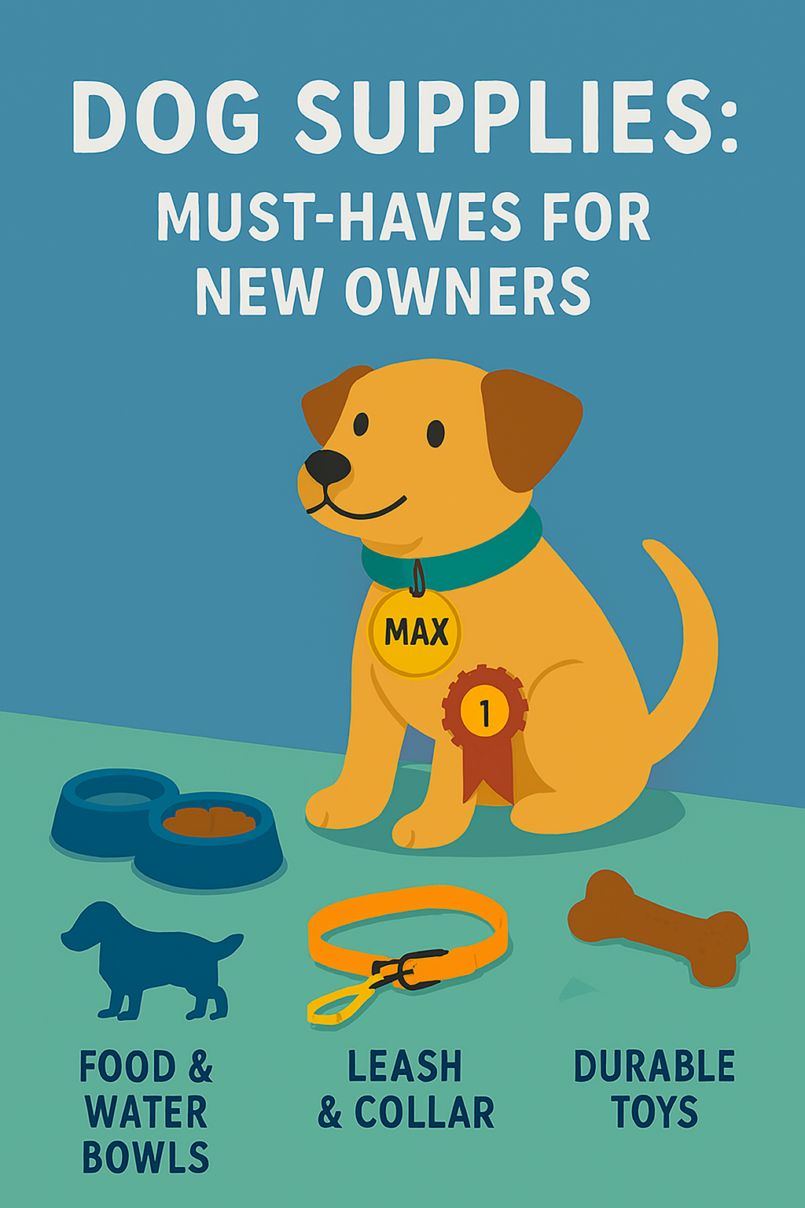
You’ll also need two sturdy bowls: one for food and one for fresh water. Stainless steel or ceramic bowls are generally preferred because they are easy to clean and less likely to harbor bacteria than plastic. Keep water available at all times and wash bowls daily to maintain hygiene.
Collar, Leash, and ID
Every dog needs a well‑fitting collar with an ID tag that includes your name, phone number, and, if possible, your address. Even if your dog is microchipped, an ID tag is the fastest way for someone to contact you if your dog gets lost. Choose a collar that is strong but comfortable, with a secure buckle or snap.
A sturdy leash is essential for walks, training, and safe outings. A standard 4–6 foot leash made of nylon or leather is ideal for everyday use. If you plan to do more advanced training, consider a training leash or a harness in addition to a regular collar and leash.
Bed and Crate or Safe Space
Dogs benefit from having a dedicated, quiet place to rest. A dog bed provides cushioning and support, especially for growing puppies or older dogs with joint issues. Choose a bed that fits your dog’s size and is easy to wash, and place it in a calm area of the house.
Many new owners also use a crate or playpen as a safe space for their dog. A properly sized crate can help with housebreaking, prevent destructive chewing when you’re away, and give your dog a den‑like retreat. Make sure the crate is large enough for your dog to stand, turn, and lie down comfortably, and always introduce it with positive experiences.
Toys and Mental Stimulation
Chewing and playing are natural dog behaviors, so having a variety of toys helps prevent boredom and destructive habits. Start with a few basics: a soft plush toy, a durable chew toy, and a puzzle or treat‑dispensing toy. Rotate toys regularly to keep things interesting.
Interactive toys that require your dog to work for treats are especially valuable because they provide mental stimulation as well as physical play. These can reduce anxiety, support training, and help your dog burn energy in a constructive way.
Grooming and Cleaning Supplies
Regular grooming keeps your dog clean, comfortable, and healthy. Essential grooming items include a brush or comb suited to your dog’s coat, nail clippers or a grinder, dog‑safe shampoo, and cotton balls or pads for ear cleaning. Short‑haired dogs may only need brushing once or twice a week, while long‑haired breeds often need daily grooming.
You’ll also want cleaning supplies on hand for accidents or muddy paws. Keep paper towels, pet‑safe cleaner, and a few old towels near your dog’s favorite spots. A good vacuum or mop will help manage fur and dirt around the house.
10 Frequently Asked Questions (FAQs)
1. What size crate should I get for my dog?
A crate should be large enough for your dog to stand, turn around, and lie down comfortably, but not so big that they can use one end as a bathroom and the other as a sleeping area. Many owners buy a larger crate with a divider so it can grow with a puppy.
2. How much food should I feed my new dog?
Follow the feeding guidelines on the food packaging and adjust based on your dog’s age, weight, and activity level. Puppies usually need several small meals per day, while adults often do well with two meals. Ask your veterinarian for a personalized recommendation.
3. Do I need a harness in addition to a collar?
A harness can be helpful, especially for dogs that pull on the leash or have respiratory issues. It distributes pressure more evenly across the chest and reduces strain on the neck. Many owners use a harness for walks and keep a collar with ID tags for everyday wear.
4. What kind of toys are safe for puppies?
Choose soft, durable toys designed for puppies, such as rubber chew toys or plush toys without small parts. Avoid toys that can be easily torn apart or swallowed. Always supervise playtime and remove damaged toys.
5. How often should I groom my dog?
Grooming frequency depends on your dog’s coat. Short‑haired dogs may only need brushing once or twice a week, while long‑haired breeds often need daily grooming. Nail trimming, ear cleaning, and baths should be done as needed, usually every few weeks to a few months.
6. Should I get my dog microchipped?
Yes—microchipping is a safe, permanent way to help reunite you with your dog if they get lost. The chip is implanted under the skin and registered with your contact information. It works alongside an ID tag, not as a replacement.
7. How do I choose the right dog food?
Look for food labeled for your dog’s life stage (puppy, adult, or senior) and made by a reputable brand. Check that it meets AAFCO standards and consult your veterinarian, especially if your dog has allergies or health issues.
8. Can I use human shampoo on my dog?
No—human shampoos are formulated for different pH levels and can irritate a dog’s skin. Always use a dog‑specific shampoo, and choose a gentle or medicated formula if your dog has sensitive skin or allergies.
9. What should I do if my dog chews on everything?
Provide plenty of appropriate chew toys and rotate them to keep your dog interested. Use positive reinforcement when your dog chews on the right items, and manage the environment by keeping tempting objects out of reach. If chewing becomes destructive, consider training or consulting a professional.
10. How can I make my home safe for a new dog?
Puppy‑proof or dog‑proof your home by removing hazards such as loose electrical cords, toxic plants, small objects, and accessible trash. Use baby gates or crates to limit access to unsafe areas, and supervise your dog closely during the first few weeks.
Putting It All Together
Setting up your home with the right dog supplies helps your new dog settle in quickly and reduces stress for both of you. Start with the basics—food, bowls, collar and leash, bed or crate, toys, and grooming tools—then add extras as you learn your dog’s preferences and needs.
By investing in quality supplies and using them consistently, you create a safe, comfortable environment that supports your dog’s health, behavior, and happiness from the very beginning.