An 8‑week‑old puppy is adorable, but they are also a tiny baby with big needs and very little self‑control. At this age, life revolves around four main pillars: eating, potty, sleep, and short bursts of play and training. A simple daily schedule helps your puppy feel secure, speeds up house‑training, and prevents overtired, bitey behavior. Think of your routine as a gentle framework, not a rigid timetable, and expect to adjust as your pup grows.
Key Needs of an 8‑Week‑Old Puppy
At eight weeks, most puppies sleep 18–20 hours a day and can only stay awake happily for about 45–90 minutes at a time. Their bladders are tiny, so they need very frequent potty breaks, especially after waking, eating, drinking, and playing. Most puppies at this age eat three to four small meals a day of a high‑quality puppy food. Because they’re just settling into a new home, they also need lots of calm reassurance, gentle handling, and positive experiences with people and everyday sounds.
Morning Routine: Starting the Day Right
Your day should start with a potty trip the moment your puppy wakes up, before greetings or play. Carry them outside if needed, take them to the same spot, and calmly praise and reward when they go. After that, offer breakfast in a quiet area and then allow 20–30 minutes of supervised play and a tiny bit of training—simple cues like their name, “sit,” or coming when called. As soon as they start to slow down, get nippy, or wander and sniff a lot, give another potty break and then guide them to a crate or bed for a nap.
Midday Schedule: Eat, Play, Sleep
Late morning and early afternoon follow the same basic cycle: wake, potty, eat, play, potty, sleep. Offer the second meal late morning or around lunchtime, depending on your routine. Keep play sessions short and varied—some toy play, a few simple training reps, and gentle exploration of safe areas in the home. Watch closely for signs of tiredness (ignoring you, wild zoomies, or increased biting) and don’t be afraid to enforce nap time; young puppies often won’t “put themselves to bed” and become cranky without enough sleep.
Afternoon and Early Evening: Gentle Structure
In the afternoon, repeat the pattern of potty, play/training, and naps, adding another meal if you are on a three‑ or four‑meal schedule. This is a good time for very short, positive outings: a few minutes in the yard, sitting on the porch, or watching the world from a safe distance, all while you reward calm curiosity. Keep physical exercise low‑impact—no long walks, stairs, or jumping off furniture—to protect growing joints. Aim for your last full meal no later than early evening so there’s time for digestion and a couple of potty trips before bed.
Evening Wind‑Down and Bedtime
As evening approaches, gently shift from exciting play to calmer activities like chewing on safe toys near you. Offer the final scheduled potty break and any last small snack well before bedtime so your puppy isn’t going to sleep on a full stomach and bladder. Establish a predictable wind‑down routine: short potty outing, a bit of quiet cuddle or gentle petting, then into the crate or puppy pen. A consistent bedtime cue (like “bedtime”) plus a special chew or stuffed food toy they only get at night can signal that it’s time to sleep.
Overnight Care and Crate Use
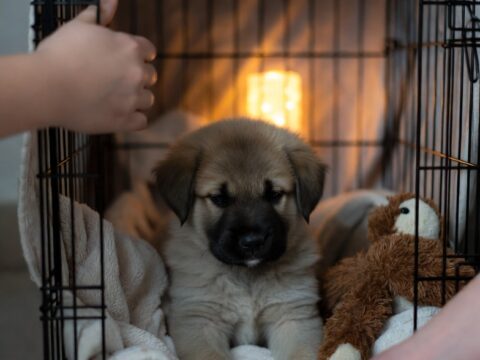
Most 8‑week‑old puppies cannot make it through the night without at least one potty break. Keeping the crate in your bedroom or nearby helps them feel secure and lets you hear if they wake. Plan to set an alarm once or twice rather than waiting for frantic crying; take them out on leash, give them a chance to potty, praise briefly, and return them calmly to the crate. Keep lights low and voices soft, and avoid turning night‑time outings into playtime. Over time, your puppy will start to sleep longer stretches, and you can gradually reduce the number of night trips.
Weaving Training into the Day
Formal training at this age should be very short, fun, and reward‑based. Use tiny pieces of their regular food to practice simple skills during their awake windows: responding to their name, coming when called, “sit,” and brief handling (touching paws, ears, collar) with rewards. House‑training is a major part of daily “training”: take them out frequently, especially after sleep, meals, and play, and reward immediately when they go in the right spot. You can also begin very light crate training by giving chews in the crate with the door open and closing it for a few seconds at a time when they’re relaxed.
Socialization Built into the Schedule
At eight weeks, puppies are in a sensitive socialization period and should gradually meet the everyday world in a positive way. During some of those short awake windows, introduce gentle, friendly people, new surfaces (like grass, carpet, tile), and common household sounds at low volume. Keep experiences brief and pleasant and let the puppy retreat if they feel unsure, then reward any curious steps forward. Avoid overwhelming them with long outings or crowded places; lots of little positive exposures throughout the week are better than one big, intense experience.
Sample 8‑Week‑Old Puppy Day
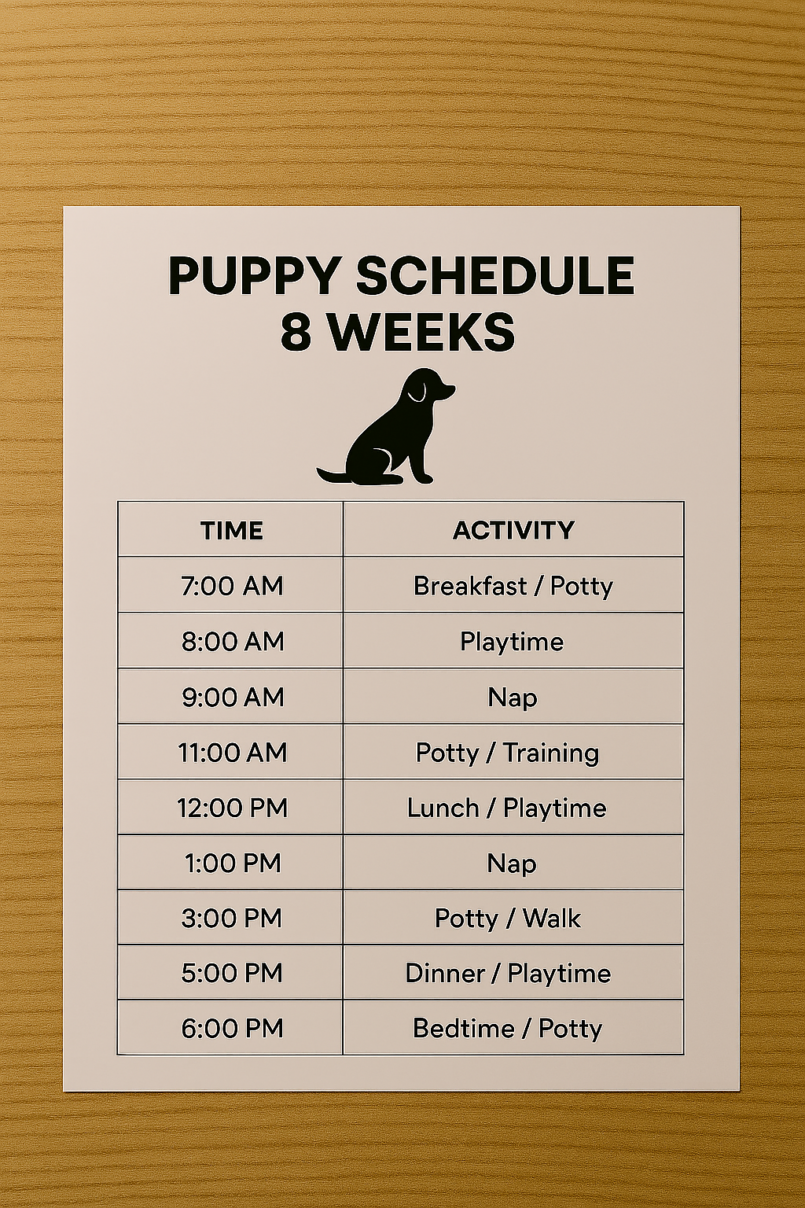
Every household is different, but a typical day might look like this: early wake‑up, potty, breakfast, short play and training, potty, then a nap. Late morning brings another potty, play, and rest cycle. Around midday and mid‑afternoon, repeat the pattern with another meal, several potty trips, and brief awake periods for play, chewing, and bonding. Early evening includes the last meal, some gentle play and training, and a couple more potty breaks. Then it’s wind‑down time, final potty, into the crate for the night, with one or two quiet night‑time potty trips as needed.
Adjusting the Plan to Your Life
No schedule will fit every family perfectly, so treat this as a starting point and adjust around your work, school, and sleep times. If you’re away for stretches, arrange for someone to let your puppy out, feed, and interact with them so they aren’t crated too long. Prioritize the pattern over the exact clock times: frequent potty breaks, multiple small meals, short awake windows with meaningful interaction, and plenty of sleep. When you stay consistent, your 8‑week‑old puppy quickly learns what to expect, which leads to faster house‑training, calmer behavior, and a stronger bond between you and your new fur baby.