Potty training your puppy is one of the first and most important skills you’ll teach them. The goal is to help your puppy understand that going to the bathroom happens in a specific, appropriate place (usually outside), and that holding it indoors is the default. Puppies don’t come pre-programmed with this knowledge—your job is to guide them patiently with a clear routine, close supervision, and lots of rewards for doing the right thing.
Successful potty training is built on three pillars: consistency, management, and positive reinforcement. Consistency means taking your puppy out at the same times and to the same spot, so they quickly understand the pattern. Management means preventing accidents by supervising closely and using crates, pens, or leashes when you can’t watch them. Positive reinforcement means rewarding every correct potty outside with praise and treats so your puppy eagerly repeats that behavior.
Start with a Potty Training Schedule
Puppies have small bladders and limited control, so frequent potty breaks are crucial. A useful rule of thumb is that a puppy can “hold it” roughly as many hours as their age in months (up to a reasonable limit), but during training you should take them out more often than the maximum. Think of your schedule in terms of specific trigger times: after waking, after eating or drinking, after playing, and before bed or confinement.
In practice, that means your day might include trips outside first thing in the morning, after each meal, after each nap, after play sessions, before you leave the house, and right before bedtime. At each trip, calmly take your puppy on a leash to their potty spot, stand quietly, and give them a few minutes to go. If they do, praise warmly and give a treat within a couple of seconds—this fast reward teaches them that going in that spot is exactly what you want.
Use a Designated Potty Spot and Cue
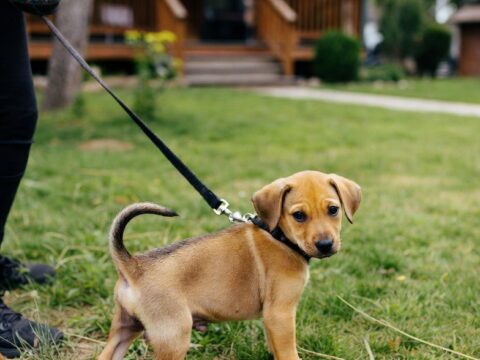
Taking your puppy to the same area outside helps them learn faster because their own scent prompts them to go. Choose a small, low-distraction area of your yard or nearby outside space. Walk them to that spot, keep the leash short but relaxed, and avoid turning it into a walk or playtime until after they’ve gone. The more predictable you make this routine, the quicker your puppy connects the dots.
As your puppy starts to squat, quietly say a simple cue like “go potty” one time. Over many repetitions, they’ll associate this phrase with the act of eliminating and will eventually be able to potty on cue in different locations. Once they’ve finished, immediately praise and reward them, then you can give a bit of extra sniffing or play as a bonus. This “potty first, fun second” sequence teaches them that getting business done quickly leads to good things.
Crate and Confinement as Training Tools
Crates and playpens are powerful potty training helpers because dogs naturally avoid soiling their sleeping area. When you can’t watch your puppy closely, confining them to a correctly sized crate or small pen area reduces the chances of accidents and builds bladder control. The crate should be just big enough for your puppy to stand up, turn around, and lie down comfortably—not so large that they can potty in one corner and sleep in another.
Use the crate for nap times, overnight, and short periods when you’re busy and can’t supervise. Always take your puppy straight from the crate to the potty spot on a leash, especially after sleeping. Crate time should feel safe and positive, not like punishment: feed some meals near or in the crate, offer safe chews there, and never use it to scold your puppy. Over time, the crate helps your puppy learn to hold it until you take them out.
Supervision and Accident Prevention
When your puppy is not in the crate or pen, think of them as a toddler you can’t leave unattended. Keep them in the same room with you and use baby gates, closed doors, or a leash attached to your waist to prevent them from wandering off. Many accidents happen when puppies slip into another room unnoticed, sniff around, and quietly squat out of sight.
Learn to recognize early signs that your puppy needs to go: sudden sniffing and circling, wandering away from play, heading to corners or doorways, or whining and pacing. As soon as you see these signals, interrupt gently by calling them and quickly bring them outside to their potty spot. The faster you respond to these cues, the more chances you give them to succeed in the right place, which speeds up learning.
Handling Accidents the Right Way
Accidents are a normal part of potty training and don’t mean you or your puppy are failing. If you catch your puppy in the act, calmly clap your hands or say “outside!” once to interrupt, then immediately take them to their potty spot. If they finish outside, praise and reward as usual. The goal is to redirect, not to scare or punish them—fear and confusion will only make accidents more likely.
If you find a mess after the fact, it’s too late to correct your puppy; they won’t understand why you’re upset. Instead, quietly clean the area with an enzymatic cleaner designed to break down pet urine and feces odor so your puppy isn’t drawn back to that spot. Then, ask yourself what you could change—more frequent potty trips, better supervision, or adjusting food and water timing—to prevent similar accidents in the future.
Nighttime Potty Training
At night, most puppies can go a bit longer between potty breaks, but many still can’t last a full eight hours. Plan for at least one middle-of-the-night trip outside for very young pups. Keep nighttime potty breaks boring and brief: carry or leash your puppy, go straight to the potty spot, wait quietly for them to go, reward calmly, and head right back to bed. Avoid play or bright lights that signal “party time.”
As your puppy grows, they’ll gradually be able to hold it longer overnight. You can test this by pushing the last potty break slightly later or stretching the time before you respond to mild restlessness, but never force a puppy to hold it so long they’re uncomfortable. If your pup is regularly having accidents in the crate at night, adjust your schedule, remove late-evening water if appropriate, and check with your vet to rule out medical issues.
Consistency, Patience, and Realistic Expectations
Most puppies start to show real reliability with potty training between about four and six months of age, though some take longer. Progress is rarely a straight line—good weeks can be followed by setbacks due to growth spurts, changes in routine, or teething. What matters most is that you keep your schedule, reinforce successes, and calmly manage mistakes.
Think of potty training as a partnership: your puppy brings the desire to stay clean and please you, and you bring structure, guidance, and patience. Keep a simple log if it helps—times they eat, drink, nap, and potty—so you can predict patterns more accurately. With steady effort, your puppy will learn that going outside is just what they do, and house training will become a habit instead of a project.
10 FAQs About Potty Training a Puppy
1. When should I start potty training my puppy?
You should begin potty training as soon as you bring your puppy home, usually around 8–12 weeks of age. While they won’t have much bladder control at first, starting early helps establish the routine and expectations they’ll follow for life.
2. How long can my puppy hold it?
A common guideline is about one hour per month of age, up to a reasonable limit, but that’s the maximum, not the goal. During training you should give your puppy more frequent opportunities—often every 1–2 hours during the day for very young pups—to set them up for success and avoid accidents.
3. How often should I take my puppy outside?
Plan to take your puppy out first thing in the morning, after every meal or big drink, after naps, after play sessions, before you leave the house, and right before bedtime. For very young puppies, that often means going out every 1–2 hours during the day, plus at least one nighttime trip.
4. Should I use pee pads or go straight to outside?
If you ultimately want your dog to potty outside, it’s usually simplest to train directly to outdoors. Pee pads can be helpful in apartments, for very small breeds, or if you have limited access to outside space, but they add an extra step: first teaching pads, then later teaching outside. If you do use pads, keep them in one consistent spot to avoid confusion.
5. Is crate training necessary for potty training?
Crate training isn’t strictly required, but it makes potty training easier and faster for many families. A correctly sized crate uses your puppy’s natural tendency not to soil their sleeping area, reducing accidents when you can’t supervise. If you don’t use a crate, you’ll need a very well-managed pen or small room and even closer supervision.
6. What do I do if my puppy keeps having accidents?
Frequent accidents usually mean the plan needs adjusting, not that your puppy is stubborn. Increase the number of potty breaks, tighten supervision (use gates or a leash), and review feeding and watering times. Make sure you’re rewarding every successful outdoor potty and cleaning indoor accidents thoroughly with an enzymatic cleaner.
7. Should I punish my puppy for peeing in the house?
No—punishing a puppy for accidents can make them afraid to go in front of you and may lead them to hide and potty in secret. Instead, focus on prevention and redirection: interrupt gently if you catch them in the act, take them outside to finish, then praise if they go in the right place. If you only find the mess afterward, clean it and move on.
8. How long does potty training usually take?
Most puppies need several weeks to a few months to become fairly reliable, and some take up to six months or more to be fully trustworthy in every situation. Factors include your consistency, the puppy’s age and breed, and how well you manage supervision and routine. Expect progress with occasional setbacks rather than instant perfection.
9. Why does my puppy pee again right after coming inside?
This often happens when puppies are distracted outside and don’t fully empty, or when coming inside is more exciting than staying out to potty. To fix it, keep potty trips calm and boring until after your puppy goes, wait a few extra minutes at the spot, and consider staying outside a bit longer after they potty so they don’t rush to finish just to get back indoors.
10. How will I know my puppy is fully potty trained?
Your puppy is truly potty trained when they consistently go outside for several weeks or months without accidents, even with small changes in routine, and they start to clearly ask to go out (by going to the door, whining, or seeking you out). You’ll also find that you can gradually lengthen the time between breaks without setbacks. Even then, it’s wise to keep some structure and regular potty times to maintain good habits.