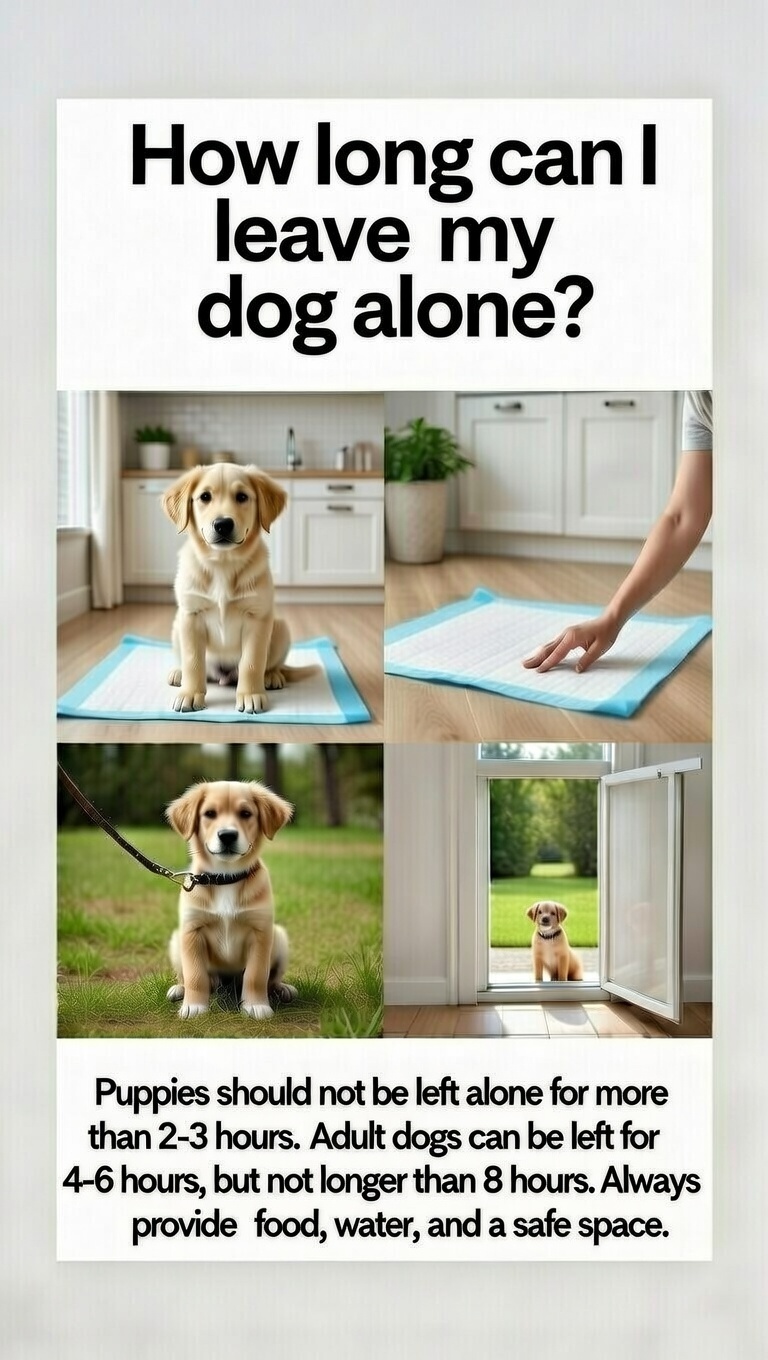
How long you can leave a dog alone depends on age, health, training, and personality, but most healthy adult dogs fall in the 4–6 hour range, with an absolute upper limit of about 6–8 hours in exceptional circumstances. Puppies, seniors, and dogs with medical or behavior issues usually need much shorter stretches and more frequent breaks, so “one number for all dogs” isn’t realistic.
When planning alone time, think in terms of your dog’s bladder capacity, exercise needs, and emotional well‑being rather than your schedule alone. Adult dogs who get a good walk, mental stimulation, and a chance to toilet before you leave cope far better than those left with no outlet. If you’ll be gone longer than they can comfortably manage, you’ll need help—from a friend, family member, dog walker, or daycare—to protect both their health and their quality of life.
Age-Based Guidelines for Leaving Dogs Alone
Age is one of the strongest predictors of how long your dog can stay home alone. Young puppies have tiny bladders and are still learning, so they can only manage very short periods without supervision. A common guideline is about one hour per month of age up to around 6 months, with a cap of roughly 4–6 hours even as they approach adolescence.
Adult dogs, roughly from 1.5 to about 8–9 years depending on breed, can often handle 4–6 hours alone, and some adapt to 6–8 hours if their needs are thoroughly met before and after. Senior dogs typically go back to needing shorter stretches—often around 4–6 hours—because of reduced bladder control, stiffness, and health conditions that require more frequent bathroom breaks.
Factors That Affect How Long Is “Okay”
Beyond age, several factors determine what’s fair and safe: health status, exercise level, separation anxiety, and access to toileting. Dogs with medical issues like diabetes, kidney disease, or gastrointestinal problems may need bathroom breaks much more often than healthy dogs. High‑energy breeds (such as many working and herding dogs) can become frustrated and destructive if left too long without exercise or mental enrichment, even if they can technically hold their bladder.
Separation anxiety changes the picture completely: some dogs cannot tolerate even 30–60 minutes alone without significant distress, vocalizing, or destruction. For these dogs, the limit isn’t about physical needs but emotional welfare. Finally, whether your dog has access to a secure yard or indoor toileting option (like a dog door to a fenced run) affects how long they can be alone without risking discomfort or accidents.
Crate vs. Free-Roam Alone Time
Crates can be excellent management tools, but they should not be used for long stretches of daytime confinement. Most veterinary and behavior sources suggest that adult dogs should not be crated for more than a few hours at a time (ignoring overnight sleep), and puppies for even less. Crates are best for short absences, naps, and safe downtime—not as all‑day storage while you work.
[rocklinvet](https://www.rocklinvet.com/site/blog/2024/01/15/how-long-can-you-leave-dog-alone)
Free‑roaming in a dog‑proofed area or a larger pen with water, a bed, and safe chew toys is more humane for longer alone periods. If you’re gone many hours, consider confining your dog to a part of the house that’s easy to clean and safe but still allows movement, a comfortable resting place, and perhaps a view out a window if that doesn’t trigger barking.
Signs Your Dog Is Being Left Alone Too Long
Behavior is your best feedback. A dog who is coping well will rest much of the time you’re gone and greet you calmly, perhaps a little excited but not frantic. In contrast, dogs left too long may show house soiling, excessive barking or howling, destruction of doors or windows, self‑injury, pacing, or drooling. These behaviors can signal boredom, unmet physical needs, or anxiety.
Physical signs include frequent accidents despite previous reliability, urinary tract infections from holding urine too long, and weight gain from lack of exercise. If your dog seems distressed when you leave or overly frantic when you return, it’s a clue to shorten alone time or add mid‑day visits, and potentially work on separation training with a professional.
10 FAQs About Leaving Dogs Alone
1. How long can an adult dog be left alone?
Most healthy adult dogs can be left alone for about 4–6 hours on a regular basis, and some can adapt to 6–8 hours if they have adequate exercise, mental stimulation, and bathroom access before and after. That 6–8‑hour window is generally considered the maximum, not the ideal.
2. How long can I leave a puppy alone?
Puppies should usually only be left alone for 2–3 hours at most, and often less for very young pups. A common guideline is roughly one hour per month of age, capped at about 4–6 hours by 6 months, because of limited bladder control and the need for socialization and supervision.
3. Is it okay to leave my dog alone for 8 hours while I’m at work?
Many people do leave adult dogs alone for a standard 8‑hour workday, and some dogs adapt, but most welfare recommendations view 8–9 hours as the upper limit and not ideal. If you must be gone that long, it’s kinder to arrange a mid‑day dog walker, potty break, or daycare a few days a week so your dog isn’t always alone for the full stretch.
4. How long can a dog stay in a crate?
Crates should be for short‑term safety and rest, not all‑day confinement. Adult dogs are generally not recommended to stay crated more than a few hours at a time during the day, and puppies even less. Overnight sleep in a crate is different, but daytime crating for 6–8 hours straight is considered too long for most dogs.
5. Can senior dogs be left alone as long as adults?
Senior dogs usually need more frequent bathroom breaks and may have health conditions that make long alone periods uncomfortable or risky. Many sources suggest aiming for 4–6 hours maximum for older dogs, adjusting based on mobility, medication schedules, and how often they need to toilet.
6. What if my dog has separation anxiety?
Dogs with separation anxiety often cannot safely be left alone even for short periods without experiencing significant distress or engaging in destructive behavior. For these dogs, the “time limit” is far shorter than generic guidelines, and treatment usually involves behavior modification, gradual desensitization to being alone, and sometimes medication under veterinary guidance.
7. How can I make long alone periods easier for my dog?
Give a good walk and some training or play before you leave, provide fresh water, a comfortable resting area, and safe enrichment like food‑stuffed toys or chew items. Leaving a radio or white noise on, and keeping a predictable routine, can also help some dogs relax while you’re away.
8. Is it cruel to leave a dog alone all day?
Regularly leaving a dog alone for longer than 6–8 hours without breaks, interaction, or a way to toilet is widely considered unfair and potentially cruel, especially for puppies, seniors, or anxious dogs. Dogs are social animals, and long-term isolation can harm both their mental and physical health.
9. Are some breeds better at being left alone?
Individual temperament matters more than breed, but some lower‑energy or more laid‑back breeds and mixes tend to tolerate alone time better than very high‑energy working or herding breeds. Even so, every dog needs daily exercise, mental stimulation, and human contact, so no breed should be left alone all day as a routine without support.
10. What should I do if my schedule doesn’t match my dog’s needs?
If your work or life schedule means your dog would be alone for longer than is healthy, you can combine several options: dog walkers, neighbors or family check‑ins, doggy daycare, or adjusting your routine so someone is home part of the day. In some cases, remote work flexibility, pet‑friendly workplaces, or hiring help a few days a week can make a big difference in your dog’s quality of life.