When Can My Puppy Start Going Outside or Meeting Other Dogs?
Deciding when your puppy can go outside or meet other dogs is a balance between protecting them from disease and giving them enough early socialization to grow into a confident, friendly adult. Veterinarians and behavior experts generally agree that puppies should stay with their mother and littermates until around 7–10 weeks, and that the most important socialization window runs roughly from 3 to about 14–16 weeks of age. During this period, puppies’ brains are especially open to new experiences, and positive exposure to the world has a lifelong impact on their behavior.
Because vaccination series are not complete until around 16 weeks, you don’t have to—and shouldn’t—wait until “fully vaccinated” to start all socialization. Instead, you start with low‑risk, controlled environments and carefully chosen dog friends. Safe early socialization includes carrying your puppy in public places, inviting vaccinated dogs into your yard, and attending well‑run puppy classes that require health records. The goal is to steadily show your puppy the world while still avoiding high‑risk areas for contagious diseases.
Going Outside Safely: Yard vs. Public Places
Your own yard or a private, clean outdoor space is usually safe for a young puppy as soon as you bring them home, as long as unknown or sick dogs haven’t been using that area. Short trips outside for potty breaks and sniffing around the yard are important from day one because they help with housetraining and gentle exposure to outdoor sights and sounds. Always supervise closely, make sure fencing is secure, and avoid letting your puppy eat plants, dirt, or unknown objects.
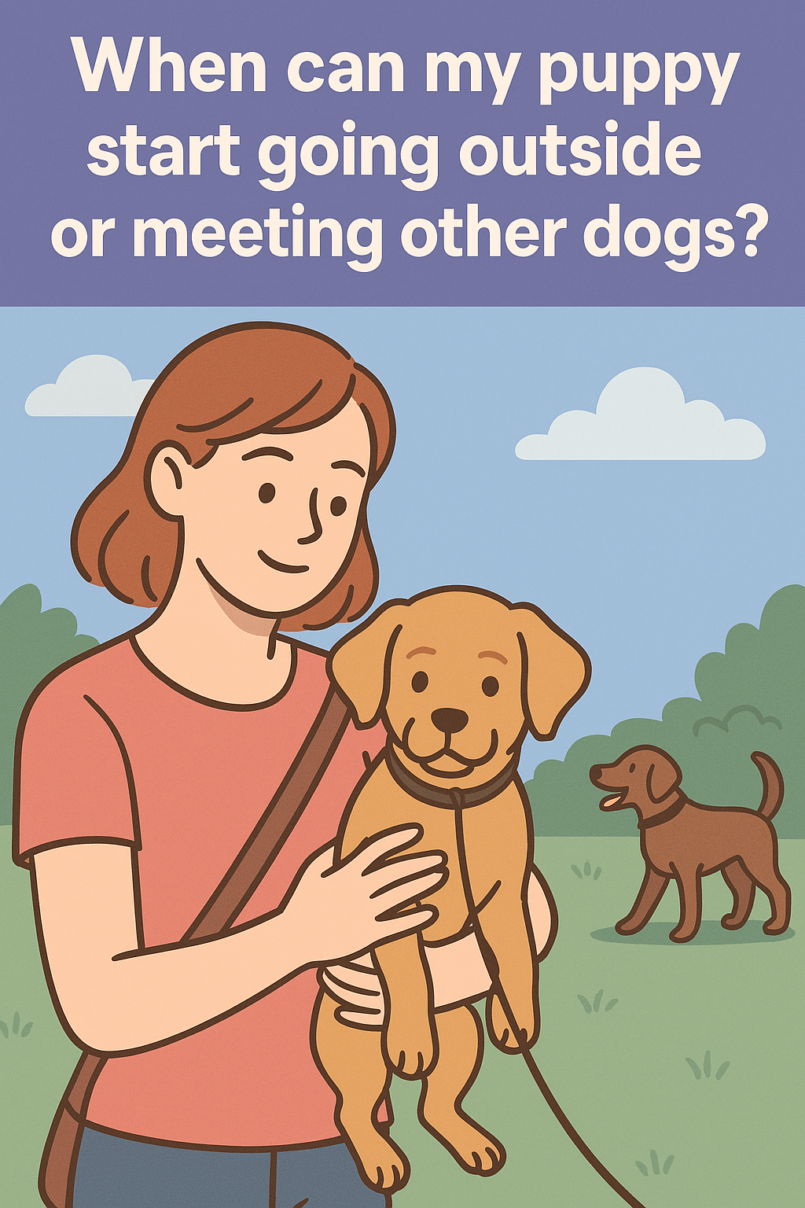
High‑traffic public places like busy sidewalks, dog parks, and areas where many unknown dogs toilet carry more risk for diseases such as parvovirus. Until your vet says your puppy has had enough vaccinations for those environments, it’s safer to limit contact with those surfaces. Instead, you can carry your puppy in your arms, in a sling, or in a stroller so they can see and hear the world without walking where many dogs have gone before.
Vaccines and Timing for Socialization
Most puppies start their core vaccines around 6–8 weeks and get booster shots every 3–4 weeks until about 16 weeks. This schedule means their protection builds gradually over time rather than all at once. You don’t have to wait until the end of the series to leave the house; instead, you match the level of exposure to your puppy’s current level of protection and your vet’s advice. A common approach is controlled, low‑risk outings early on, followed by more freedom after key booster visits.
Talk with your veterinarian about your local disease risk and your puppy’s specific vaccine schedule. In many areas, vets now recommend starting well‑run puppy socialization classes once the puppy has had at least one set of vaccines and a deworming, because the behavioral benefits of early socialization outweigh the small, managed health risks. As each booster is given, you can ask what new environments are now safe to explore.
When Can My Puppy Meet Other Dogs?
Your puppy can start meeting other dogs earlier than most people think—as long as those dogs are healthy, fully vaccinated, and known to be gentle with puppies. That might mean friends’ adult dogs, relatives’ dogs, or dogs in your breeder’s or foster’s home. Controlled one‑on‑one interactions in private yards or homes are much safer than random encounters with unknown dogs in public spaces. These early friendships teach your puppy to read dog body language and practice polite play.
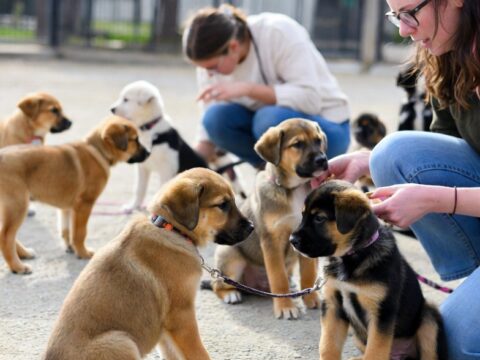
Group puppy classes run by qualified trainers are another safe way to meet dogs. Good classes require vaccine proof, separate puppies by size or play style, supervise play closely, and step in quickly if a puppy is overwhelmed. Avoid chaotic environments where large adult dogs play roughly with tiny puppies, or where there is little structure; those situations can create fear instead of confidence.
Indoor Socialization Before Walking Outside
Even before your puppy is walking much outdoors, you can start socialization work inside your home. This includes gentle handling of paws, ears, tail, and mouth, wearing a collar or harness, and getting used to household sounds like vacuum cleaners, hair dryers, and doorbells. You can invite fully vaccinated friends and family over to meet your puppy, keeping interactions calm and positive. For puppies who are cautious, let them approach visitors at their own pace while you provide treats and praise.
You can also expose your puppy to “fake” versions of the outside world: open umbrellas, people in hats or sunglasses, different floor textures, and recorded city or thunder sounds played quietly. All of this helps them build a mental library of “normal, safe things” they will later encounter outside, reducing the chance of fear reactions when you start going out more.
Balancing Disease Risk and Behavior Risk
There are two main risks to balance: infectious diseases and long‑term behavior problems caused by lack of socialization. Avoiding the outside world entirely until vaccines are finished may reduce disease risk, but it increases the chance your puppy grows into a fearful, reactive adult. On the other hand, taking a very young, minimally vaccinated puppy to dog parks or pet store floors increases disease risk unnecessarily.
The middle path is to give your puppy many positive experiences in relatively safe conditions: controlled dog friends, clean yards, carried outings, and vetted puppy classes. As your puppy’s vaccines progress, you gradually add more environments while continuing to keep experiences positive and not overwhelming. If you’re unsure how to strike this balance in your area, your vet and a good trainer can help you build a plan.
Reading Your Puppy’s Body Language
Regardless of age or vaccination status, your puppy’s comfort level is just as important as their environment. Watch for loose, wiggly bodies, soft eyes, and playful behavior—these are signs they’re enjoying the interaction. Signs of stress include tucked tail, lip licking, yawning when not tired, pinned ears, hiding behind you, or freezing in place. If you see these, move your puppy away from the situation and make things easier next time.
Never force your puppy to interact with people or dogs they’re afraid of. Instead, create more distance, let them observe, and pair the sight or sound of the trigger with treats and praise. This teaches them that strange things predict good outcomes, not pressure. Over time, gentle repetition at their pace builds real confidence.
10 FAQs About When Puppies Can Go Outside and Meet Other Dogs
1. When can my puppy first go outside at all?
Your puppy can usually go into your own yard or a private, clean outdoor space as soon as they come home, often at 8–10 weeks. These short trips should be supervised, kept away from areas used by unknown dogs, and focused on potty breaks and gentle exploration, not long walks.
2. When is it safe to walk my puppy in public places?
Leashed walks on quiet sidewalks or low‑traffic areas can often begin once your puppy has had at least one or two sets of vaccines, depending on your vet’s advice. You should still avoid places where many unknown dogs toilet—like dog parks, busy dog beaches, and some pet store floors—until your vet says your puppy’s vaccination series provides stronger protection.
3. When can my puppy go to the dog park?
Dog parks are high‑risk environments for both disease and overwhelming experiences, so they are usually not recommended for young puppies. Many vets advise waiting until the full core vaccine series is complete (often around 16 weeks or later) and even then, many trainers suggest skipping dog parks altogether in favor of smaller, known playgroups where you can better control which dogs your puppy meets.
4. Can my puppy meet my friend’s adult dog?
Yes, this is often one of the safest and best ways to start dog‑to‑dog socialization, as long as the adult dog is healthy, fully vaccinated, and known to be friendly and gentle with puppies. Arrange meetings in a fenced yard or spacious room, keep leashes handy at first, and allow your puppy to take breaks if they seem overwhelmed.
5. When can my puppy start puppy classes?
Many puppy classes accept puppies as soon as they’ve had their first set of vaccines and a clean bill of health from a vet. Good programs require proof of vaccination, maintain clean facilities, and design class activities to be safe for young dogs. Because the critical socialization window closes around 14–16 weeks, starting classes sooner rather than later is usually beneficial.
6. What about carrying my puppy in public before they’re vaccinated?
Carrying your puppy in your arms, a sling, or a stroller is a great way to show them the world before they can safely walk on public surfaces. They can see people, traffic, bikes, and other dogs at a distance without stepping where those dogs have gone. Just avoid letting strangers touch your puppy if you’re concerned about disease, and keep experiences short and positive.
7. How do I protect my puppy from parvo and other diseases?
Follow your vet’s vaccine schedule closely, avoid high‑risk environments like dog parks and unknown dog hangouts, and don’t let your puppy sniff or play with unvaccinated or sick dogs. Keep your own yard clean, pick up waste promptly, and wash your hands if you’ve been around other dogs. Combining vaccine protection with smart environment choices greatly reduces disease risk.
8. My breeder said to keep the puppy home until fully vaccinated. Is that right?
Some breeders still recommend strict isolation, but many veterinary behavior experts now caution that total isolation can cause serious behavior problems later. A more modern approach is controlled, low‑risk socialization—safe dogs, clean spaces, carried outings, and supervised puppy classes—guided by your vet’s advice. You can share your breeder’s concerns with your vet and ask for a plan that respects both health and behavior needs.
9. What if my puppy seems scared outside or around other dogs?
If your puppy appears fearful—tucked tail, hiding, shaking—reduce how intense the situation is. Move farther away, shorten the outing, or choose quieter times of day. Pair sightings of people and dogs with treats and happy praise from a safe distance. For ongoing or severe fear, consider working with a positive‑reinforcement trainer who has experience with puppy socialization.
10. How long should early outings and dog greetings be?
Short and sweet is best for young puppies—often just a few minutes at a time. It’s better to leave with your puppy wanting more than to push until they’re tired, overstimulated, or scared. For dog meetings, aim for brief sniff‑and‑move‑on interactions or short play bursts with lots of breaks, rather than long, uncontrolled play sessions.